
Tile · St. Petersburg, FL
1 / 8
St. Petersburg, FL
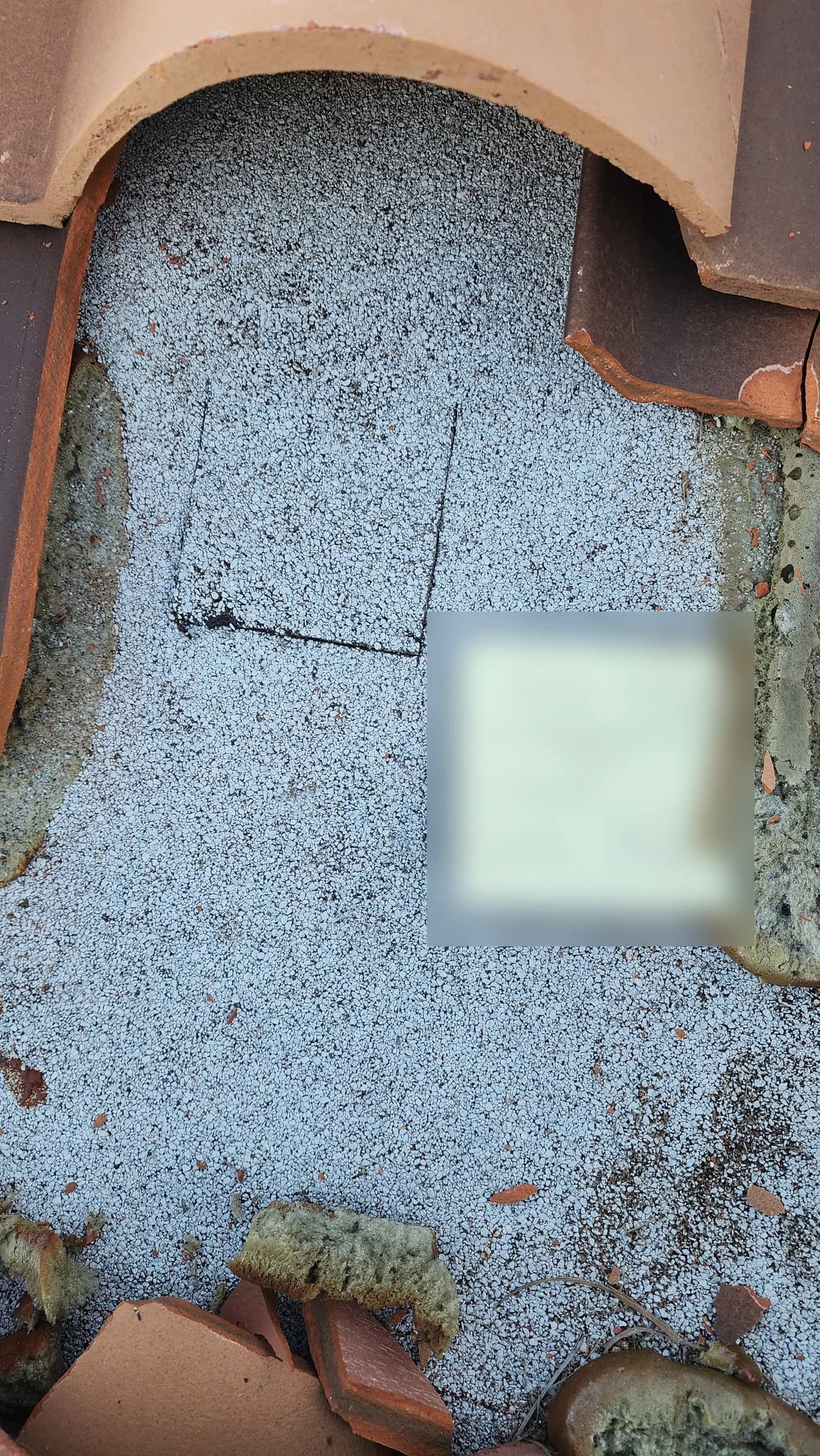
Verea clay S-barrel re-roof, St. Petersburg, FL
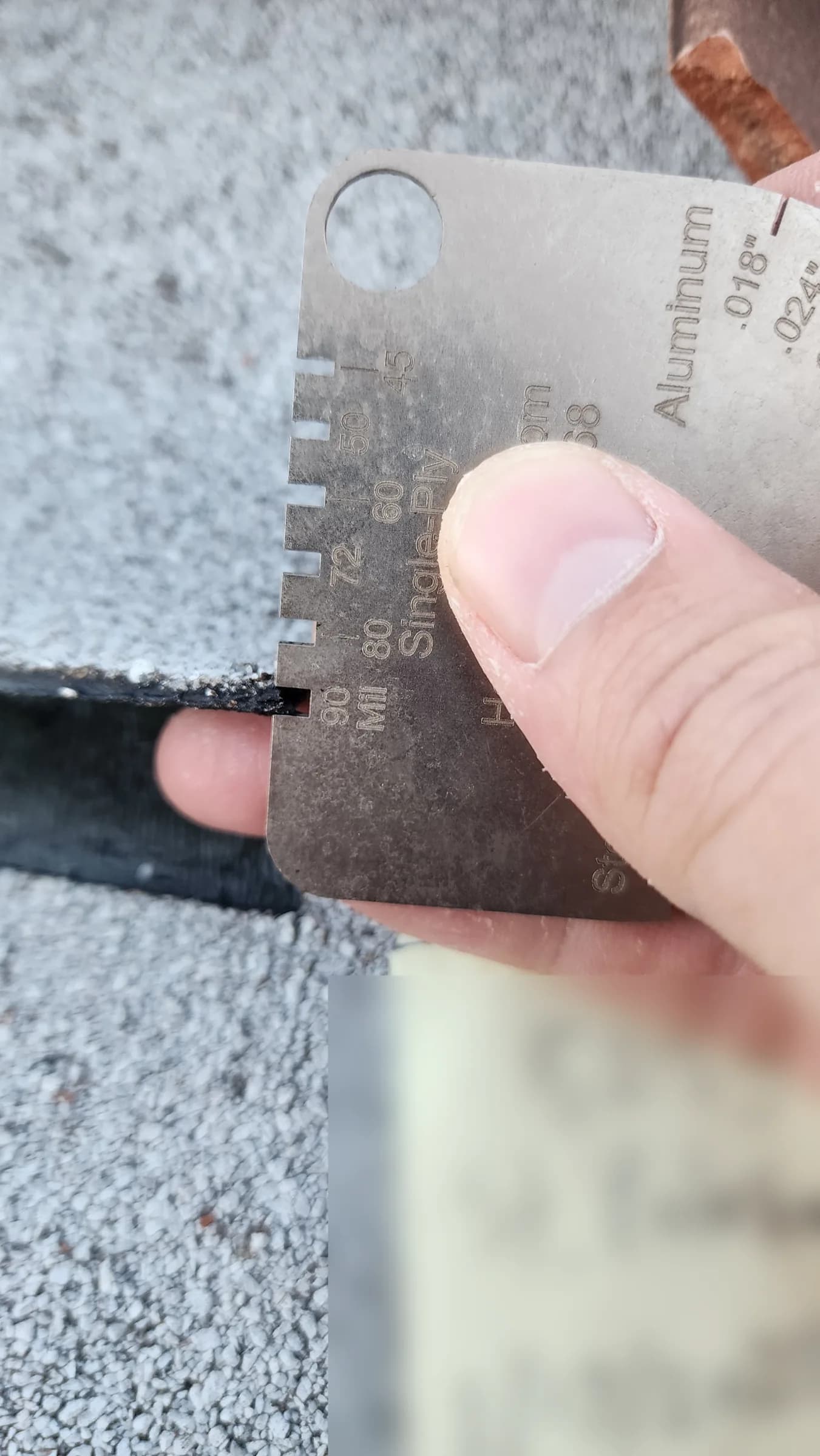
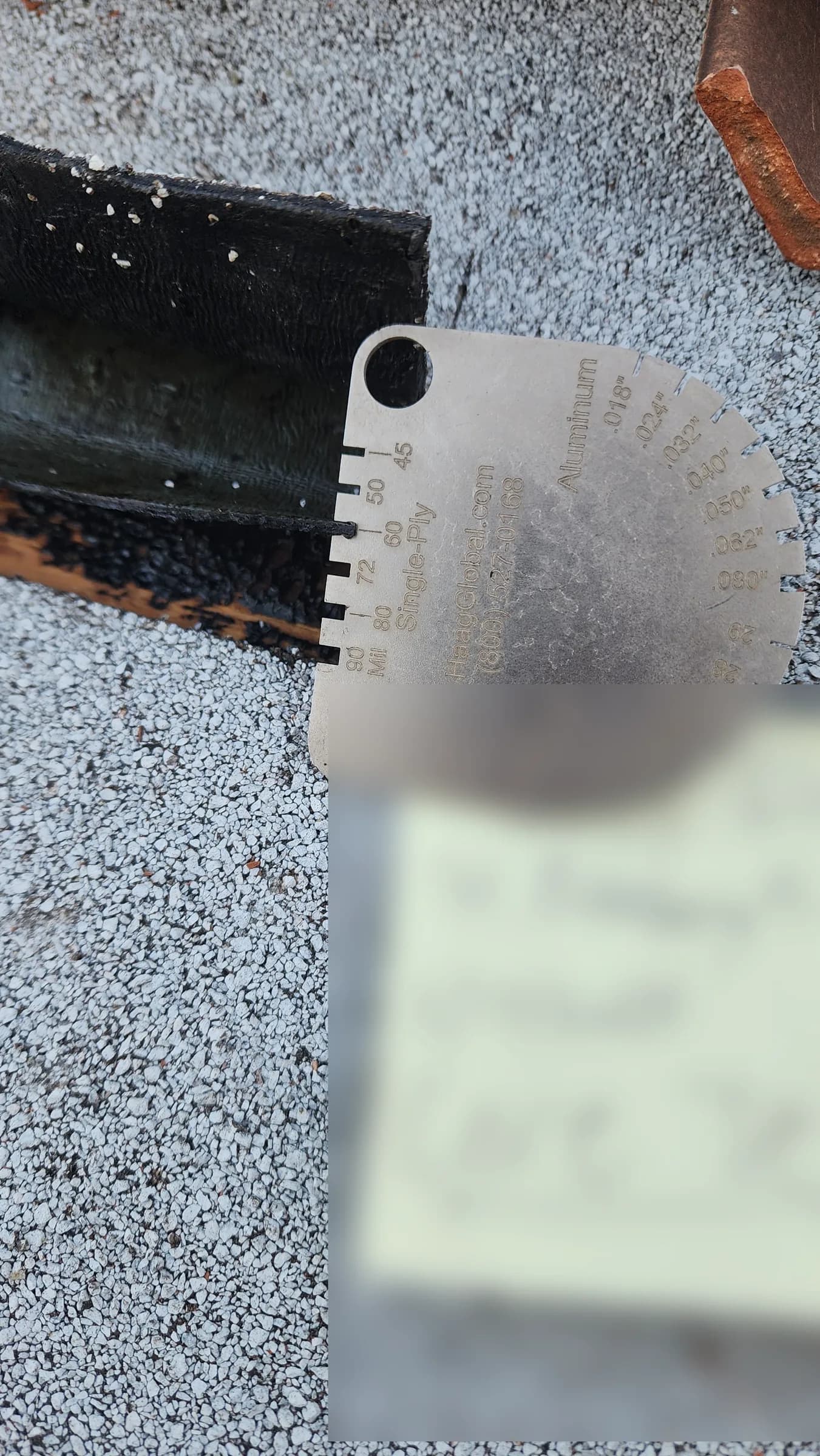
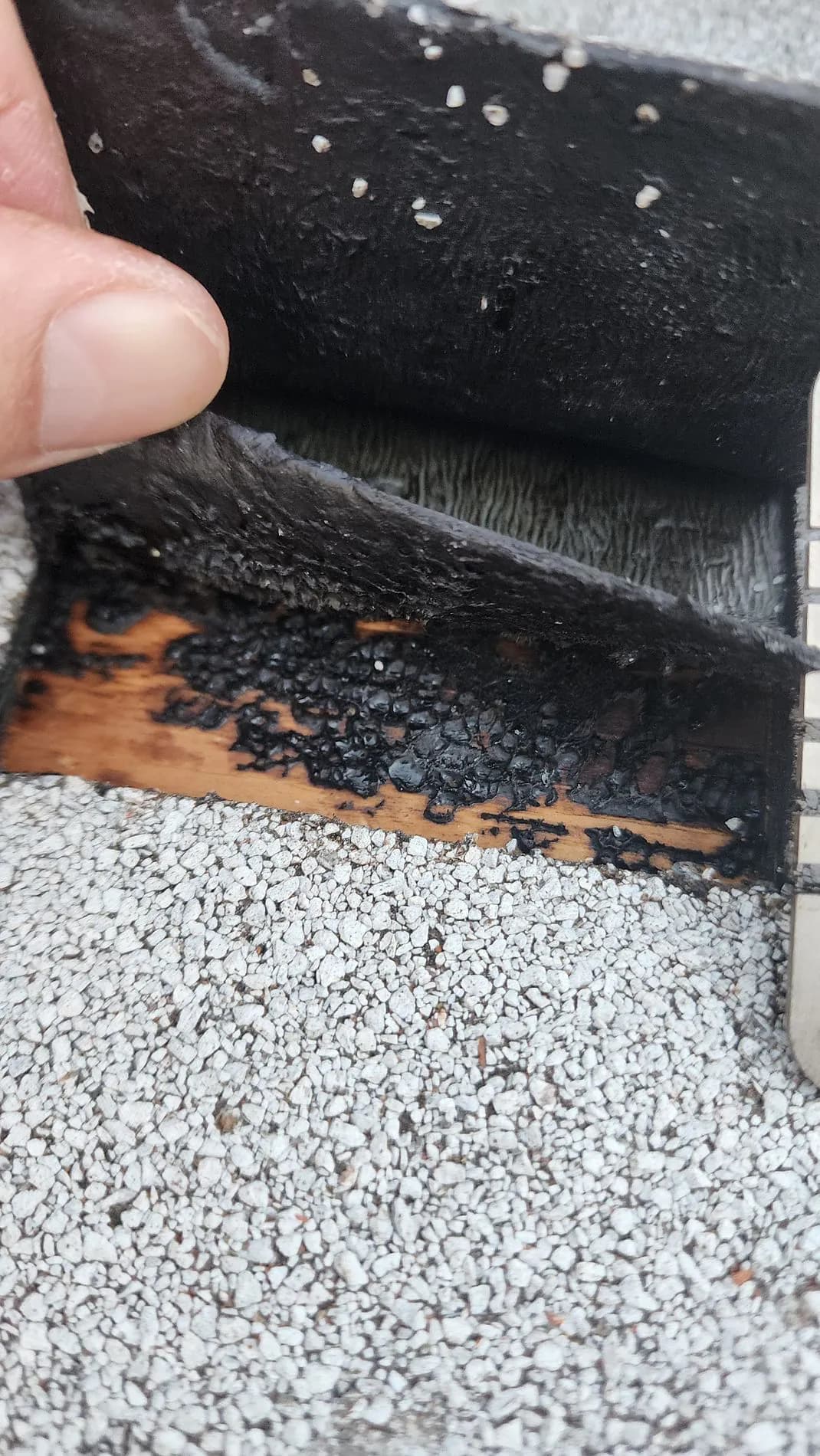
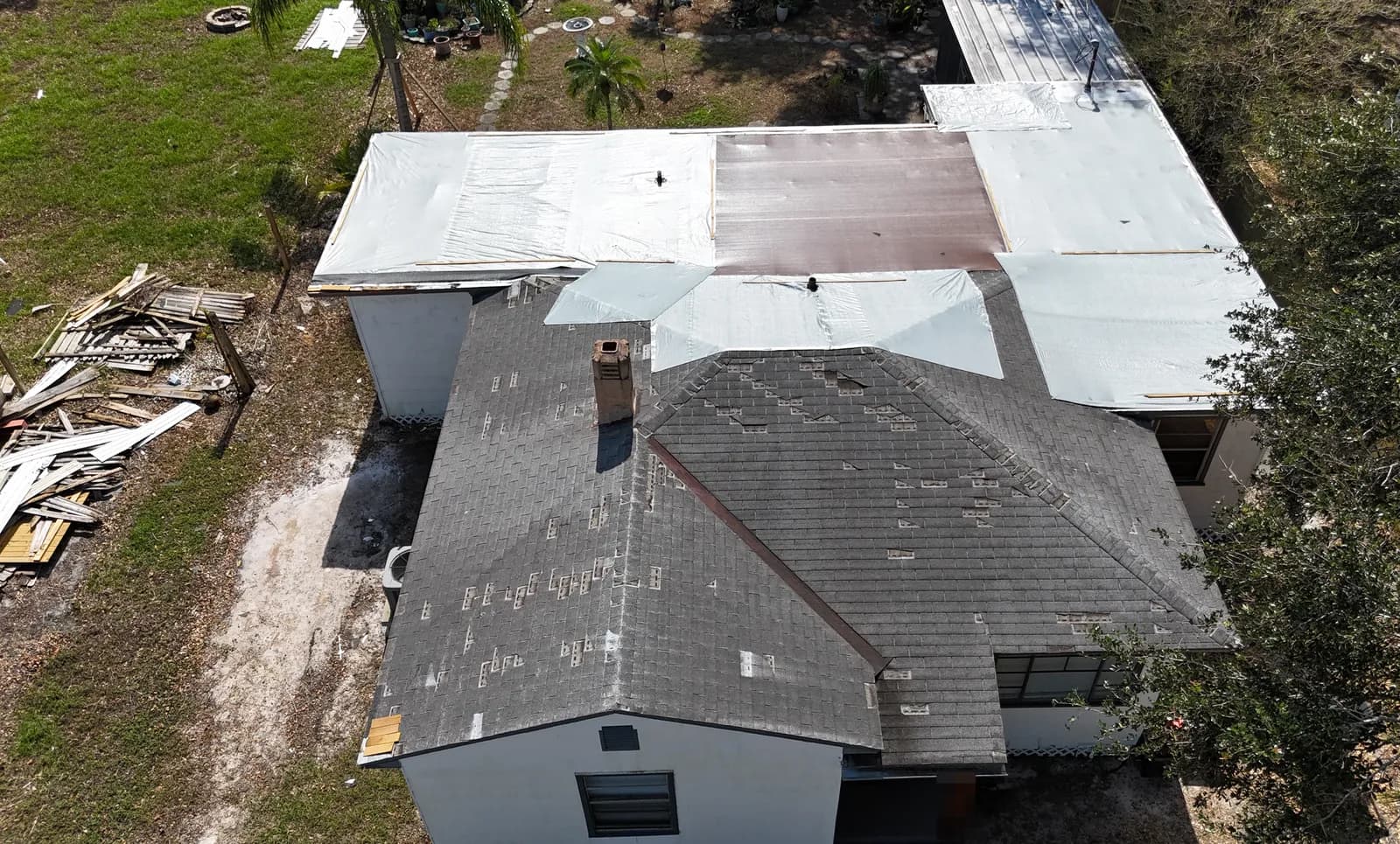
The existing clay tile roof, documented from above before replacement.
Tampa Bay service market: Tampa, St. Petersburg, Clearwater
Residential and commercial roofing, storm response, and documented inspections across Tampa, St. Petersburg, Clearwater, and the surrounding Hillsborough and Pinellas County communities. The same rule everywhere K. Simon Construction works: the roof's condition gets documented first, in writing, and every recommendation traces to it.
Tampa Bay regional office
5401 W Kennedy Blvd #127
Tampa, FL 33609
888-NOW-ROOF (888) 669-7663
Service by city
The legal floor every Tampa reroof carries, the 25 percent rule with the permit-history argument, historic-district certificates, and factors-only pricing.
Read the page →
Leak triage in the document-first order, what Tampa storms verifiably do to roofs, and when a repair is the honest call on the city's split-age stock.
Read the page →
Low-slope systems chosen by factors, re-cover versus tear-off by the code's own conditions, and the property-manager storm framework.
Read the page →
Why the full 25 percent rule shows up more on a 1969-median housing stock, Pinellas's countywide 145 mph design speed, and in-progress reroof inspections.
Read the page →
When repair is right on the bay's oldest housing stock, how repairs interact with the 25 percent rule, and what the historic districts ask.
Read the page →
The barrier islands by name, what Helene's water and Milton's gusts did to them per NHC, Pinellas's countywide wind number, and how salt air rewrites the materials specification.
Read the page →
The two clocks: tile that outlives its own underlayment, the no-cover-over-tile rule, the re-lay, and honest limits on matching discontinued profiles.
Read the page →
Asked in this market
Replacements are permitted work in both counties; small repairs meet the new statewide under-$7,500 exemption, and Pinellas runs in-progress inspections on reroofs.
No: the High-Velocity Hurricane Zone is Miami-Dade and Broward. Tampa Bay roofs run under Florida's statewide wind-load requirements for each specific address.
The rule, the 2022 carve-out for roofs built to the 2007 code or later, and who actually decides: the local building official.
In Florida practice, six: the enhanced manufacturer pattern the maximum wind-speed warranties typically require, above the code's four-fastener base outside the HVHZ.
The full playbook: first 2 hours to day 30, vendor verification, the documentation standard, and a printable eight-document toolkit.
The storm record, precisely
The region's reputation for luck is real, and so is what 2022 through 2024 proved about the margins.
The famous streak is real, and narrower than it sounds. In the hurricane center's historical database, no major hurricane has made landfall on the Tampa Bay coastline since the 1921 Tarpon Springs hurricane, and no hurricane of any category since an unnamed Category 1 in 1946. That is a statement about landfall geometry, not protection, and the last few seasons showed how little the geometry is owed.
Hurricane Helene, September 2024: the water event. Helene's center stayed more than a hundred miles offshore on its way to a Big Bend landfall, and Tampa Bay still took 5 to 7 feet of storm surge. The St. Petersburg tide gauge, recording since 1947, and the Clearwater gauge, since 1973, both set their all-time water-level records. On the Pinellas barrier islands the surge was deadly. For roofs, Helene was mostly a water story: sustained winds in Pinellas stayed below hurricane force.
Hurricane Milton, October 2024: the wind-and-rain event. Milton made landfall at Siesta Key in Sarasota County, south of the bay, which put Tampa Bay on the offshore-wind side: surge here stayed near one foot while the destructive water went south. What Tampa Bay got instead was wind and rain: gusts to 101 mph at Albert Whitted Airport in St. Petersburg, 96 mph at Tampa International, and a storm-maximum 20.40 inches of rain recorded south of St. Petersburg, with record crests on the Hillsborough River. The hurricane center's own report adds the sentence that matters most here: a track shift of less than 30 nautical miles north would have sent a significant storm surge into Tampa Bay.
Ian 2022 and Idalia 2023: the near misses. Ian was forecast toward Tampa Bay before shifting south to a Category 4 landfall at Cayo Costa; the bay famously emptied in reverse surge as the wind blew the water out. Idalia passed more than a hundred miles offshore and still pushed a moderate surge into the bay. Four consecutive seasons, four different geometries, and three different damage modes: surge, wind gusts, and rainfall flooding, each with different implications for a roof and its records.
Sources: National Hurricane Center tropical cyclone reports for Milton, Helene, and the NHC historical database (nhc.noaa.gov); NWS Tampa Bay (weather.gov/tbw). Wind figures at named stations are gusts where labeled gusts; no land station in Hillsborough or Pinellas recorded sustained hurricane-force wind in Milton.
Older streets, extra steps
Tampa and St. Petersburg both run certificate-of-appropriateness review in their local historic districts, and the difference between a staff sign-off and a board hearing is usually whether the material changes.
City of Tampa: in the local districts the Architectural Review Commission covers, Hyde Park, Seminole Heights, and Tampa Heights, the city's design guidelines say a roof modification or replacement requires a Certificate of Appropriateness before construction begins. Like-for-like reroofs in appropriate materials can be approved administratively; a change of roof material goes to review. Ybor City runs the same logic through the Barrio Latino Commission, with roof shapes, forms, and materials among its explicit criteria.
City of St. Petersburg: the city's preservation overlay requires a COA before any exterior alteration to a locally designated property, and reroofing is a named application category, photographs of the roof's condition plus a description of the materials to be used. Same materials and shape is a staff-level approval; a material or shape change on a landmark or contributing structure goes to the commission.
The distinction that saves confusion: National Register listing alone places no restrictions on what a private owner does with their roof; the National Park Service says so outright, and so does St. Petersburg's own preservation page. It is LOCAL designation that triggers review. Both counties also run preservation boards for designated properties outside city limits, and in unincorporated Pinellas the permit itself is gated on the certificate, with ordinary like-for-like maintenance carved out.
What it means for scheduling: if the property is locally designated, the certificate belongs in the project timeline ahead of the permit, and a contractor working these neighborhoods should say so unprompted. Check designation first; the cities' preservation offices are the authority on whether a specific address is locally designated, and both publish their designated properties.
Sources: City of Tampa historic preservation design guidelines, City of St. Petersburg historic preservation, National Park Service, National Register FAQs, Pinellas County Historic Preservation Board.
Two cities, two roof populations
Census housing data and the adopted wind speeds sketch the actual roofing landscape on each side of the bay.
Median housing unit built 1969, and roughly seven in ten units predate 1980, computed from the Census Bureau's published counts. A bungalow-and-block city where many roofs have been through multiple reroof cycles, where local historic designation is a live question, and where a roof predating the 2007 code sits under the full 25 percent rule rather than the newer carve-out. In thirteen months this stock saw Idalia's surge, Helene's record water, and Milton's 101 mph gusts with record rain.
Median housing unit built 1985, with a huge post-2000 build volume alongside the historic neighborhoods: less than half the stock predates 1980. That splits the market in two: newer roofs that commonly qualify for the 2007-code carve-out, and the older streets of Hyde Park, Seminole Heights, Tampa Heights, and Ybor where certificate review can apply. Hillsborough addresses take their design wind speed from the state's contour maps parcel by parcel.
Pinellas County's Gulf front is a chain of barrier islands, Clearwater Beach, Sand Key, Treasure Island, Long Key with St. Pete Beach, separated by passes. Pinellas adopts a single countywide ultimate design wind speed of 145 mph for ordinary buildings, and the salt-air specification rules below apply hardest here. Helene's record at the Clearwater gauge is the water-side reminder; the wind side is written into every product approval on every permit.
Sources: US Census Bureau ACS 5-year tables B25034 and B25035 (data.census.gov; percentage shares computed from published counts); Pinellas County Construction Licensing Board wind-speed adoption (pcclb.com); Florida Building Commission ASCE 7-22 wind map materials (floridabuilding.org). Design wind speeds are strength-level code values for engineering, not stormproof ratings.
Salt air is a specification issue
From the barrier islands to bayfront streets, salt air changes what holds up, and the systems library carries the specifics.
The pattern the roof systems library publishes holds hardest in coastal Pinellas: near salt air, metal roofing is specified as aluminum or a high-grade coated steel with compatible fasteners and flashings, because cheaper metal corrodes where those hold up. Clay and concrete tile are inert to salt, which is a genuine coastal advantage, provided the underlayment beneath them, the layer on the shorter clock, is treated as the working part of the system. And Florida heat and UV age shingles faster than mild climates do, coast or not.
None of that picks a system by itself. The honest sequence for a Tampa Bay roof is the one the materials questions page walks: factors first, then what the structure can carry, then the look, with the salt-air rule applied street by street rather than by slogan.
From the job files
Both of these are published case studies from this market, shown from their own job files.
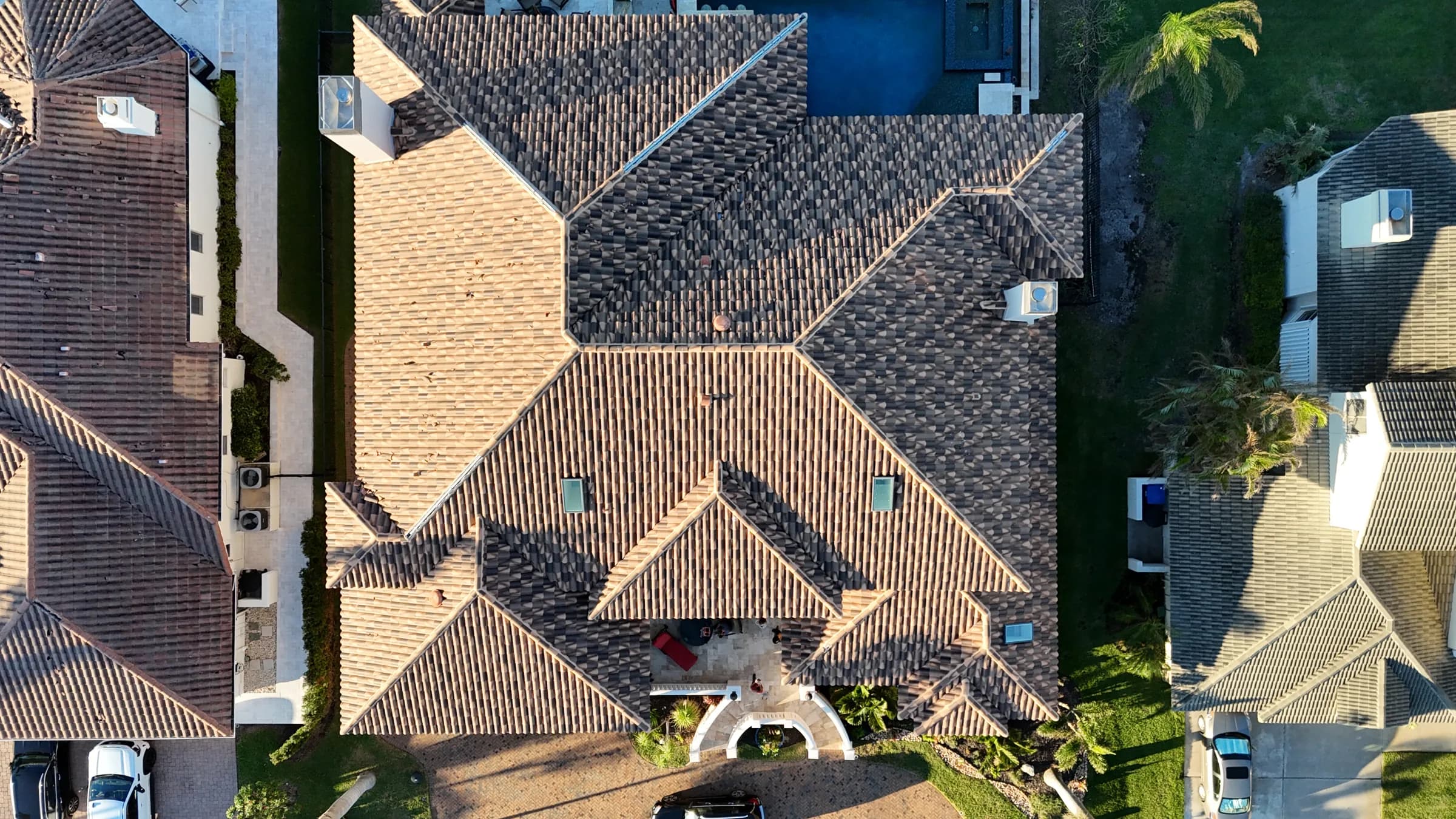
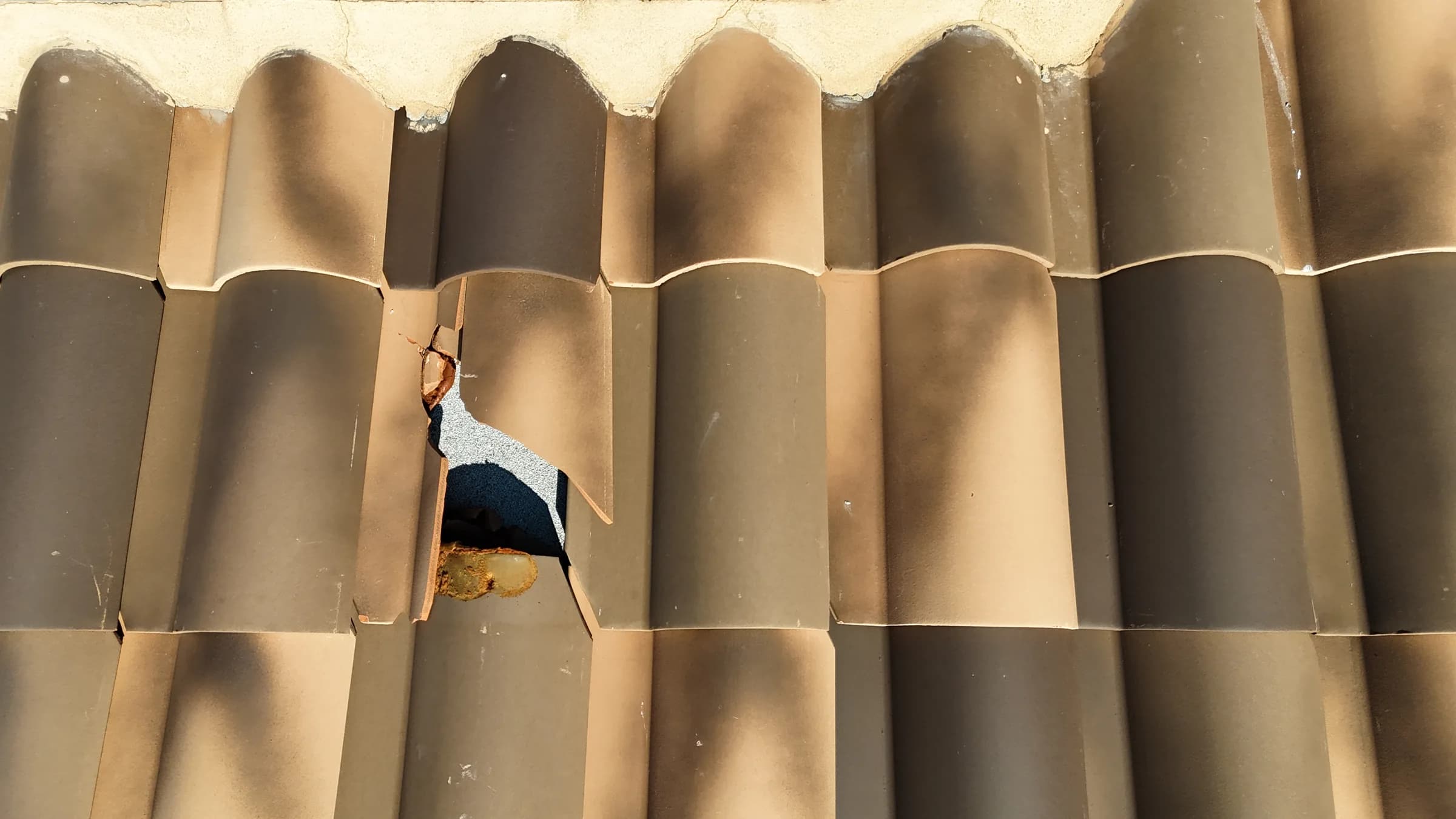
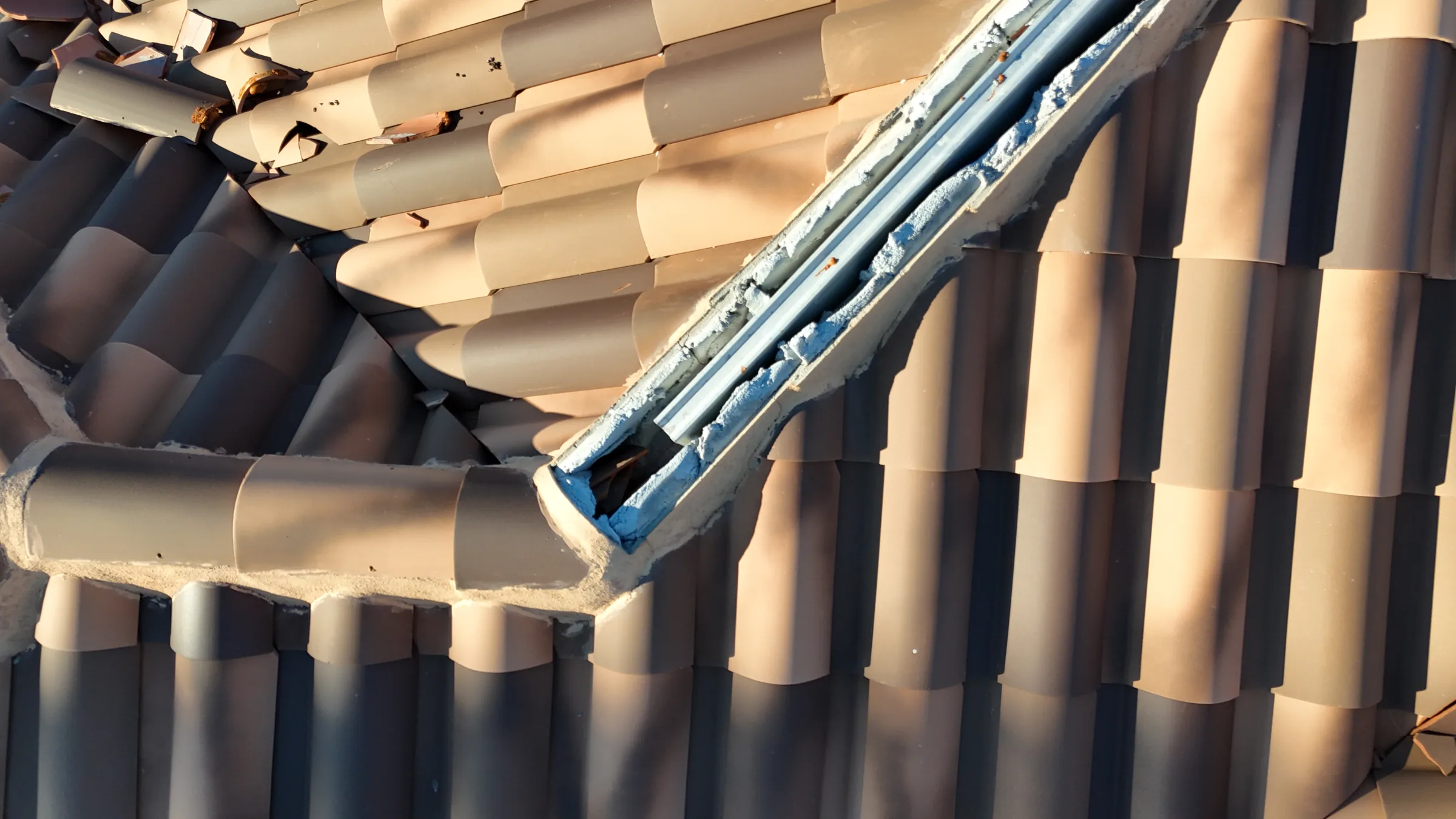
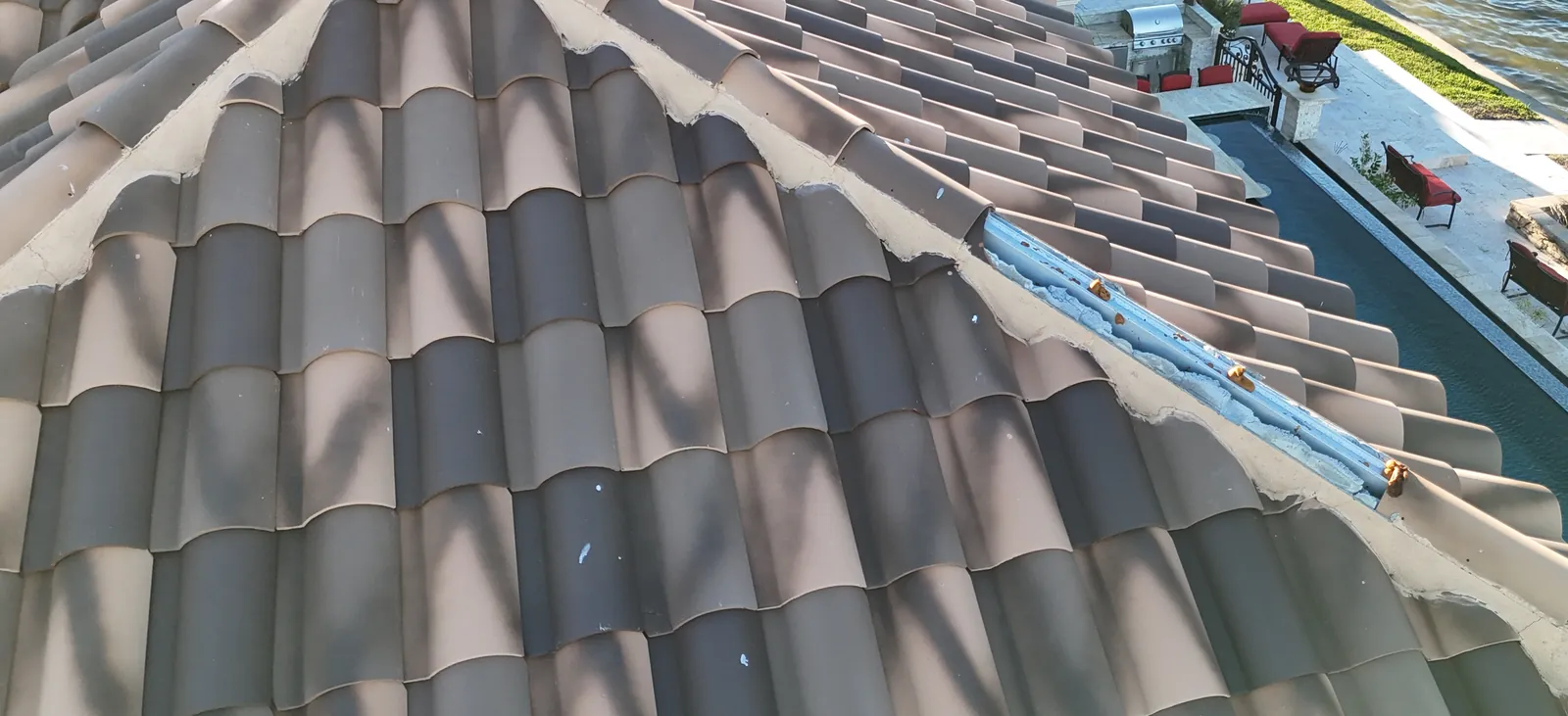
Tile · St. Petersburg, FL
1 / 8
St. Petersburg, FL
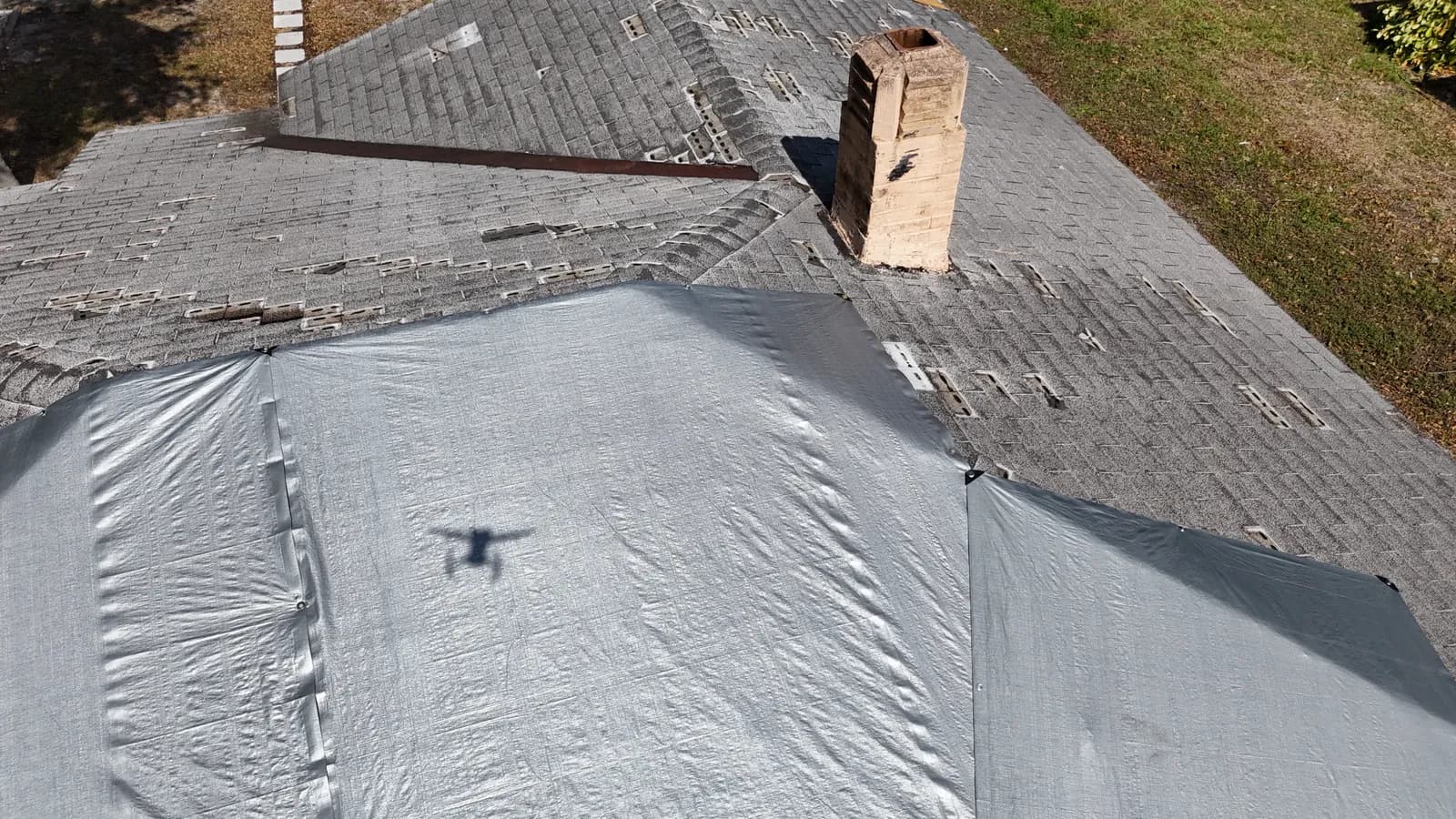
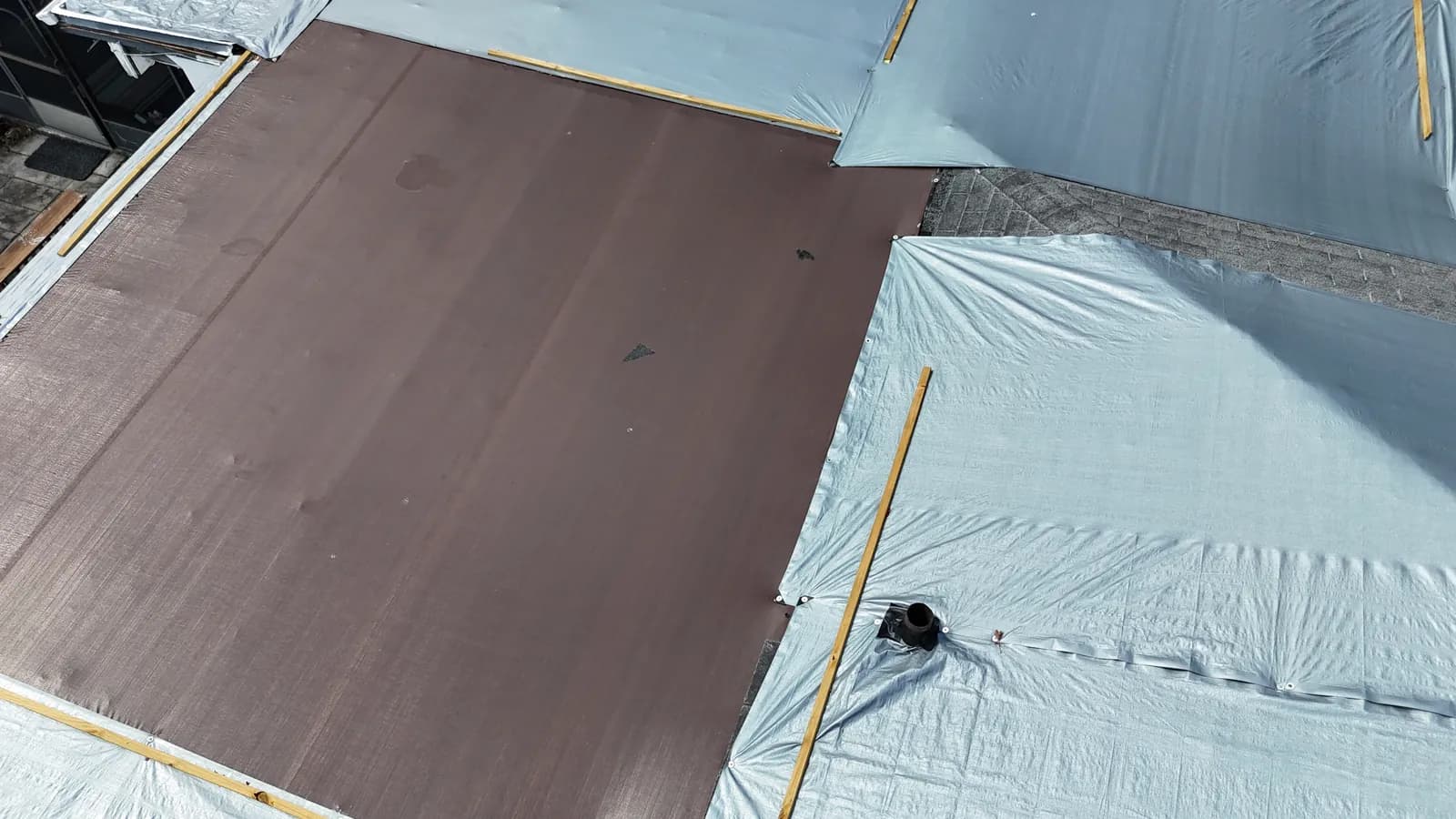
The existing clay tile roof, documented from above before replacement.
Shingles · St. Petersburg, FL
1 / 8
St. Petersburg, FL
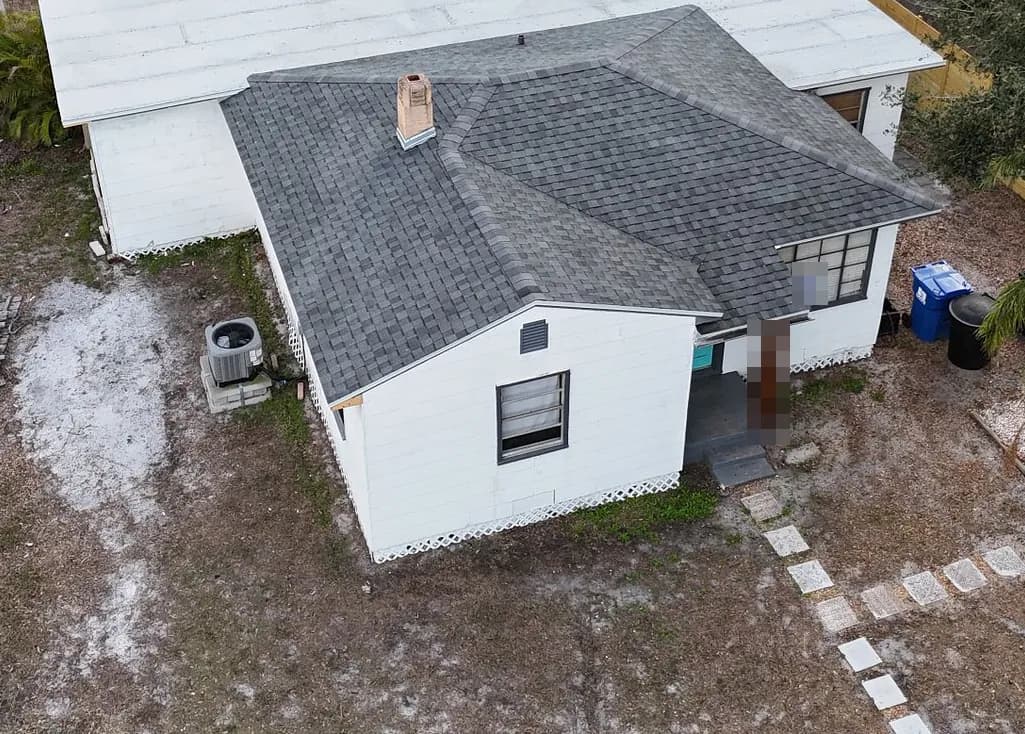
Completion aerial, February 13, 2025. The house number on the porch post is blurred.
FAQ
For property managers, associations, and building owners
The Storm Response Playbook covers the first 2 hours through day 30: documentation, mitigation, vendor verification, and the records that survive the season. Free, with a printable toolkit of eight working documents. Use it whether or not you ever call us.
Tampa Bay
Tell us what is happening with the roof and where the property is. A K. Simon Construction inspection produces a dated, written record with photographs tied to findings, whether the next step is a repair, a replacement, or nothing at all this year.