
Shingles · St. Petersburg, FL
1 / 8
St. Petersburg, FL
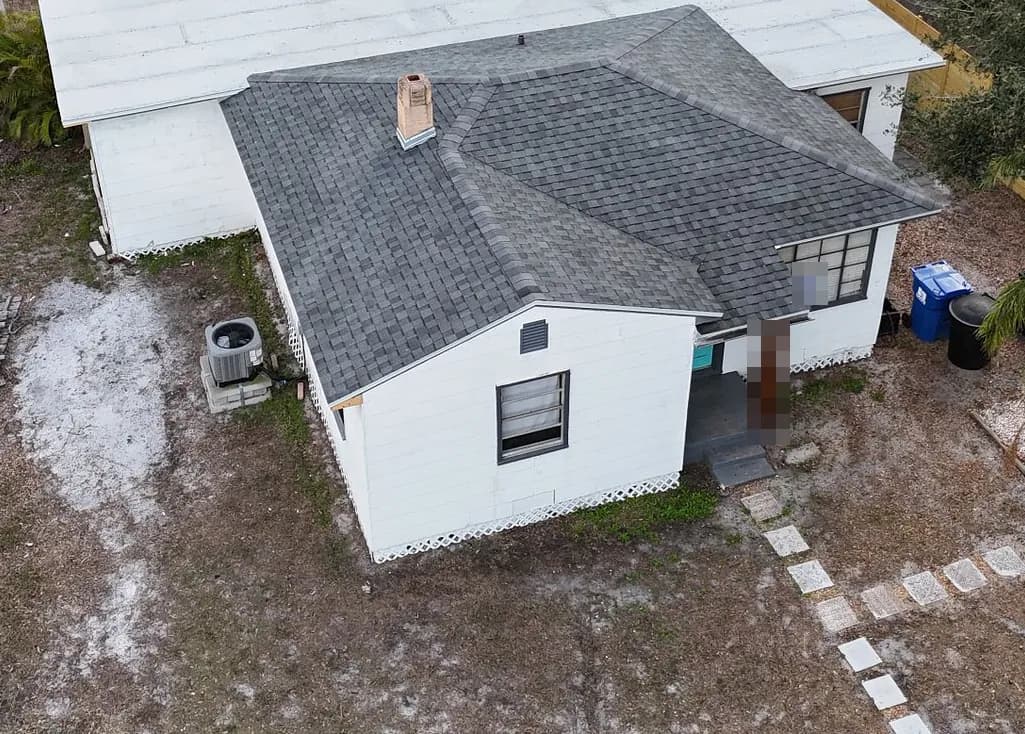
Shingle roof replacement after hurricane winds
Completion aerial, February 13, 2025. The house number on the porch post is blurred.
Florida code and permits, plainly
The 25 percent rule, the 2022 carve-out for newer roofs, permits, what a reroof must include, and how to verify a license.
Reviewed August 20, 2026. General information, not legal or insurance advice; code determinations belong to your local building official.
The 25 percent rule comes from the Florida Building Code's Existing Building provisions (section 706.1.1): when more than 25 percent of a roof or roof section is repaired, replaced, or recovered within a 12-month period, the code can require the entire roofing system or section to be brought up to current code. Whether a particular job crosses that line is the local building official's determination.
The rule exists so a roof cannot be rebuilt piecemeal to an outdated standard. In practice it matters most after storms, when a badly damaged section can pull the whole roof into a full code-compliant replacement. Two boundaries are worth knowing. First, the Florida Building Commission has addressed tie-in work in its declaratory statements, holding that removing and reinstalling undamaged material solely to tie a repair into the rest of the roof does not count toward the 25 percent threshold. Second, a 2022 law created a major carve-out for newer roofs, covered in the next question.
Source: Florida Building Code, Existing Building 706.1.1 (Florida Building Commission, floridabuilding.org). The threshold call belongs to your local building department, not to any contractor, including us.
Often not, and the building official decides. Under Fla. Stat. 553.844(5), enacted in May 2022, if the existing roof was built, repaired, or replaced in compliance with the 2007 Florida Building Code or any later edition, only the portion being worked on must meet current code, even when more than 25 percent of the roof is involved. Roofs that predate the 2007 code still fall under the full rule.
This was the roofing centerpiece of Senate Bill 4-D, passed in a 2022 special session, and it remains unchanged in the 2026 statutes. The proof that a roof qualifies is its permit history: the permit shows which code edition the roof was built or reroofed under, which is one more reason permitted work protects the property long after the crew leaves. The building official applies the statute; bring the permit record rather than an assumption.
Source: Fla. Stat. 553.844(5) (flsenate.gov).
Yes. Fla. Stat. 553.79 makes it unlawful to construct, alter, modify, or repair a building without first obtaining a permit from the local building department, and a roof replacement falls squarely inside that. Permitting is administered locally, so how small a repair can be before it needs a permit varies by county, but a full reroof is permitted work everywhere in Florida.
A permit is not friction; it is the property's proof. The permit record and passed inspections are what a building can show at sale, at refinance, and at the next insurance conversation, and they are how a future owner proves which code edition the roof was built under. A contractor who suggests skipping the permit on work that requires one is creating a documentation gap the property inherits; the storm response playbook treats that as a standing red flag. The roofing contractor normally pulls the permit; an owner being asked to pull their own permit for contracted work deserves a hard question about why.
One recent change worth knowing: effective July 1, 2026, Fla. Stat. 553.79(1)(g) requires local governments to exempt work valued at less than $7,500 on a single-family dwelling from the permit requirement, which can cover small repairs. A full roof replacement will virtually always exceed that figure, so the permit answer for a reroof does not change.
Source: Fla. Stat. 553.79 (flsenate.gov). Check your county's building department for how it applies the thresholds.
For site-built single-family homes, yes: Fla. Stat. 553.844 requires a roof replacement to incorporate Florida's hurricane mitigation techniques, including a secondary water barrier and improved roof-deck attachment. Both should be visible on the permit documents for the job, and both exist for the same reason: keeping wind-driven water out after the covering takes damage.
A secondary water barrier seals the roof deck itself, so that if a storm strips shingles or tile, the deck still sheds water instead of letting it into the living space. Stronger deck attachment resists the uplift that removes the covering in the first place. These are separate from roof-to-wall connection upgrades, which carry their own cost-limited rules in the statute; a contractor quoting reroof work should be able to walk you through exactly which mitigation items apply to your house and where they appear in the scope.
Source: Fla. Stat. 553.844(2)-(3) (flsenate.gov). Wind mitigation features can also matter to insurance premiums, which is a question for the insurance side of this library.
No. The Florida Building Code's High-Velocity Hurricane Zone covers Miami-Dade and Broward counties only, so Tampa Bay homes are outside it. Tampa roofs are still governed by Florida's statewide wind-load requirements, which the code sets using the ASCE 7 engineering standard and wind-speed maps specific to each site, under the 8th Edition (2023) Florida Building Code currently in force.
The practical difference: products marketed as "Miami-Dade approved" meet the strictest zone's testing, which is fine anywhere, but a Tampa roof does not require HVHZ-specific approvals. What it requires is materials and attachment rated for the design wind pressures of that address, which the permit drawings and product approvals document. Peninsula wind speeds have been stable across recent code editions, so a roof permitted under the current code reflects the same wind maps that have governed for years.
Sources: Florida Building Commission (floridabuilding.org) and the state's uniform wind mitigation form, which defines the HVHZ as Miami-Dade and Broward.
For a roof replacement, yes, in both counties. Small repairs are the gray area: Florida law now requires local governments to exempt work valued under $7,500 on a single-family dwelling from permitting, effective July 1, 2026, so minor repair jobs may fall outside the requirement. The county building department's current guidance is the authority for any specific job; Pinellas, for example, requires in-progress inspections and mitigation affidavits on reroof permits.
Because county pages and the new statewide exemption are still settling against each other, the reliable move is the boring one: check the county building department's current guidance for the specific job, or use a contractor who pulls the permit and can show you the county's requirement in writing. The documentation logic from the permit question above applies double here: on reroofs, Pinellas's in-progress inspection exists precisely so deck nailing and underlayment are verified before they disappear under the covering.
Sources: Fla. Stat. 553.79 (flsenate.gov), Pinellas County roofing inspection policies (pinellas.gov), and your county's building department.
Look the license up yourself on the Florida DBPR licensee search at myfloridalicense.com. Confirm the license is current, that the class covers roofing, and, critically, that the license qualifies the exact business entity named on your contract, not just an individual with a similar name. Florida construction businesses must be qualified by a licensed individual, and the search shows both.
The entity check is the one people miss. A license that belongs to a person does not automatically cover every company that person is associated with; the DBPR record shows which business the license qualifies. Pair the lookup with a certificate of insurance, real references, and the rest of the five vendor checks in the storm response playbook. For the record, our own licenses are published on the company page and can be checked the same way; any legitimate Florida contractor will invite the lookup rather than dodge it.
From the job files
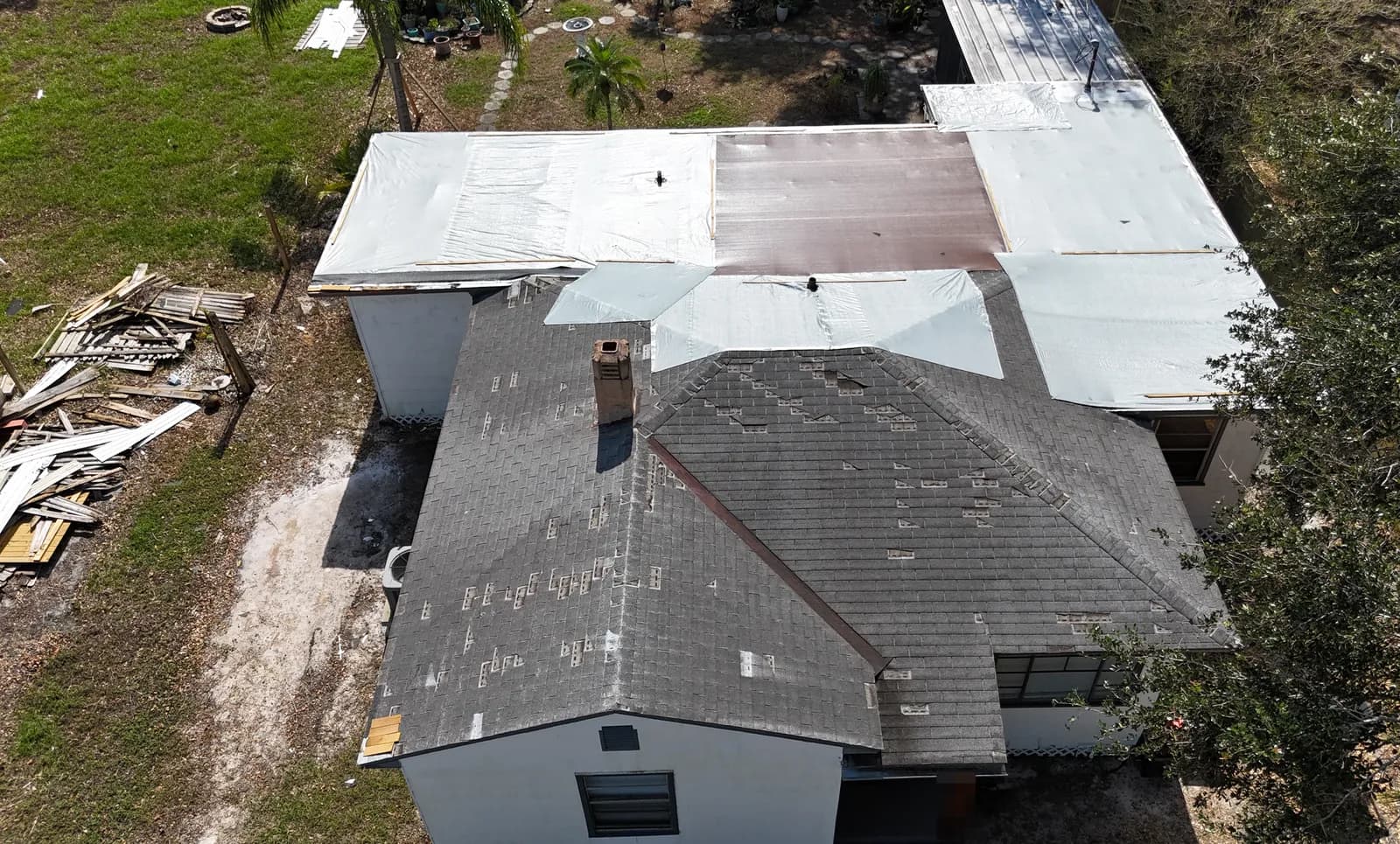
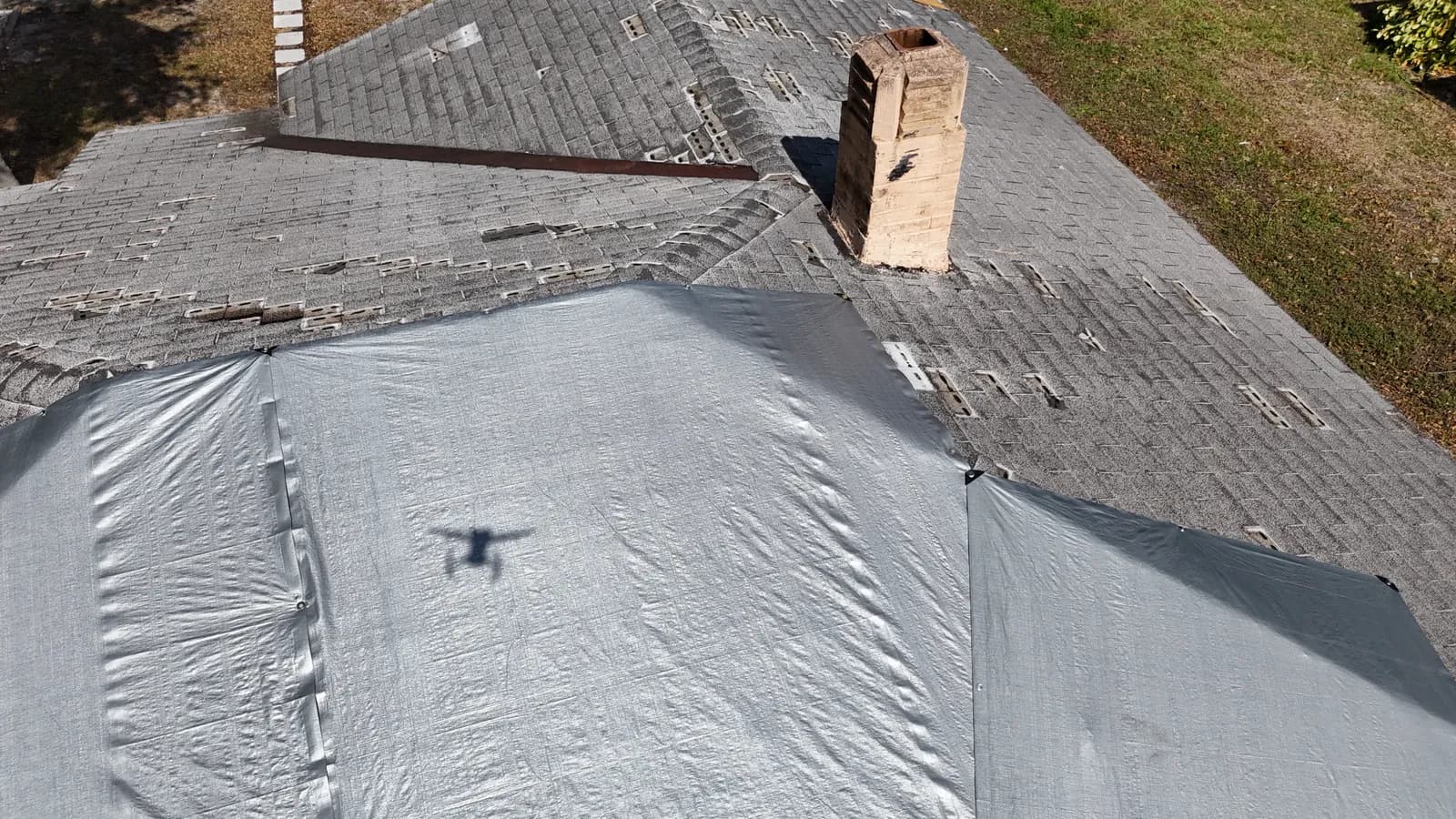
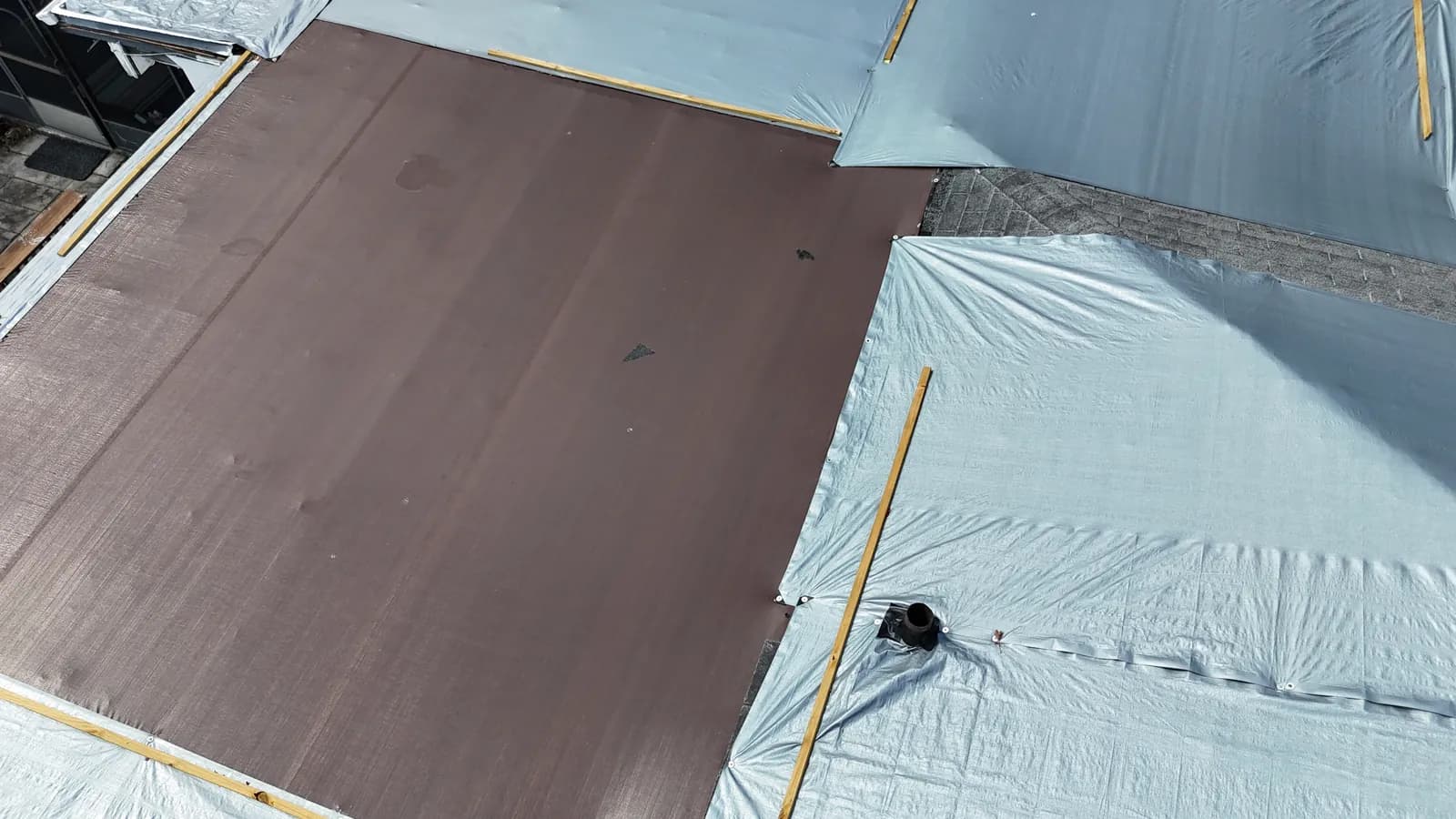
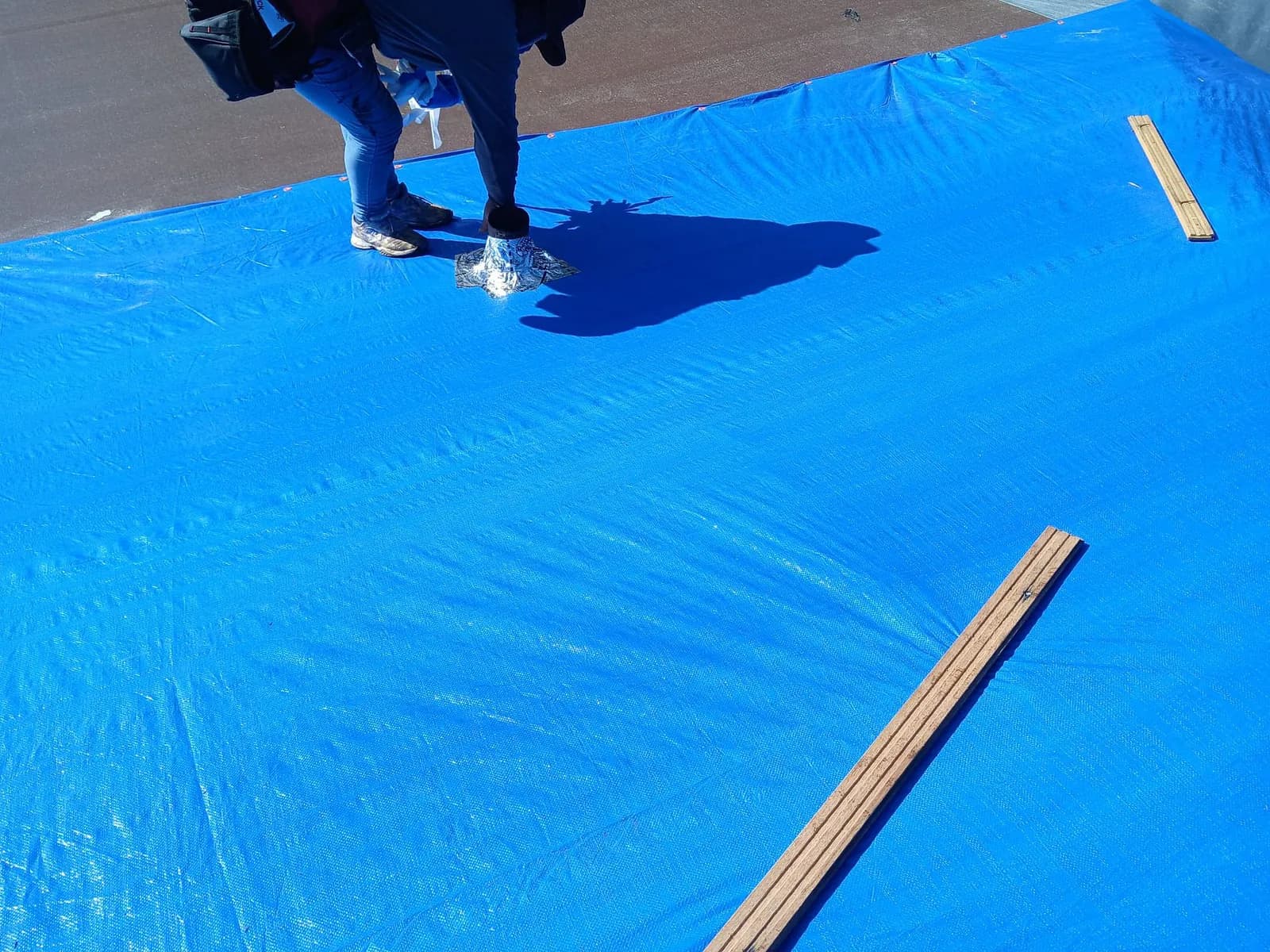
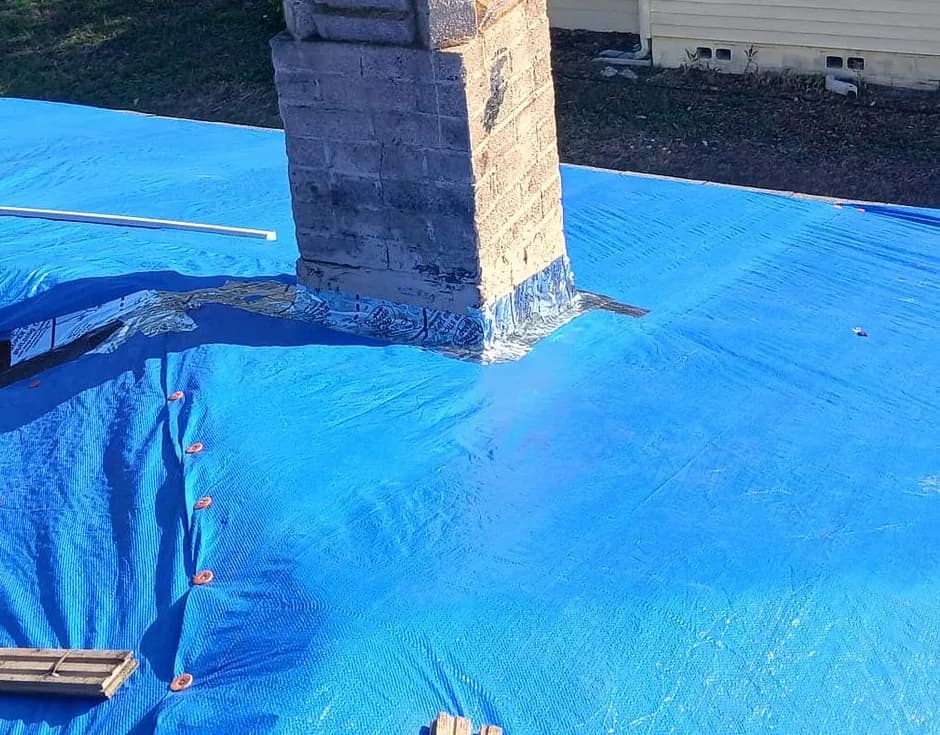
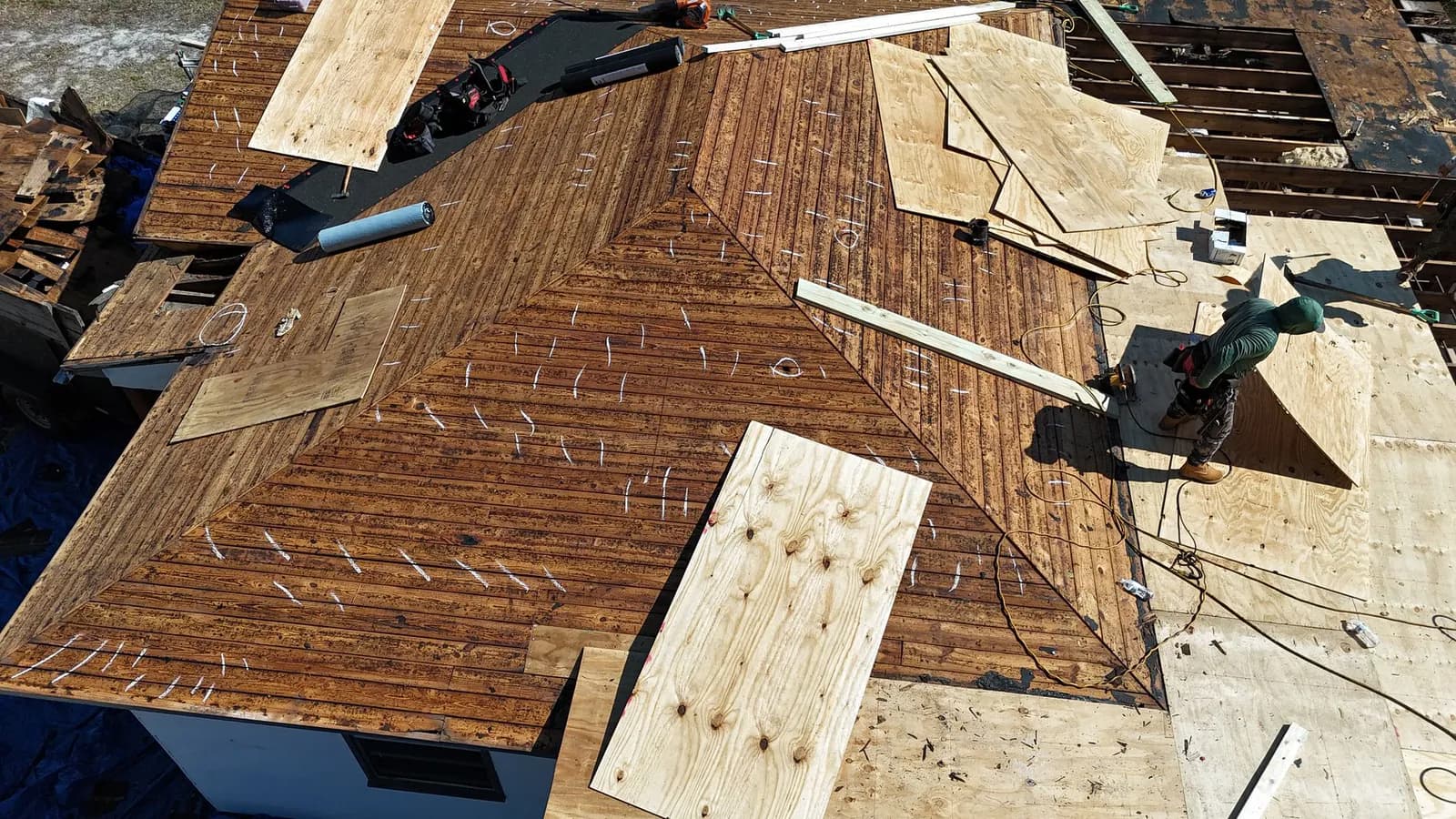
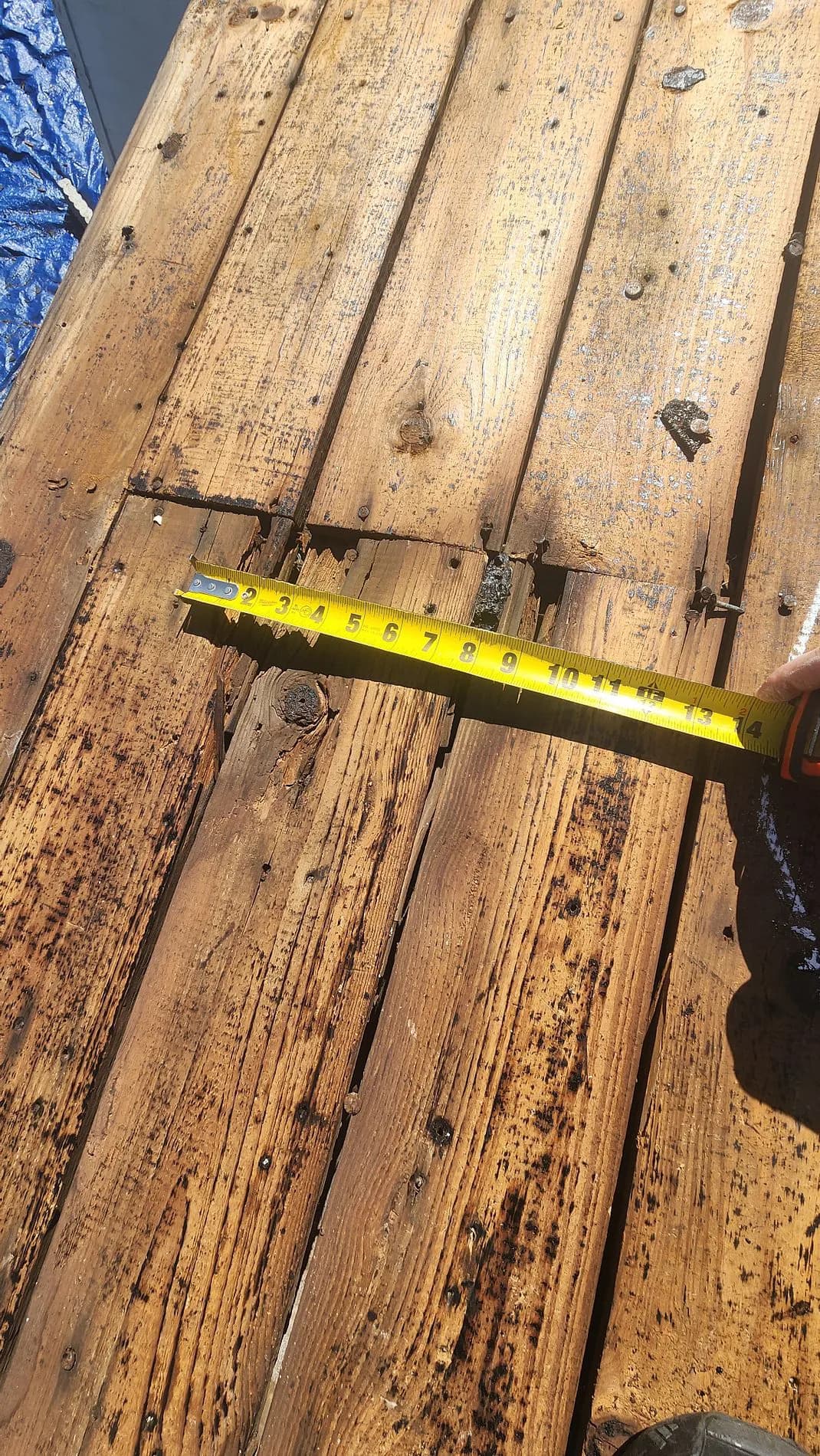
A St. Petersburg replacement carried through permit, in-progress inspection, and final, photographed at each step.
Shingles · St. Petersburg, FL
1 / 8
St. Petersburg, FL
Completion aerial, February 13, 2025. The house number on the porch post is blurred.
Keep going
The storm response playbook carries the full vendor verification and documentation framework; the glossary defines every term these answers use.
When the question is about your roof
A documented inspection answers the questions this page cannot: what shape this roof is in, what the options are, and what the record should say. K. Simon Construction publishes its licenses and invites the lookup.