
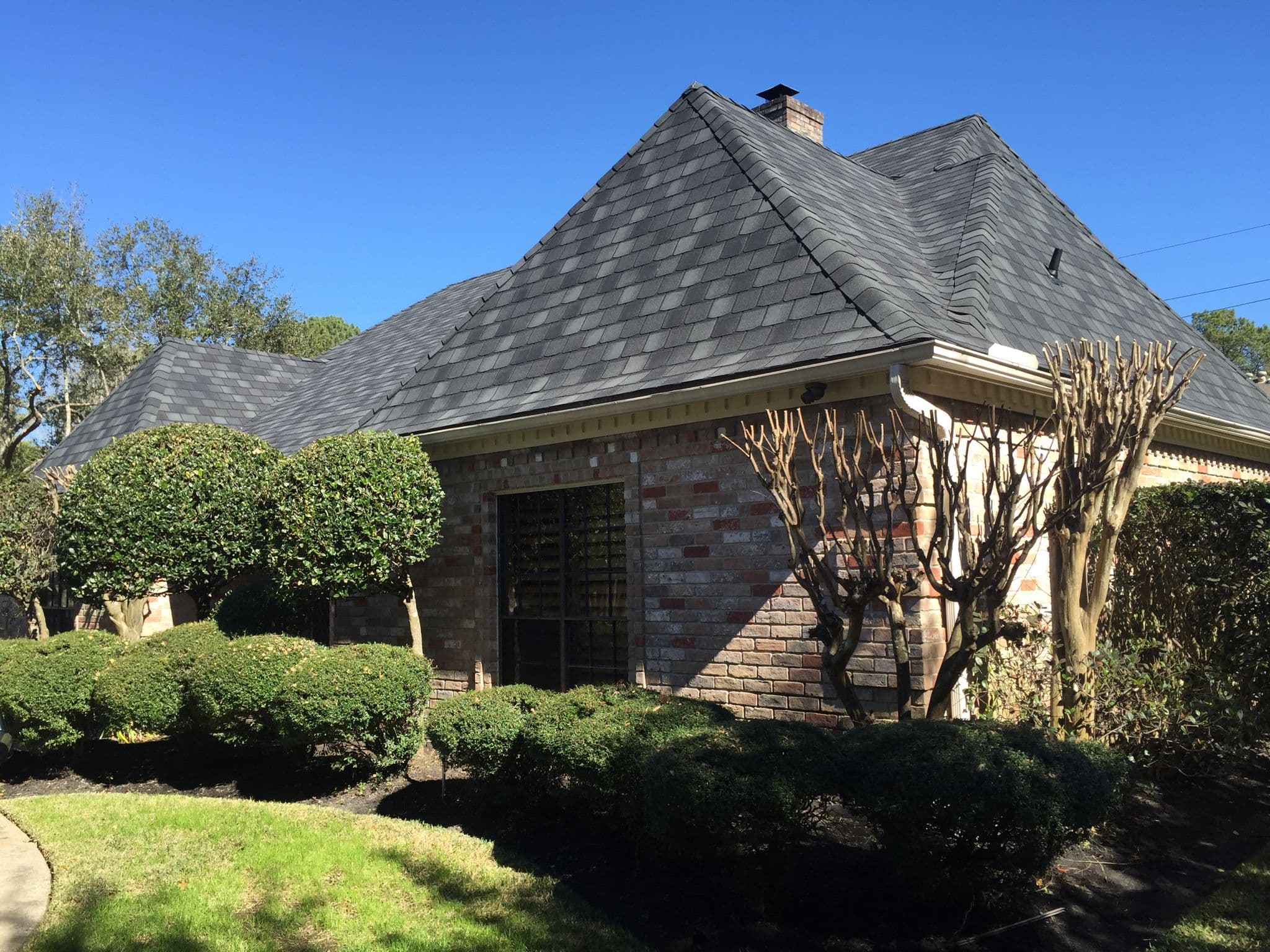
Residential roofing
Residential roofing planned around the complete roof assembly
The material you can see is one layer of a roof. Underneath it sit the deck, underlayment, flashing, and ventilation that decide whether the house stays dry, and repairs that ignore them tend to come back. K. Simon starts every residential project with a photo-documented inspection of the complete assembly, then recommends the least work that solves the problem.
Problem recognition
What the roof is telling you
Every one of these can be checked from the ground or from inside the house. None of them requires you to get on the roof. Working at height is our job, not yours.
A stain on the ceiling
Water travels along framing before it shows, so the stain is rarely under the entry point. It marks a roof that needs tracing, not guessing.Granules in the gutters
Some granule loss is normal on newer shingles. A steady accumulation on an older roof means the surface protecting the asphalt is wearing away.Shingles missing or lifted
Visible from the ground after wind. Even when the shingle looks re-seated, the seal strip and fasteners underneath may not have survived.Trouble at the flashings
Chimneys, valleys, skylights, and wall junctions are where most leaks start. Gaps, rust, or lifted metal there matter more than the field of the roof.A sagging roofline
A dip in the ridge or plane can point to deck or structural issues. Worth a qualified look sooner rather than later; from the ground, it is only a clue.An attic that tells on the roof
Daylight at penetrations, damp insulation, or matted, darkened sheathing are assembly problems you can check without ever touching a ladder.
Seeing one of these does not automatically mean a big project. It means the roof has earned a documented inspection. If the damage followed hail or a wind event, the storm restoration process covers how that evidence gets captured.
Decision framework
Repair, replace, or leave it alone
The answer comes from the inspection, not from what a contractor would prefer to sell. These are the factors that move the decision.
| Factor | Repair usually fits | Replacement earns a look |
|---|---|---|
| Extent of damage | Localized: one slope, one flashing, a handful of shingles. | Widespread wear or damage across multiple slopes. |
| Leak history | First occurrence with a traceable source. | Repeat leaks in different places: the assembly is failing, not a spot. |
| What's underneath | Deck and underlayment sound where opened. | Brittle or failed underlayment, soft deck, chronic attic moisture. |
| Material matching | Matching or acceptably close material is available. | Product discontinued, or patchwork would compromise the roof. |
| Your horizon | Short remaining ownership, roof otherwise serviceable. | Long ownership ahead, where repeated repairs cost more than they save. |
Sometimes the honest recommendation is neither: document the condition, fix nothing, and re-check on a schedule. If a report calls everything urgent, treat the report as the problem.
Visible accountability
What every residential project puts on paper
Condition evidence
Every project starts with a photo-documented inspection of the complete assembly, not a glance from the curb.
Scope logic
The recommendation is the least work that solves the problem, with the evidence beside it and every option that fits.
Protection plan
Landscaping, driveway, and anything under the eaves protected while the crew works the approved scope.
Closeout record
Photos of the finished assembly, the as-built scope, and the documentation for the installed system.
The process
How a residential project runs
Six steps, each ending with something in your hands. No step gets skipped because the job is small.
Inspection
A qualified inspector documents the roof surface, flashings, penetrations, drainage, and, where accessible, the attic and ventilation.
You receive: A written, photo-backed condition report.
Findings and options
We walk you through what was found, separated into urgent items, maintenance items, and normal aging, with every option that fits.
You receive: A recommendation you can question, with the evidence beside it.
Scope and proposal
The selected option becomes a written scope: materials, assembly components, site protection, and what happens if hidden conditions appear.
You receive: A line-item proposal, not a single mystery number.
Build
The crew works the approved scope with the property protected: landscaping, driveway, and anything under the eaves.
You receive: Progress communication you do not have to chase.
Verify and clean up
The work is checked against the scope, the site is cleared of debris and fasteners, and anything that changed is documented.
You receive: A roof that matches the paperwork.
Closeout
The record is handed over: photos of the finished assembly, the as-built scope, and the documentation that applies to the installed system.
You receive: A closeout package worth keeping with the house documents.
Choose the work
Start where your roof is
Roof inspection
A photo-documented condition assessment that separates urgent problems from maintenance items and normal aging, in writing.
See what the inspection coversRoof repair
Leak diagnosis and targeted repair that fixes the source in the assembly, not the symptom on the ceiling.
See how repairs are diagnosedRoof replacement
A transparent replacement plan covering deck, underlayment, ventilation, flashing, cleanup, and closeout, not just shingles.
See the replacement plan
Materials
The system question comes after the condition question
Asphalt, impact-resistant shingles, metal, tile, slate, synthetic slate: each earns its place on the right house. What fits yours depends on slope, climate, structure, budget, and how long you plan to own it.
Steep-slope
Architectural shingles
The most common steep-slope system, with broad aesthetic and performance options.
Explore system
Long-life system
Standing seam metal
Crisp architectural lines with concealed fasteners and system-specific detailing.
Explore system
Multi-ply protection
Modified bitumen
Layered protection with multiple installation methods and robust transition detailing.
Explore system
FAQ
Residential roofing questions
Do I need an inspection before you can quote anything?
Yes, and you should want that from any contractor. A price quoted without documented condition is a guess, and guesses get corrected mid-project at your expense. The inspection produces a written report, and the proposal is built from it.
Will you push a replacement when a repair would do?
The recommendation is the least work that solves the problem; that is the standing rule. When a repair fits, the report says so, along with what to watch that could change the answer later.
How do I know if the damage is storm-related?
From the ground, you usually can’t: hail bruising and wind-broken seals are assembly-level findings. What you can do is note the date of the event and avoid letting anyone do cosmetic patching before the condition is documented. The storm restoration page explains how that evidence is captured.
Which roofing material is the best?
None of them, in the abstract. Each system wins on a different combination of slope, climate exposure, structure, appearance, maintenance appetite, and ownership horizon. The roof systems comparisons lay out the tradeoffs; the inspection tells you which ones your house can support.
What should I have ready before the first visit?
Whatever exists: the roof’s approximate age, any leak history, photos of interior stains, and prior repair records. None of it is required (the inspection stands on its own), but history shortens the diagnosis.

Start with the building
Get the roof looked at properly
One documented inspection replaces every guess in this decision. Request it online, or call and talk it through first.