St. Petersburg · Pinellas County · roof repair

Roof repair in St. Petersburg

St. Pete's median housing unit dates to 1969, which makes repair the everyday question here: when it is the honest call, when it is postponing the inevitable, and how the code treats the difference.

The short answer

A St. Petersburg roof repair starts with an honest diagnosis, not a patch: the leak's source is rarely where the stain is, and on a housing stock whose median unit dates to 1969, the real question is whether this roof has a repair left in it. A documented inspection answers that with photographs tied to findings; the repair-restore-or-replace framework turns the findings into a decision you can check rather than take on faith.

The roof population here

Repair lives differently in a 1969-median city

By the Census Bureau's published counts, St. Petersburg's median housing unit was built in 1969 and roughly seven in ten units predate 1980. That shapes everything about repair work: decks that have carried multiple coverings, bungalow-era framing details, local historic designation on some streets, and a meaningful share of roofs that predate the 2007 Florida Building Code, which matters because the 2022 carve-out to the 25 percent rule only reaches roofs built to that code or later. Pinellas County adopts a single countywide ultimate design wind speed of 145 mph for ordinary buildings, so repaired sections are specified against the same number the whole county builds to.

Repair, restore, or replace

When repair is the honest call

Repair solves a local problem on a roof with life left: storm-lifted shingles on one slope, a failed flashing detail, a penetration that opened. It is the wrong call when the covering is at end of life across the field, when the deck is going soft, or when this is the third patch on the same slope in two seasons. The repair-restore-or-replace guide walks the seven inputs that decide it honestly, and the red flags that a recommendation is bigger, or smaller, than the roof's condition. The code has a view too: repairs that cross 25 percent of a roof section in a year can pull the section to current code, with tie-off work excluded from the count and the building official holding the pen.

The one thing a repair should always produce, on this housing stock especially, is a record: what was found, what was done, photographs of both. A roof with a documented repair history is easier to sell and easier to plan for than a roof with a shoebox of receipts. The maintenance guide carries the between-events routine that catches the next one small.

Factors, not folklore

What decides a repair price in St. Pete

Repairs are diagnosed work, and on pre-1980 decks the diagnosis is half the job; these are the levers an honest repair quote is built from.

  • Finding the actual source. Water travels: the entry point is often upslope of the stain, and chasing it is diagnostic work, which is why the inspection comes first.
  • The detail involved. A field shingle repair, a valley, a chimney flashing, and a flat-roof seam are different jobs at different depths; details are where roofs fail and where repairs live.
  • Matching the existing roof. On older coverings, matching material and profile takes sourcing; where matching is impossible, that fact belongs in the conversation before work, not after.
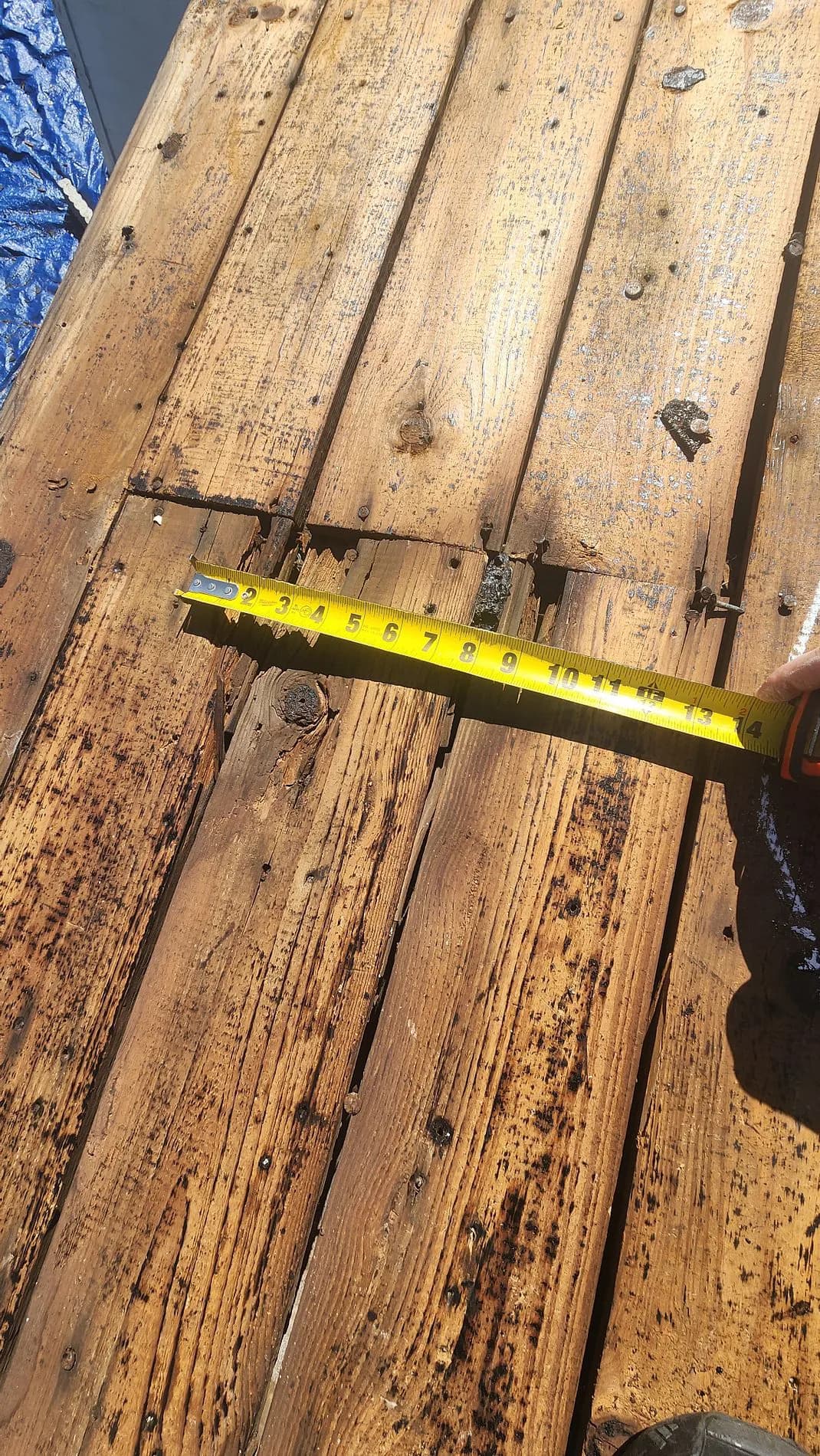
  • Deck condition under the repair. Soft decking found under the opened area must be addressed; it cannot be honestly re-covered.
  • Access and safety setup. Steep, high, or tight-access roofs carry real setup costs on small jobs.
  • Permit posture. Whether the specific repair needs a permit follows the county's current guidance and the job's value; the quote should say which applies and why.

From the job files

What documented storm work looks like here

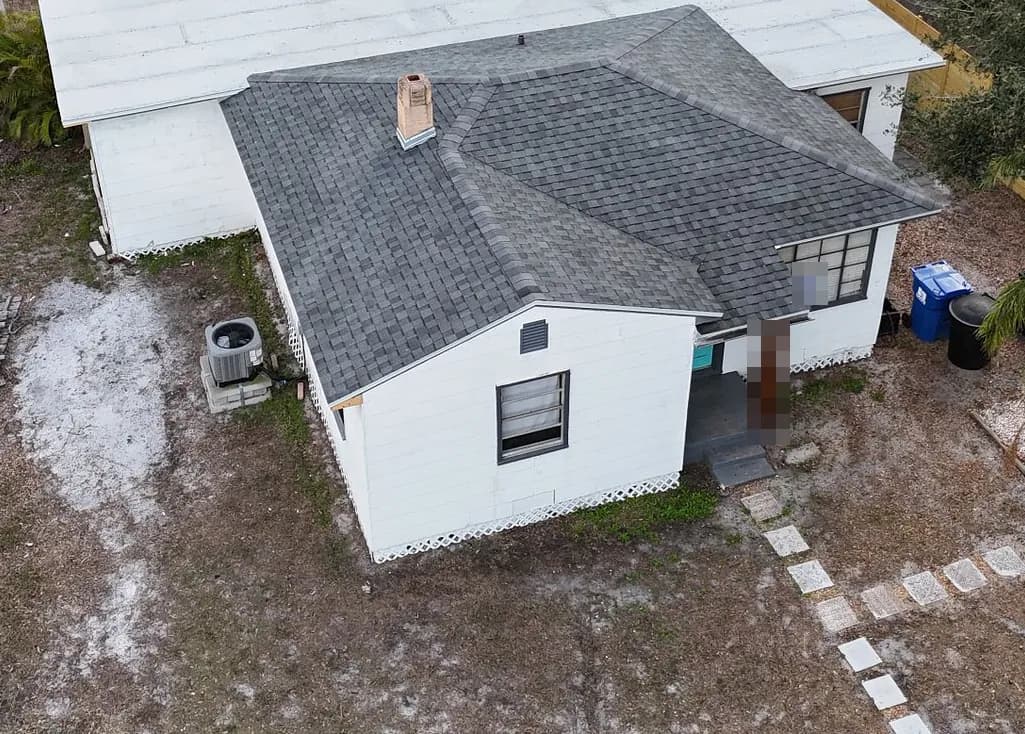
  • Aerial view of a one-story house with a new gray shingle hip roof and a bright white flat roof section behind it
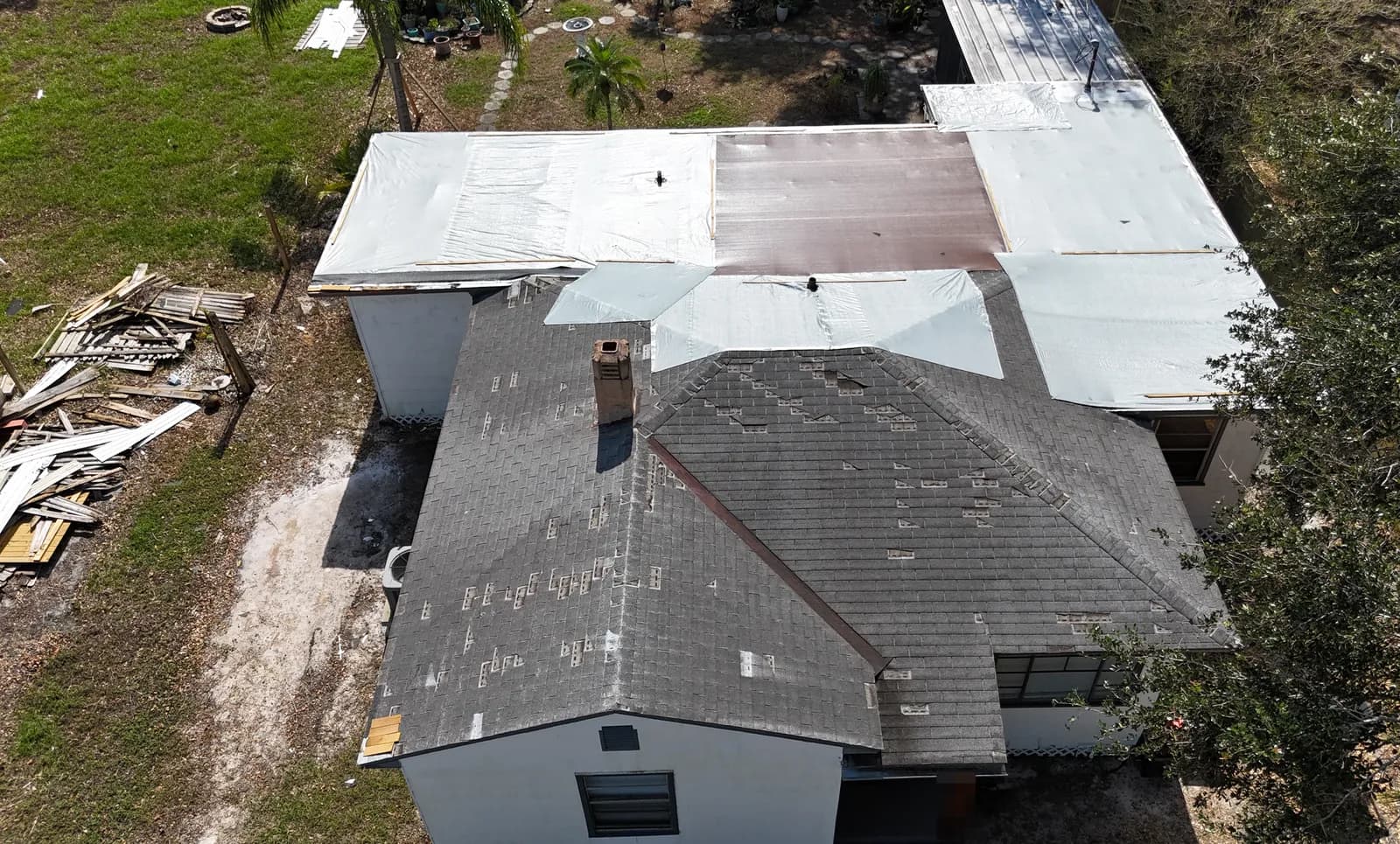
  • Aerial view of a storm-damaged roof with shingles stripped on every slope, the flat section covered in tarps and membrane, and debris piled in the yard
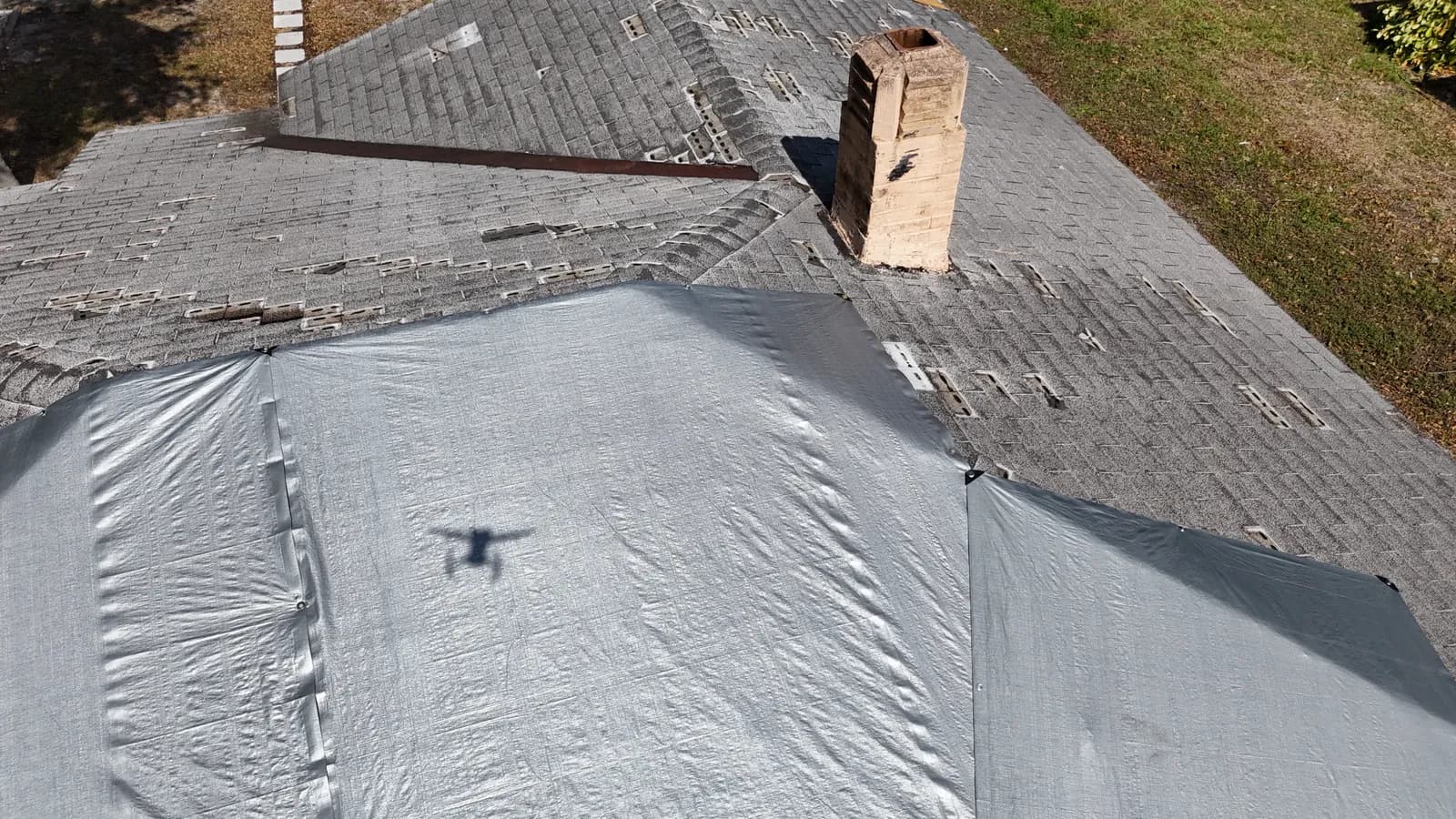
  • Close aerial view of shingle tab loss across a roof, a weathered brick chimney, and a gray tarp covering the lower slope
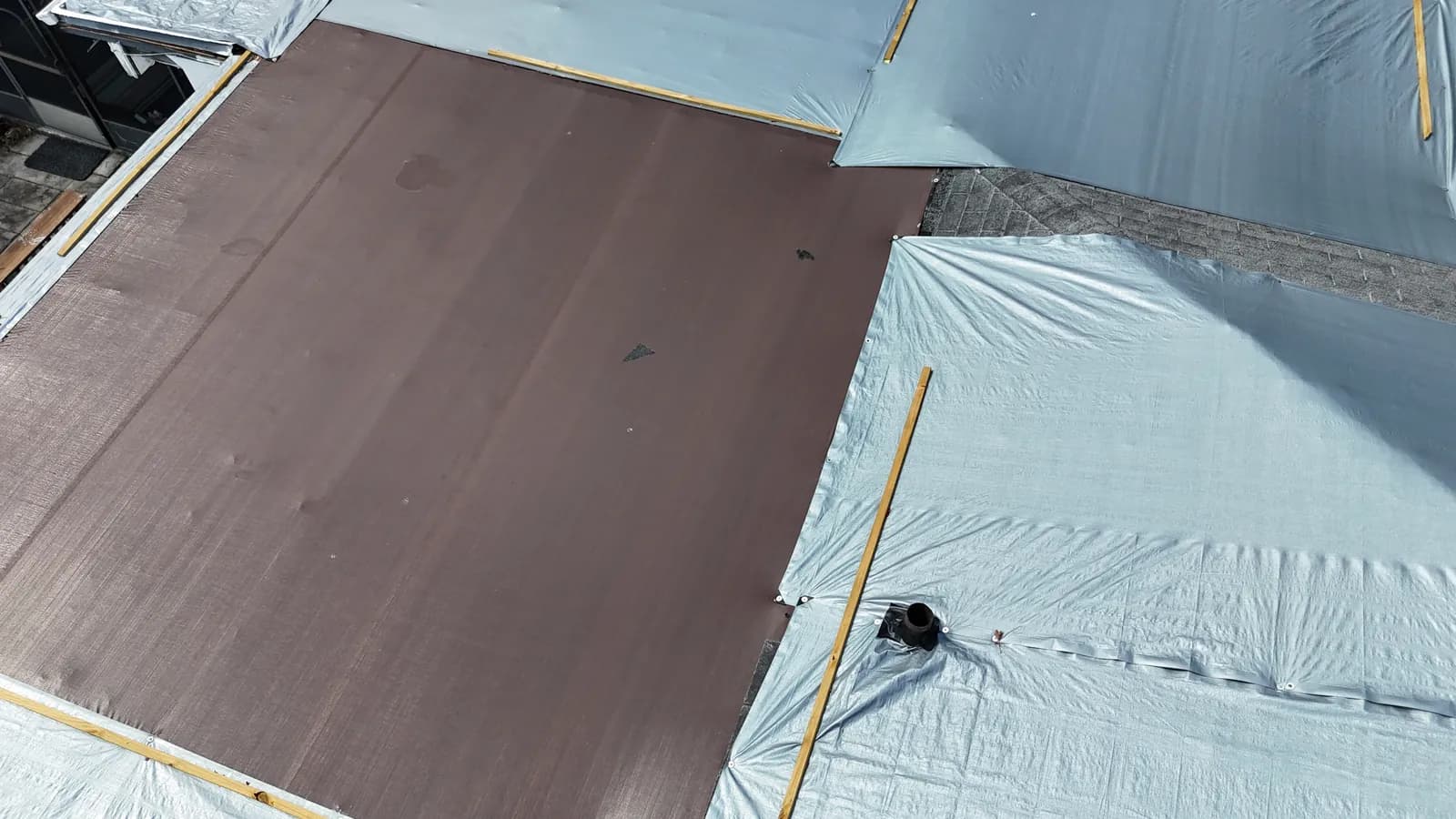
  • Overhead view of a flat roof section covered with brown peel-and-stick membrane, gray tarps, and wood battens
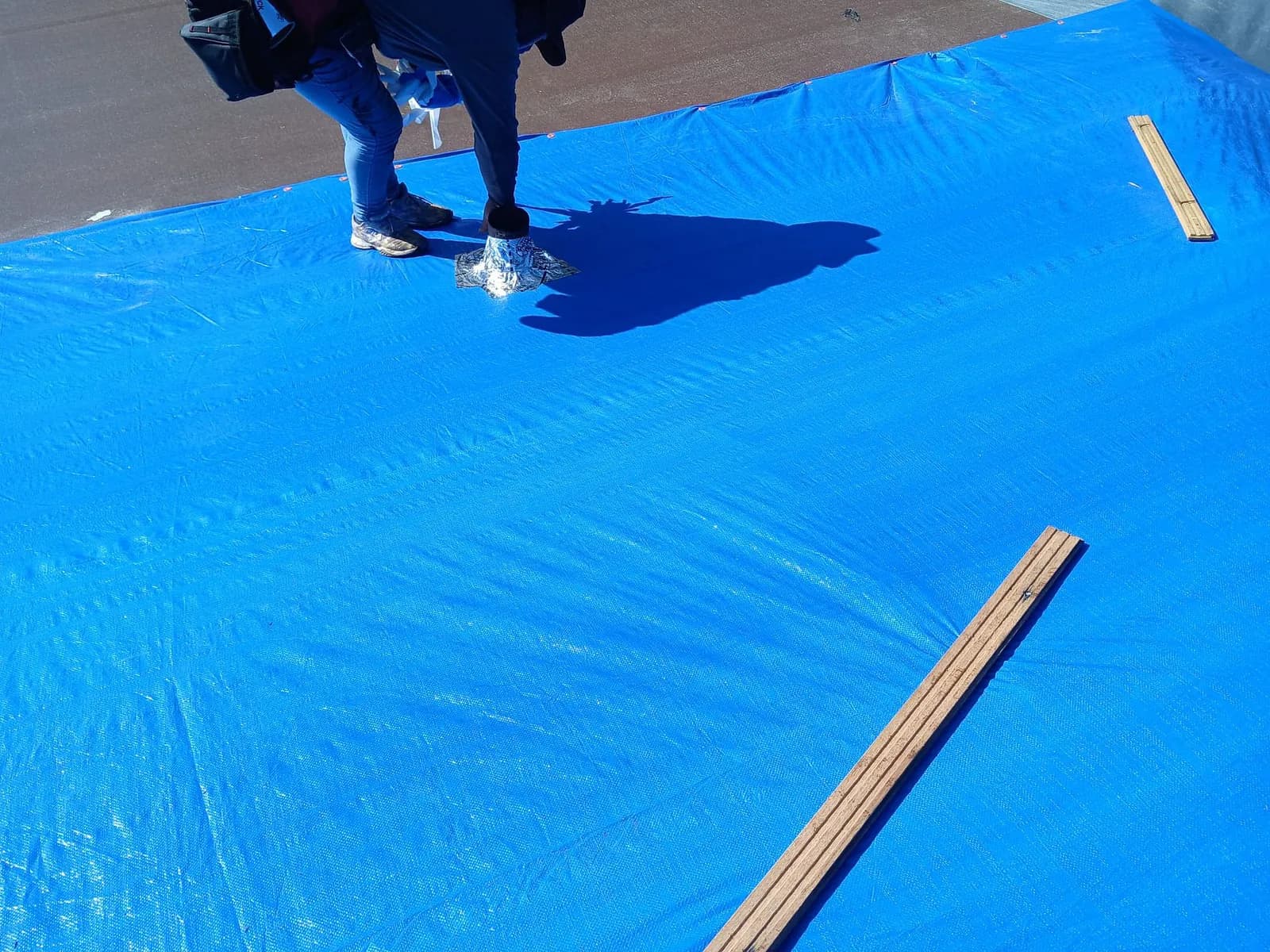
  • Roofer standing on a fresh blue tarp stretched over a roof, with wood battens laid nearby
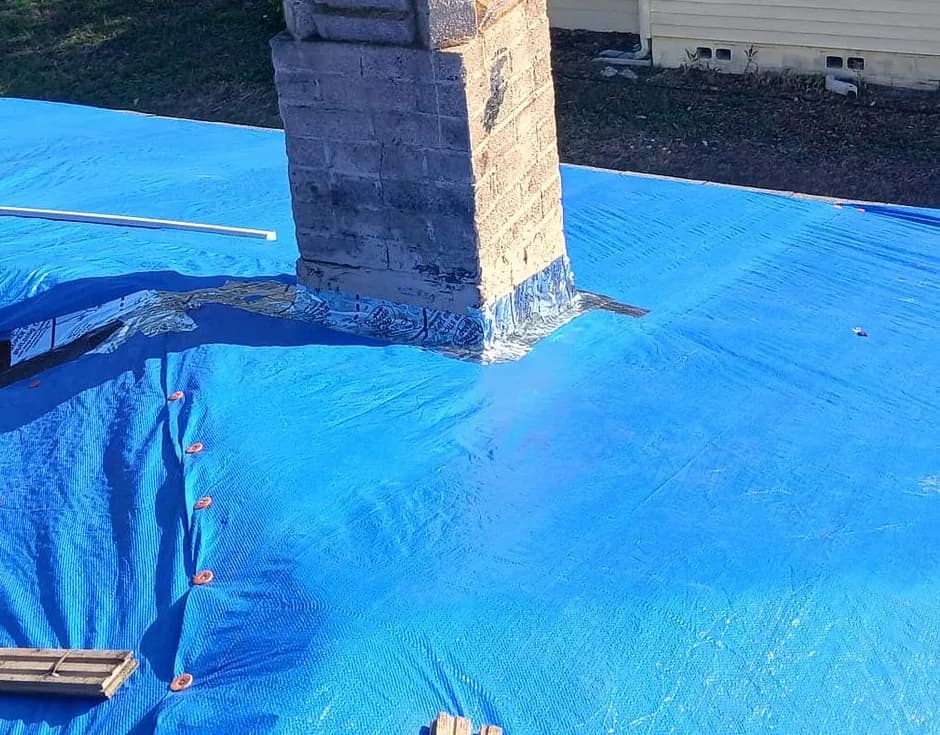
  • Blue tarp over a roof slope with a concrete block chimney wrapped in membrane at its base
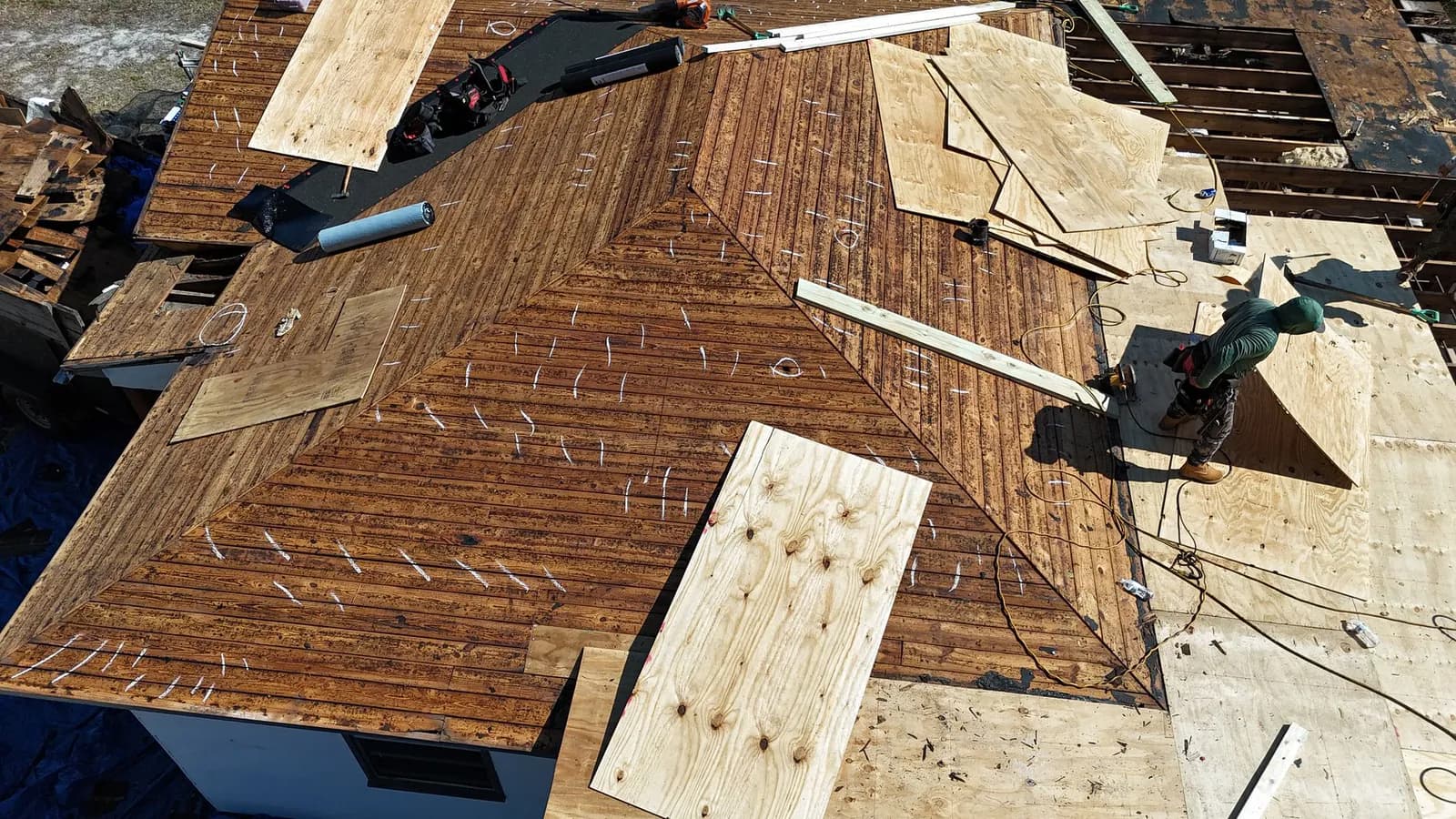
  • Aerial view of a roof mid rebuild, original plank decking exposed with new plywood sheets staged and a crew member working
  • Tape measure laid across old plank roof decking with rot and gaps between boards

Shingles · St. Petersburg, FL

1 / 8

St. Petersburg, FL

Shingle roof replacement after hurricane winds

Completion aerial, February 13, 2025. The house number on the porch post is blurred.

Read the full case study

FAQ

St. Petersburg roof repair questions

My St. Pete roof is leaking right now. What do I do first?
Safety, then documentation, then mitigation: keep people away from sagging ceilings and anything electrical, photograph the interior damage and, from the ground, the roof, then get temporary protection on. Move or cover what the water is reaching. Emergency tarping on anything beyond trivial access is professional work. The emergency page walks the sequence, and documenting before cleanup is what gives the repair conversation a dated record to work from. Documentation is yours to gather; coverage is always the insurer's to decide.
Do I need a permit for a small roof repair in St. Petersburg?
It depends on the size of the job. Florida law now requires local governments to exempt work under $7,500 on a single-family home from permitting, effective July 1, 2026, while Pinellas County's own permitting practice has historically run stricter, so the county or city building department's current guidance is the authority for a specific repair. A full replacement is permitted work regardless. The Florida roof rules page carries the cited version.
Will a repair trigger the 25 percent rule?
Only if more than 25 percent of a roof section is repaired, replaced, or recovered within 12 months, and the Florida Building Commission has held that undamaged material removed and reinstalled solely to tie a repair into the rest of the roof does not count toward the threshold. Roofs built to the 2007 code or later also carry the 2022 carve-out. The building official makes the determination; the rules page walks the mechanics.
My house is in a historic district. Does that change a repair?
It can. St. Petersburg requires a Certificate of Appropriateness before exterior alterations to locally designated properties, with same-materials-and-shape work approved at staff level and material or shape changes going to the commission. National Register listing alone changes nothing for a private owner; it is local designation that triggers review. The city's preservation office is the authority on whether a specific property is locally designated.

St. Petersburg

Get the leak diagnosed, not just covered.

A K. Simon Construction inspection finds the source, documents it with photographs tied to findings, and puts the repair-or-replace answer in writing against the code that governs it. Licenses published, lookup invited.

Call now Inspection