
Assembly
Deck or substrate, insulation, underlayment or membrane layers, attachment, and surfacing, specified as one assembly rather than a product name.
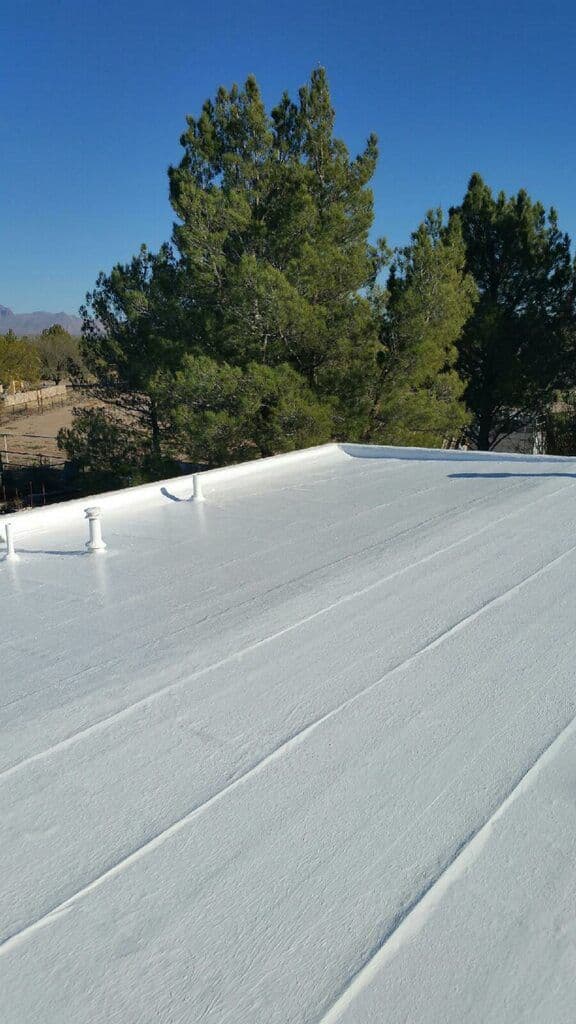
Restoration · Roof system record
A restoration option when the existing assembly is a verified candidate, not a shortcut.
Best-fit context
Moisture investigation, adhesion testing, repairs, reinforcement, and dry-film thickness verification belong in the decision and the closeout record. Coating over a wet or failing assembly hides the problem and voids the benefit.
10-20 years typical industry range, per system and spec
Varies by climate, installation quality, detailing, and maintenance. A range starts the conversation; it is not a guarantee.
Deck or substrate, insulation, underlayment or membrane layers, attachment, and surfacing, specified as one assembly rather than a product name.
The conditions, measurements, and tests that determine whether this system actually fits the building.
Edges, penetrations, drainage, transitions, movement, and material compatibility: where roof performance is decided.
Photos, product records, inspection points, and maintenance guidance, delivered so the owner holds the evidence.
System anatomy
A coating is not paint, and it is not a new roof. It is a system applied over a verified existing roof, and every layer exists to make that restoration hold.
The coating goes over the roof you already have, so that roof has to be a genuine candidate: dry, sound, and confirmed by testing. This is a decision, not an assumption, and it is where most coating failures are actually caused.
Failed seams and flashings are fixed and wet insulation is removed and replaced before any coating is applied. A coating is not a repair, and coating over a problem only hides it, so the repairs come first.
A primer chosen for the specific substrate gives the coating something to bond to. Skipping it, or using the wrong one, is how a coating peels, which is why adhesion is tested on the actual roof beforehand.
Polyester fabric embedded in coating at the seams, penetrations, and transitions bridges the areas that move and work hardest. Reinforcing these details is part of what makes it a system rather than a coat of paint.
The coating chemistry, whether silicone, acrylic, or polyurethane, applied to a specified dry-film thickness measured in mils. That verified thickness, not the number of buckets, is what determines how the coating performs and how long it lasts.
The finished reflective surface can be cleaned and, eventually, recoated to renew the roof again. That renewability is the point of the coating model: a candidate roof restored, then restored again, rather than torn off.
Listed from the existing roof up. A coating is a system, primer, reinforcement, and verified thickness, applied over a roof proven worth restoring.
What it does well
On the right roof, a coating solves real problems that a tear-off would solve more expensively and disruptively.
A coating renews a sound but weathered roof, deferring a full tear-off and the disruption and landfill that come with it. On a candidate roof, it buys years at a fraction of replacement's cost and interruption.
Reflective coatings turn a heat-absorbing roof into a cool one, cutting the cooling load on the building below. In a hot climate that is a genuine operating benefit layered on top of the waterproofing.
Because a coated roof can be cleaned and recoated, the model is renewable: restore the roof, then restore it again down the line. That is a different economic path than replacing a membrane every couple of decades.
Where it fails
Almost every coating failure traces to the same root cause: it was put on a roof that was never a candidate, or put on wrong.
The number-one failure is spraying a coating over a roof that is wet or failing underneath. It seals the problem in, does not fix it, and forfeits the benefit, which is exactly why a moisture survey comes before any coating.
Applied below its specified dry-film thickness, a coating wears out early, and without reinforcement at the seams and details, cracks reopen where the roof moves. Thickness and reinforcement are what separate a system from a paint job.
Skipping the primer or the adhesion test, or applying to a dirty or damp surface, leads to peeling. And the wrong chemistry for a ponding roof degrades in the standing water, which is why the chemistry is matched to the conditions.
Florida climate fit
Florida heat, ponding, and humidity all shape whether a coating is a fit and which chemistry belongs on the roof.
A reflective coating meaningfully reduces the heat a flat roof passes into a Florida building, which is a real operating-cost benefit. UV resistance varies by chemistry, so the product is chosen for the exposure, not just the color.
Ponding is common on Florida low-slope roofs, and some chemistries tolerate standing water far better than others, with silicone often favored where water sits. Matching the chemistry to the roof's real drainage is part of the specification.
Humidity and heavy rain mean wet insulation is common and invisible from the top of the roof, so a moisture survey before coating is not optional here. A coating cannot add wind uplift resistance either; that still comes from attachment, not from the surface.
Maintenance rhythm
The coating model only works if the surface is kept up and recoated on schedule, which is the whole point of choosing it.
Reflective coatings, silicone especially, pick up dirt that dulls their reflectivity, so keeping the surface clean preserves the cool-roof benefit. Clear drains are part of this, since standing water and debris work against the coating.
The seams and penetrations that were reinforced are where wear shows first, so those get the attention on inspection. Addressing a worn detail early keeps a small spot from becoming an open path.
The renewable model depends on recoating before the coating is spent, extending the roof rather than letting it lapse. Punctures and wear spots are touched up with compatible coating in the meantime.
Quality versus shortcut
With coatings the entire quality question is the preparation and the verification, because the spraying is the easy part.
A moisture survey and an adhesion test on the actual roof, all repairs made and any wet insulation replaced first, the correct primer, reinforced seams and details, a verified dry-film thickness, and a chemistry chosen for the roof's ponding and traffic.
Spraying a coating over a wet or failing roof with no moisture survey and no adhesion test, applying below the specified thickness, leaving seams unreinforced, and recoating with an incompatible chemistry that will not bond.
Ask whether a moisture survey and adhesion test will be done, what repairs come first, and how the dry-film thickness gets verified. A real coating proposal is mostly about proving the roof is a candidate; a shortcut skips straight to spraying.
Repair, restore, or replace
A coating is the restore path, and its value is entirely in whether the roof it covers actually belongs on that path.
Between repairing isolated damage and replacing the whole roof sits restoration, and a coating is how a sound low-slope roof gets restored. It belongs only where the assembly is a verified candidate.
A weathered but dry and sound roof that passes moisture and adhesion testing is a strong candidate, where a coating adds reflectivity and years for far less than a tear-off. The testing, not optimism, decides it.
A roof with saturated insulation, widespread membrane failure, or unresolved leaks is not a coating candidate, and coating it only hides the problem. Those roofs need repair or replacement, because wet insulation has to come out, not be sealed in.
How it ages
A rough picture of how a coating system moves through its typical 10 to 20 year range per application. Chemistry, thickness, ponding, and upkeep move every stage, and recoating renews the clock.
Years 0-2
Candidacy verified, repairs done, and the coating applied to its specified thickness. Reflectivity is at its peak and the roof is effectively restored.
Years 2-8
Reflectivity may drop as the surface picks up dirt, silicone especially, so keeping it clean matters. The reinforced details get watched as the coating settles into service.
Years 8-15
Wear approaches, and this is the window to plan the next recoat while the surface is still sound. The renewable model works only if the recoat comes before the coating is spent.
Years 15-20+
A recoat renews the roof for another cycle, or, if the substrate has declined underneath, the honest answer becomes replacement.
These are general aging patterns for the system, not a schedule. Climate, installation quality, and maintenance move every date, which is why service life is written as a range.
Decision questions
These are the conditions an inspection verifies before this assembly is worth recommending. If one fails, the recommendation changes.
Moisture survey results
Adhesion test on the actual surface
Seam and detail repairs before coating
Dry-film thickness verification
FAQ
The questions owners and facility managers actually ask about this system, answered plainly.
No. A coating system is primer, reinforcement fabric at the seams and details, and base and top coats applied to a verified dry-film thickness, all over a roof proven sound and dry. Paint colors a surface; a coating system waterproofs and restores a roof, and the thickness and reinforcement are what make the difference.
No, and that is the most important thing to understand about coatings. A coating belongs only on a roof that is a verified candidate: dry, sound, and confirmed by a moisture survey and an adhesion test. Coating a wet or failing roof seals the problem in rather than solving it, which is why the testing comes before any decision to coat.
It depends on the roof. Silicone tolerates ponding water well and holds up under standing water where acrylic would struggle, but it attracts dirt that dulls reflectivity and, once applied, generally must be recoated with silicone again. Acrylic is reflective and economical on roofs that drain well. The roof's drainage and traffic, and the future recoat, decide which chemistry belongs on it.
Only if the roof is a candidate and the leaks are repaired first. A coating is not a repair, so failed seams and flashings are fixed and any wet insulation is replaced before it goes on. On a sound roof with those repairs made, a properly reinforced coating restores the waterproofing; on a failing roof, it just hides the leak for a while.
A coating system typically serves in the range of ten to twenty years depending on the chemistry, thickness, ponding, and upkeep, and yes, it can be recoated. That renewability is the point: a candidate roof is restored, kept clean and maintained, and then recoated to renew it again, rather than being torn off. The figures are typical ranges, not guarantees.
Keep going
Where to go next, whether you are weighing a coating against replacement or comparing the low-slope systems it restores.
Where restoration fits between a repair and a full replacement.
Open
The membranes a coating restores, and how they compare.
Open
A common low-slope membrane and when it is a coating candidate.
Open
How a low-slope capital decision is planned around operations.
Open
Why drains, seams, and ponding decide a flat roof's future.
Open
System review
An inspection documents the deck, drainage, and details this decision depends on, then the options get explained against the building in plain language.