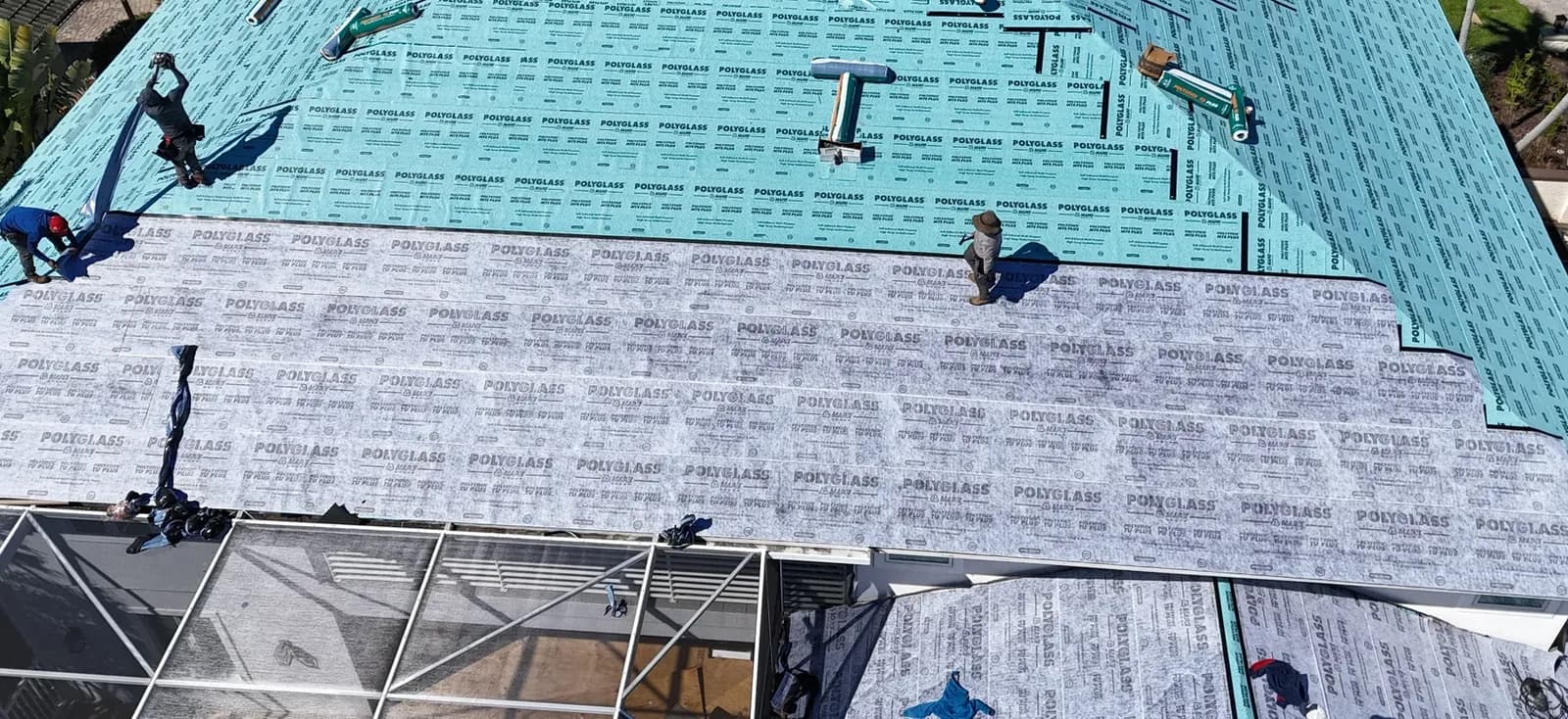
St. Petersburg · Pinellas County · roof replacement

Roof replacement in St. Petersburg

A housing stock whose median unit dates to 1969 meets a county that adopts one wind speed for everybody. What the law requires, what the city's roofs actually need, and what decides the price.

The short answer

A St. Petersburg roof replacement carries Florida's statewide requirements, a permit, a secondary water barrier, strengthened deck attachment, approved products, plus the county's own habits: Pinellas adopts a single countywide ultimate design wind speed of 145 mph for ordinary buildings and runs in-progress inspections on reroofs, so the deck nailing and underlayment are verified before the covering hides them. On a housing stock whose median unit dates to 1969, the roof's permit history often decides the scope before the contractor does.

The floor the law sets

What every St. Pete reroof must include

The statewide floor is the same one the Florida roof rules page documents: a permit, the secondary water barrier and deck attachment Fla. Stat. 553.844 requires on site-built single-family homes, and product approvals on every component. Pinellas adds a single countywide ultimate design wind speed of 145 mph for ordinary buildings, and reroof permits here carry in-progress inspections with mitigation affidavits for what the inspection cannot see, which leaves a verified permit and inspection record attached to the property.

On locally designated historic streets, the certificate of appropriateness comes first: same-materials-and-shape at staff level, material or shape changes to the commission, with reroofing a named application category in the city's own matrix.

The 1969 problem

Why the full 25 percent rule shows up more in St. Pete

By the Census Bureau's published counts, roughly seven in ten St. Petersburg housing units predate 1980. The 2022 carve-out that softens the 25 percent rule reaches only roofs built, repaired, or replaced under the 2007 code or later, so a meaningful share of this city's roofs still answer to the full rule: cross the threshold in a year and the whole section can come to current code. The practical consequence is that a St. Pete replacement conversation often starts in the permit archive, because whether this roof was last permitted in 1998 or 2012 changes what the law asks of the next one. The building official holds the determination; the record is what you bring.

Factors, not folklore

What actually decides a St. Pete replacement price

On a stock this old, the number that matters is the one written after the roof is opened; these are the levers every real St. Pete quote is built from.

  • Size, pitch, and complexity. Area drives material; steepness and cut-up geometry, hips, valleys, dormers, drive labor, safety setup, and waste.
  • The system chosen. Shingle, metal, and tile occupy different cost tiers with different service lives; the systems library carries the published ranges, and tile adds structure and labor realities of its own.
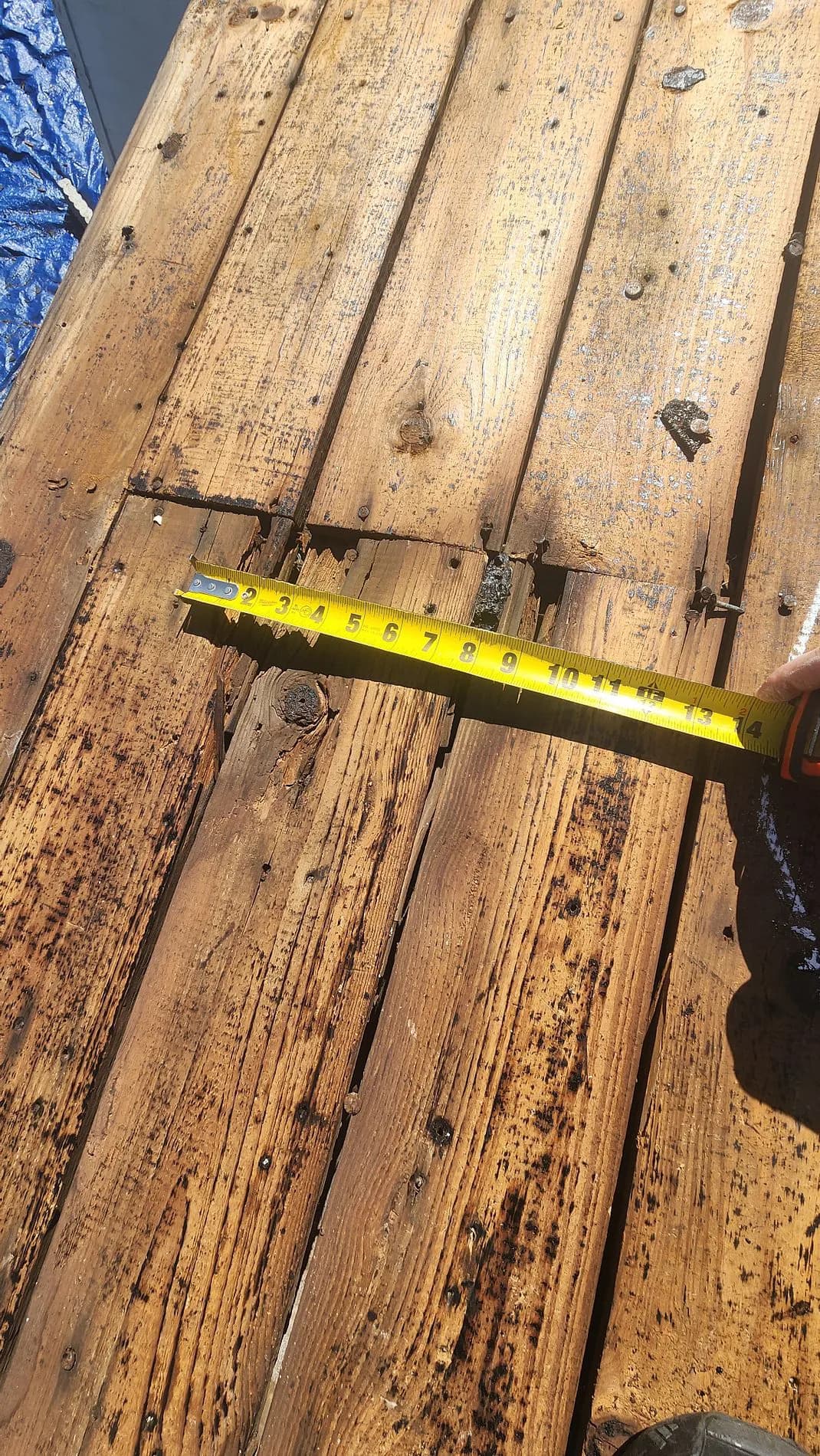
  • What the tear-off reveals. On pre-1980 decks the honest wildcard is bigger: multiple prior coverings, plank decks, and rot only show themselves once the roof is open, and code requires sound substrate.
  • Code items. Secondary water barrier, deck re-nailing, drip edge, and the in-progress inspection are part of every compliant Pinellas quote.
  • Access, protection, disposal. Tight urban lots, landscaping, overhead lines, and dump distance all show up in real quotes.
  • Certificates where designated. In local historic districts the COA belongs in the timeline ahead of the permit.

Level bids on equal scope, never the headline number, and let the measurement tool give you an independent read on your roof's size before anyone quotes it.

From the job files
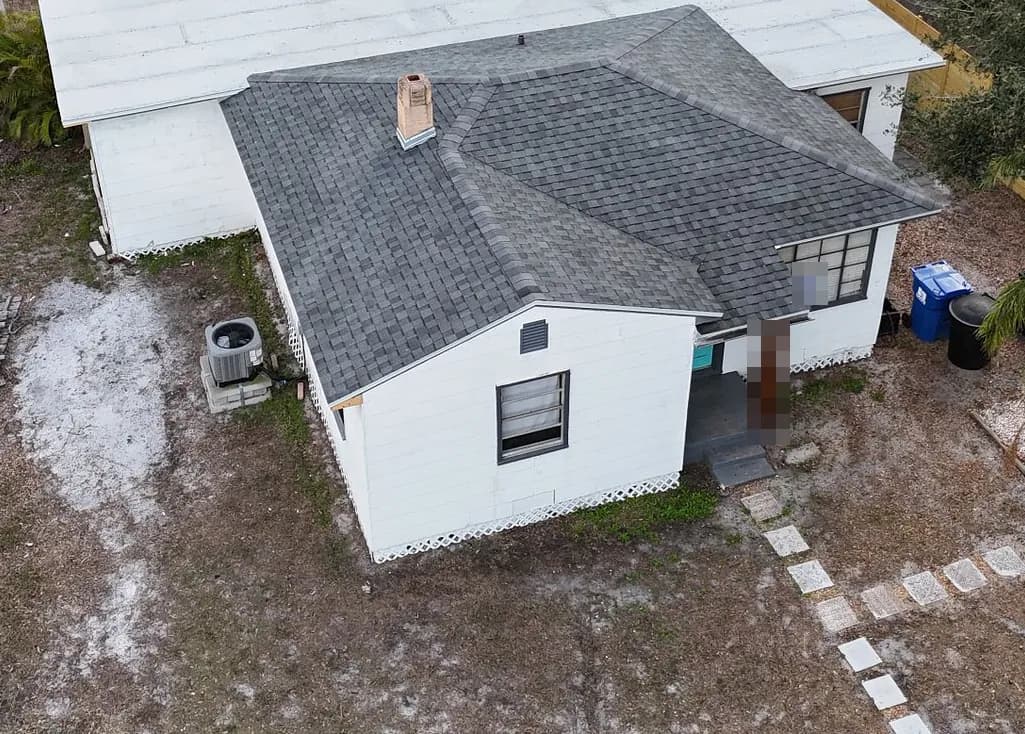
Two St. Petersburg replacements, from their job files

  • Aerial view of a one-story house with a new gray shingle hip roof and a bright white flat roof section behind it
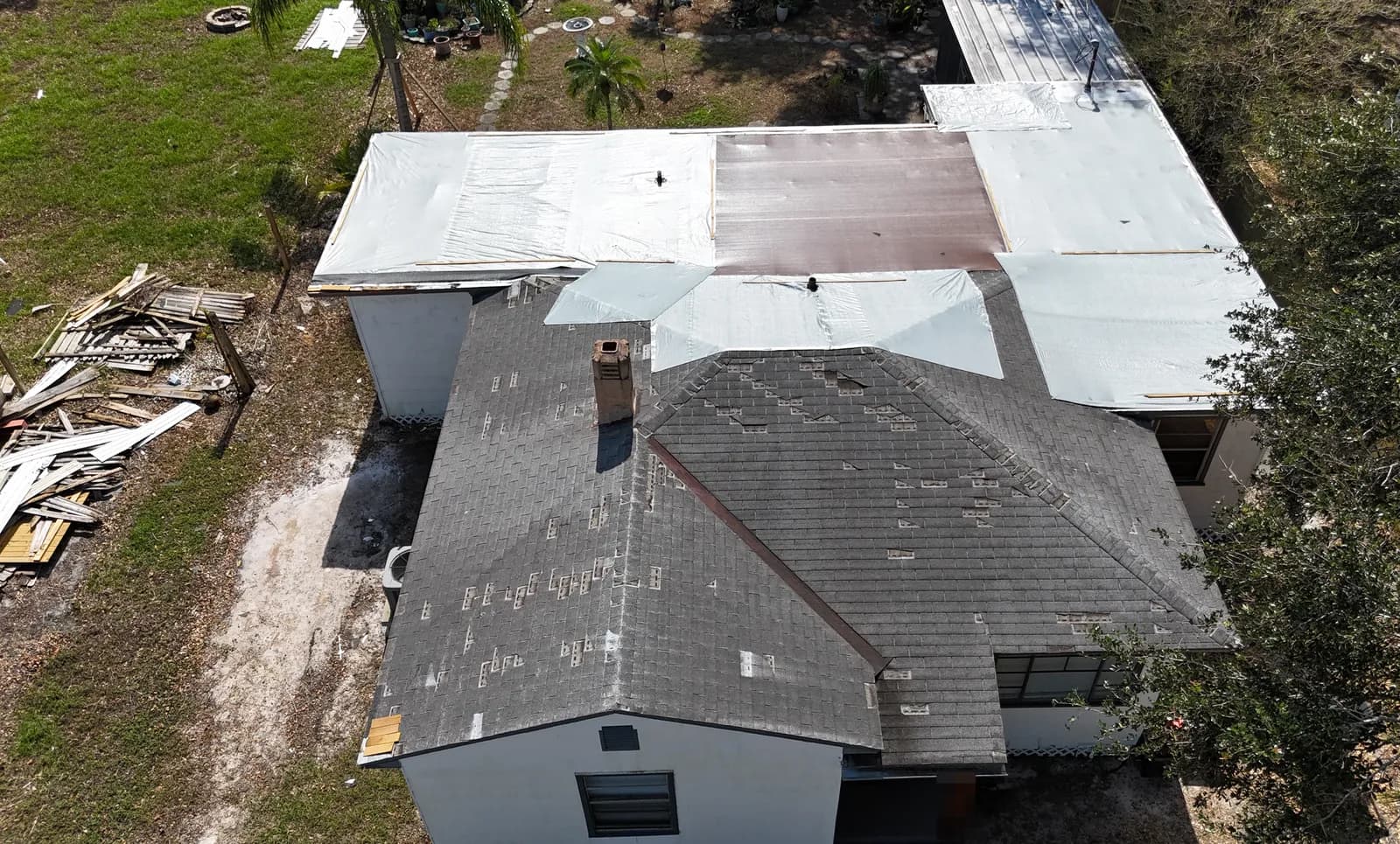
  • Aerial view of a storm-damaged roof with shingles stripped on every slope, the flat section covered in tarps and membrane, and debris piled in the yard
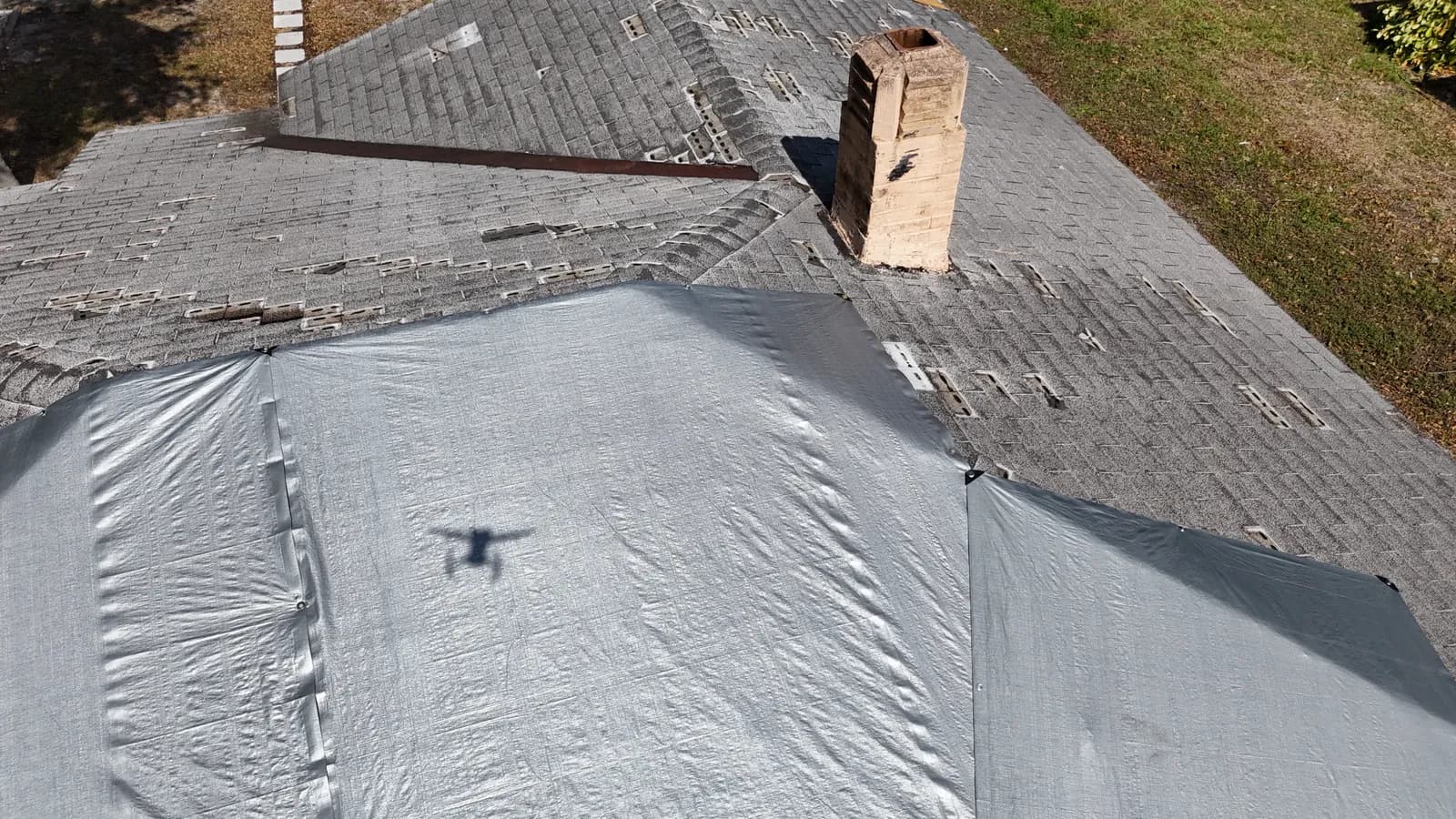
  • Close aerial view of shingle tab loss across a roof, a weathered brick chimney, and a gray tarp covering the lower slope
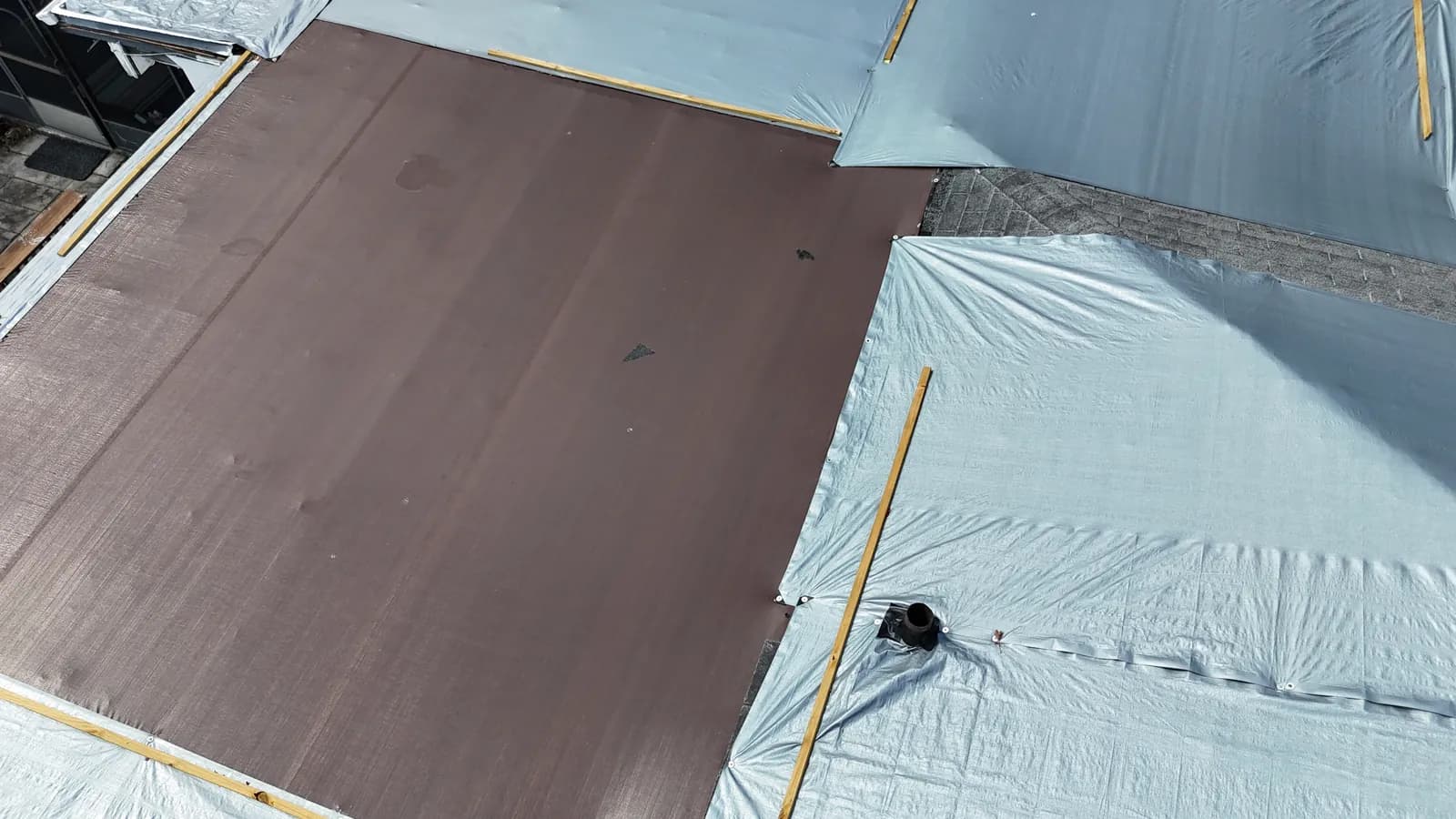
  • Overhead view of a flat roof section covered with brown peel-and-stick membrane, gray tarps, and wood battens
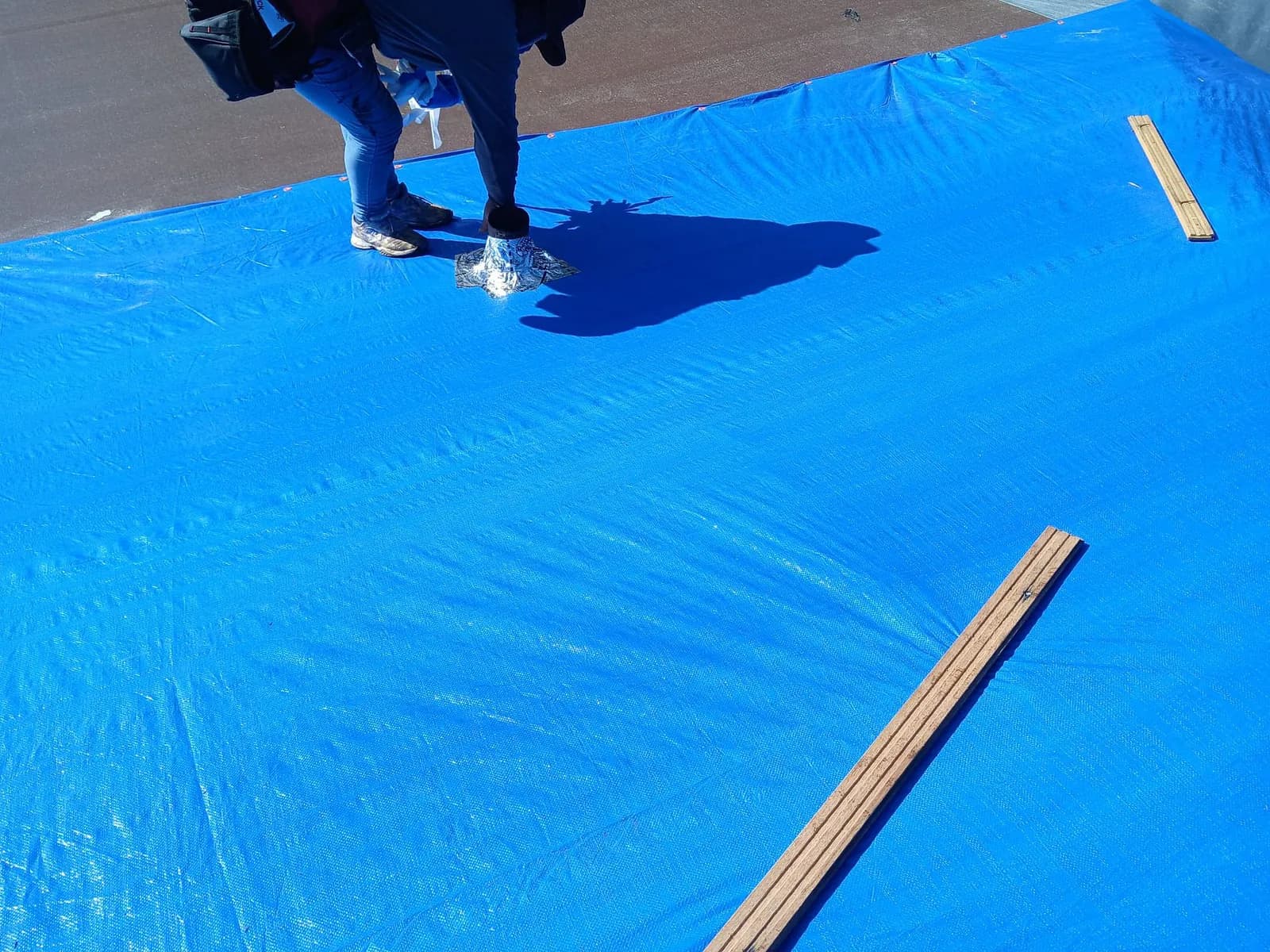
  • Roofer standing on a fresh blue tarp stretched over a roof, with wood battens laid nearby
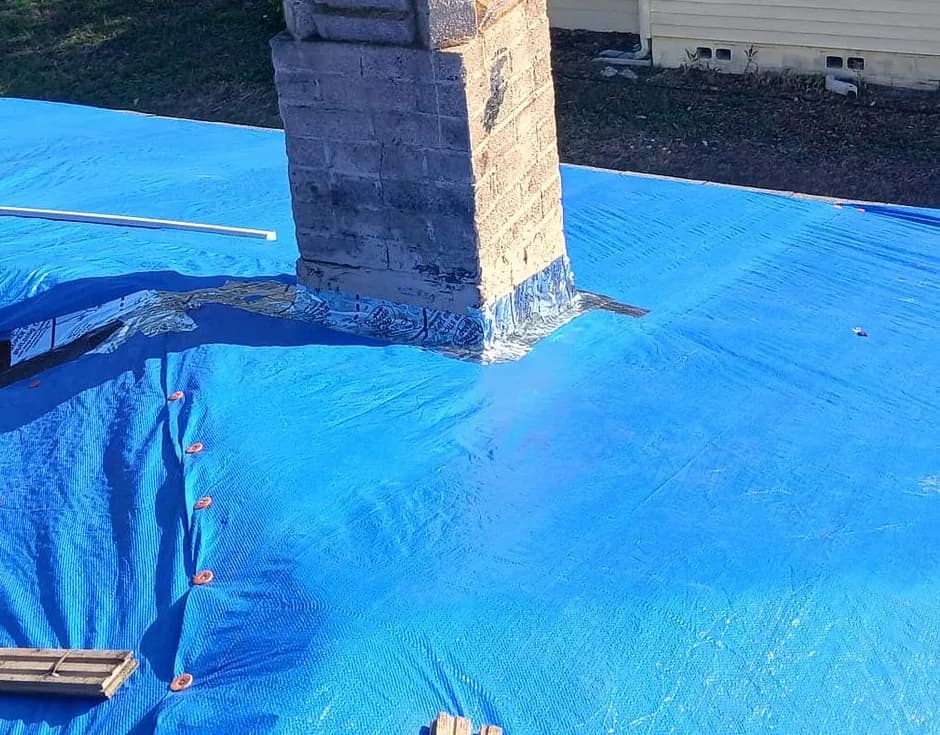
  • Blue tarp over a roof slope with a concrete block chimney wrapped in membrane at its base
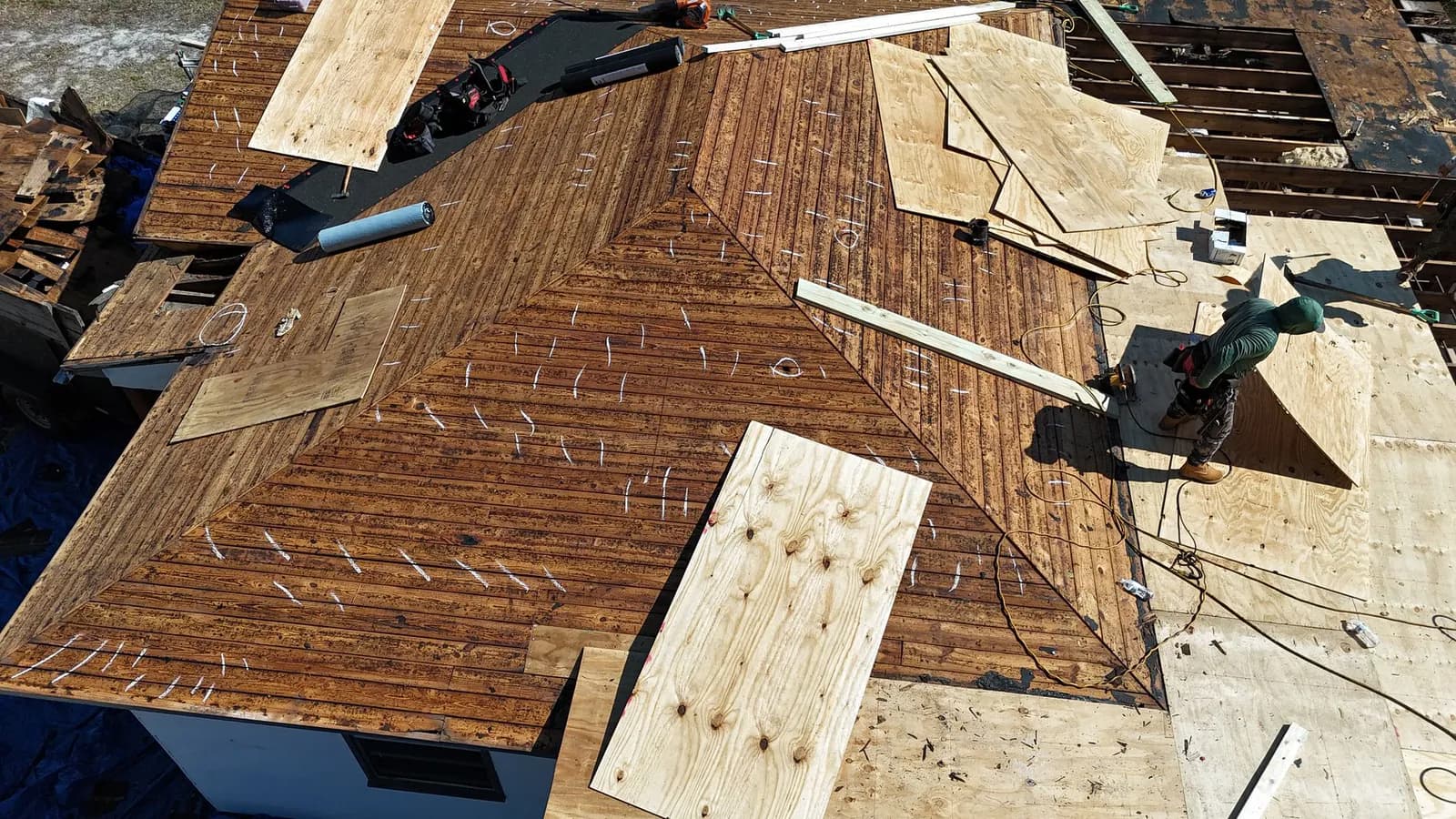
  • Aerial view of a roof mid rebuild, original plank decking exposed with new plywood sheets staged and a crew member working
  • Tape measure laid across old plank roof decking with rot and gaps between boards

Shingles · St. Petersburg, FL

1 / 8

St. Petersburg, FL

Shingle roof replacement after hurricane winds

Completion aerial, February 13, 2025. The house number on the porch post is blurred.
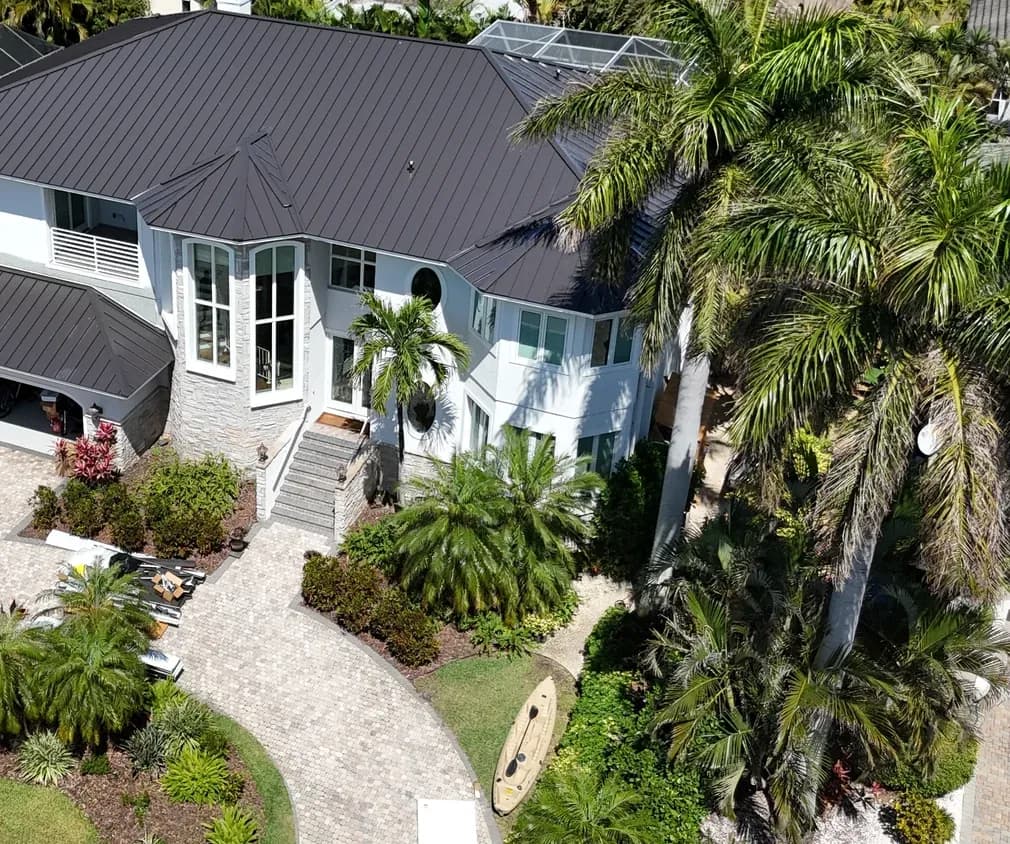
Read the full case study
  • Aerial view of the completed dark standing seam metal roof on a white two-story home, with royal palms and a paver drive in front.
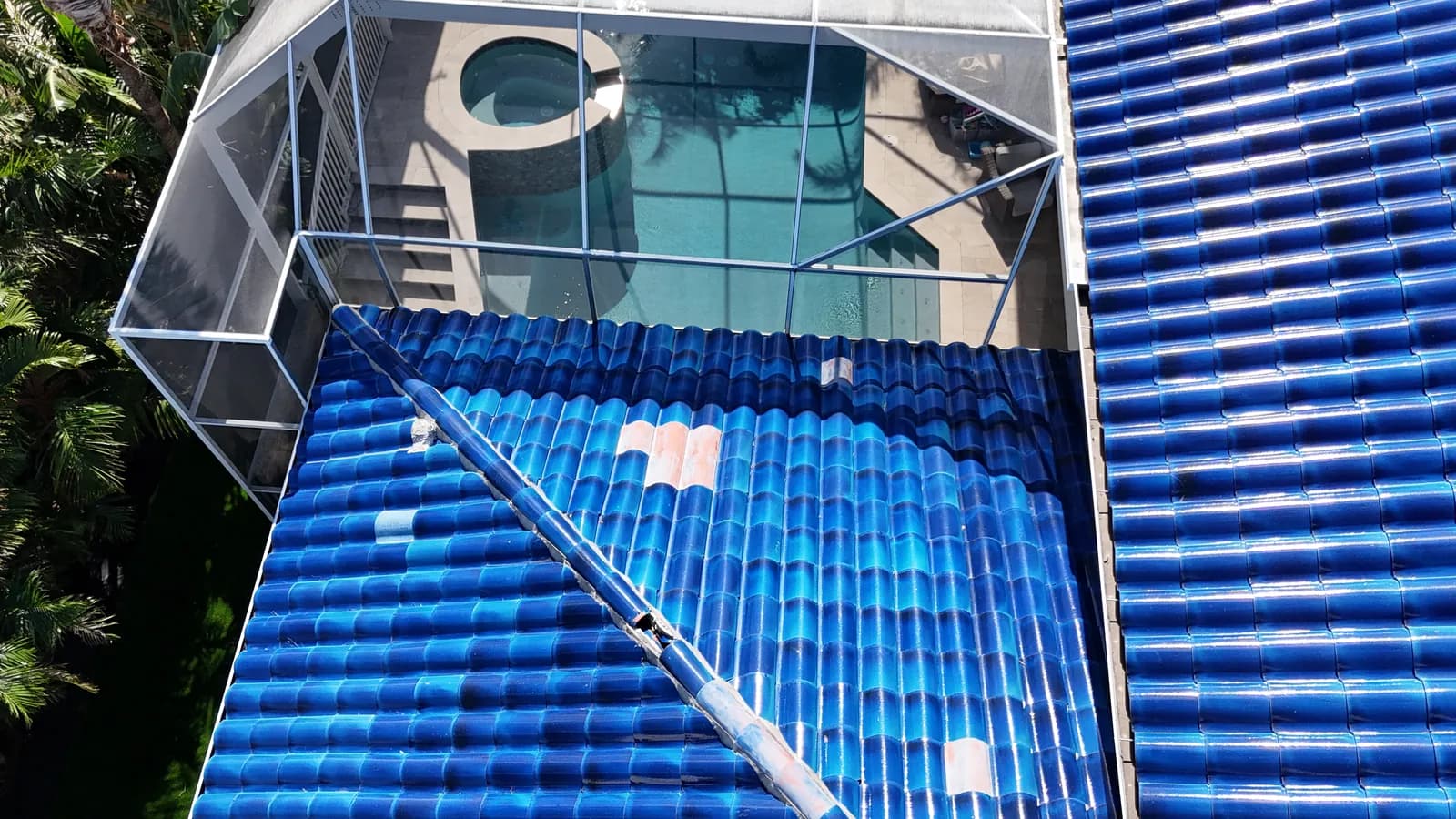
  • Straight-down aerial of the glazed cobalt blue clay tile roof before the conversion, with lighter mismatched repair tiles scattered across the slopes.
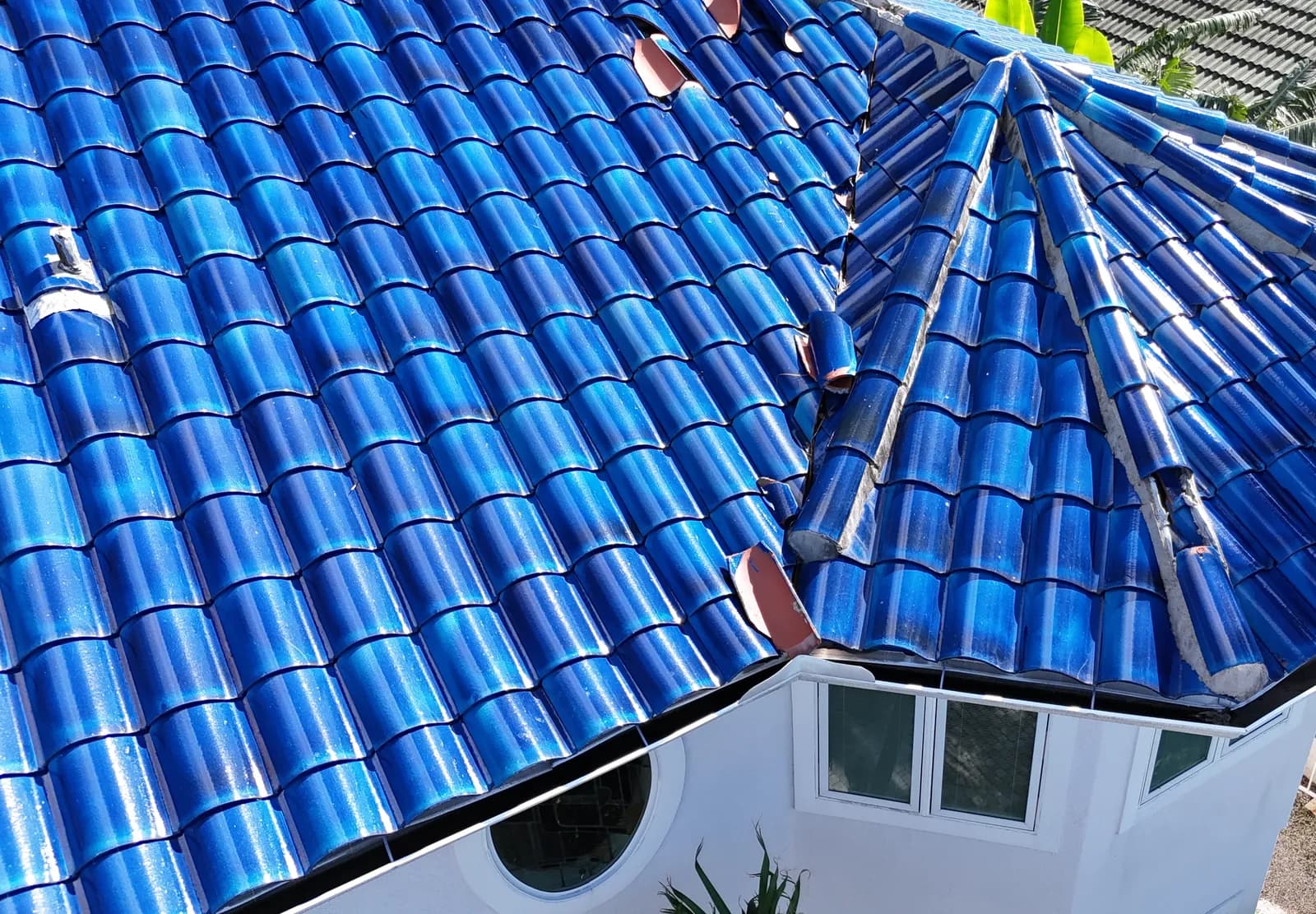
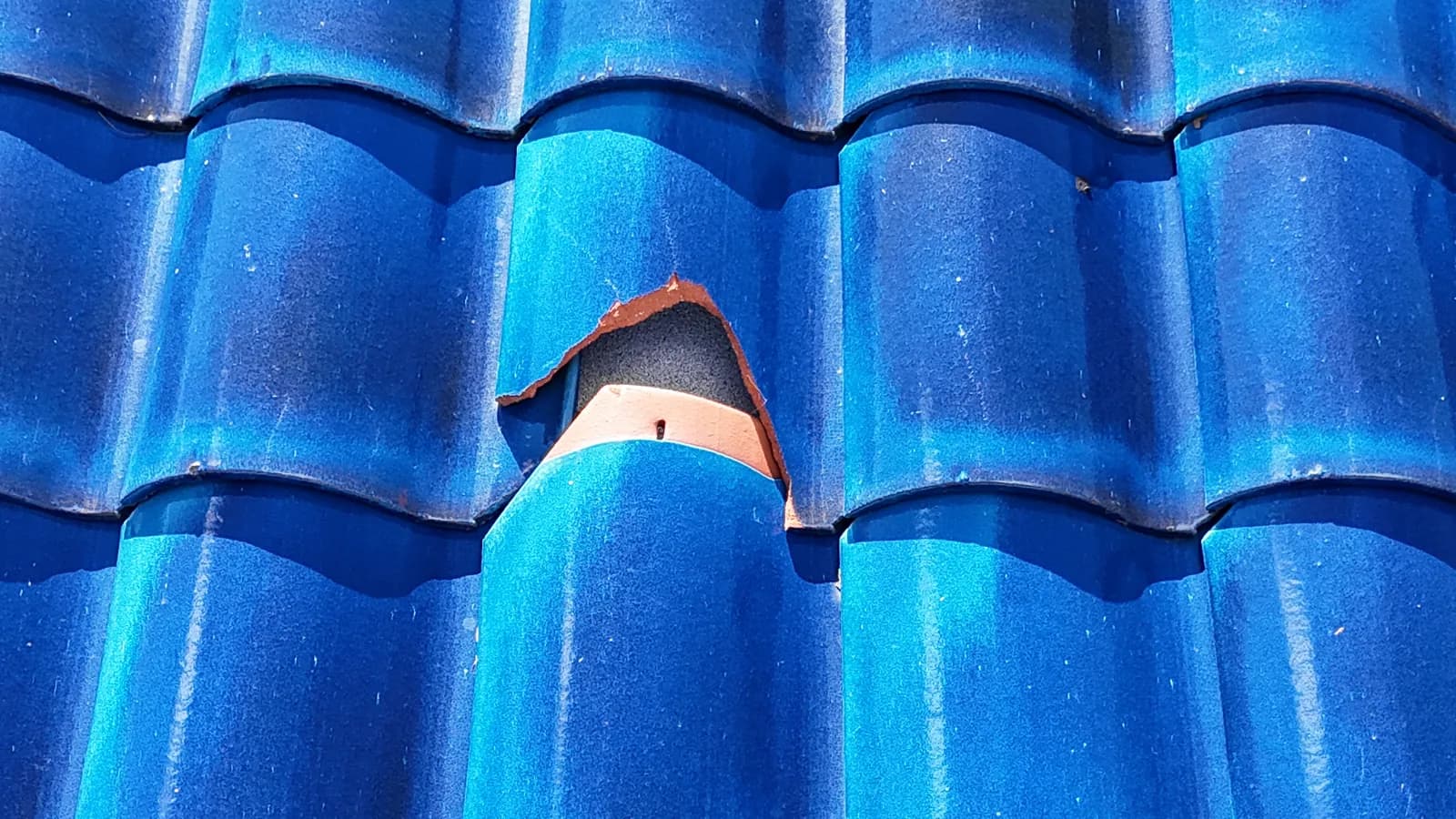
  • Broken and displaced blue clay S tiles at a turret hip, with cracked mortar and exposed orange tile bodies.
  • Close-up of a punctured blue clay tile with a hole broken through to the layers beneath.
  • Displaced hip cap tiles and broken mortar on a ridge line above the screened pool enclosure.
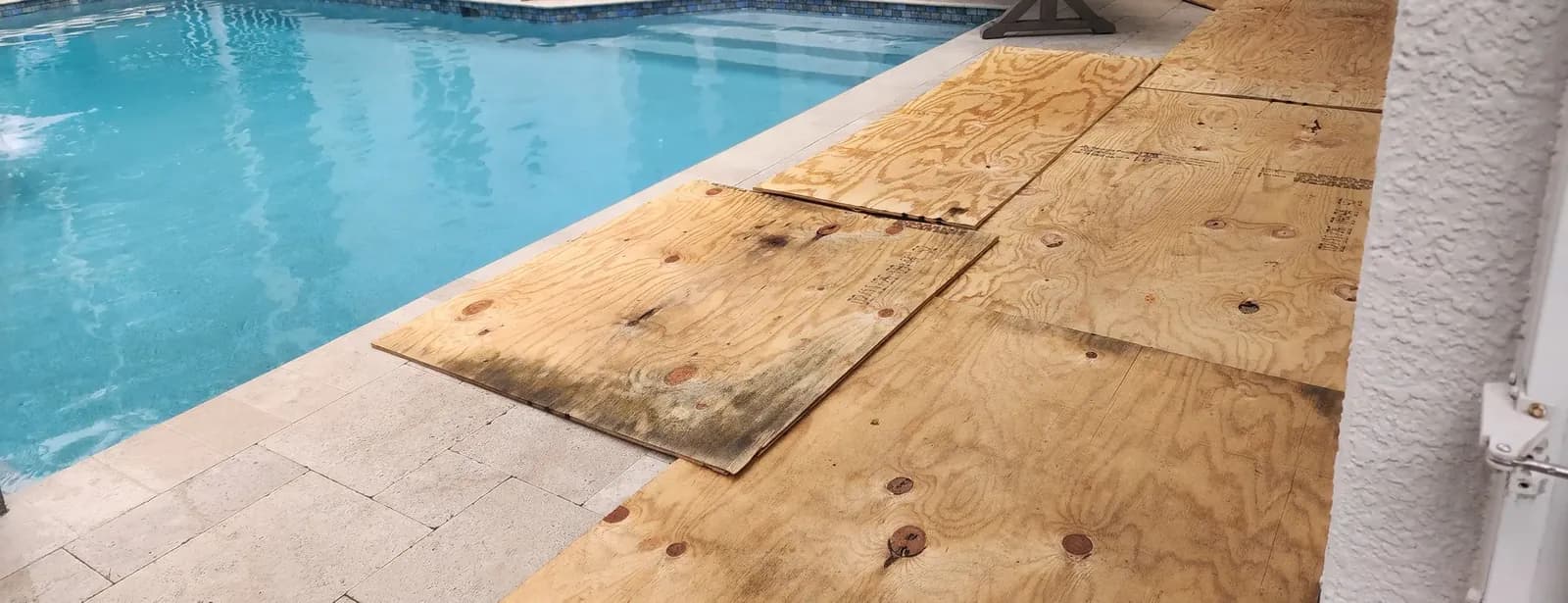
  • Plywood sheets laid over the paver pool deck beside the swimming pool to protect it during the roof work.
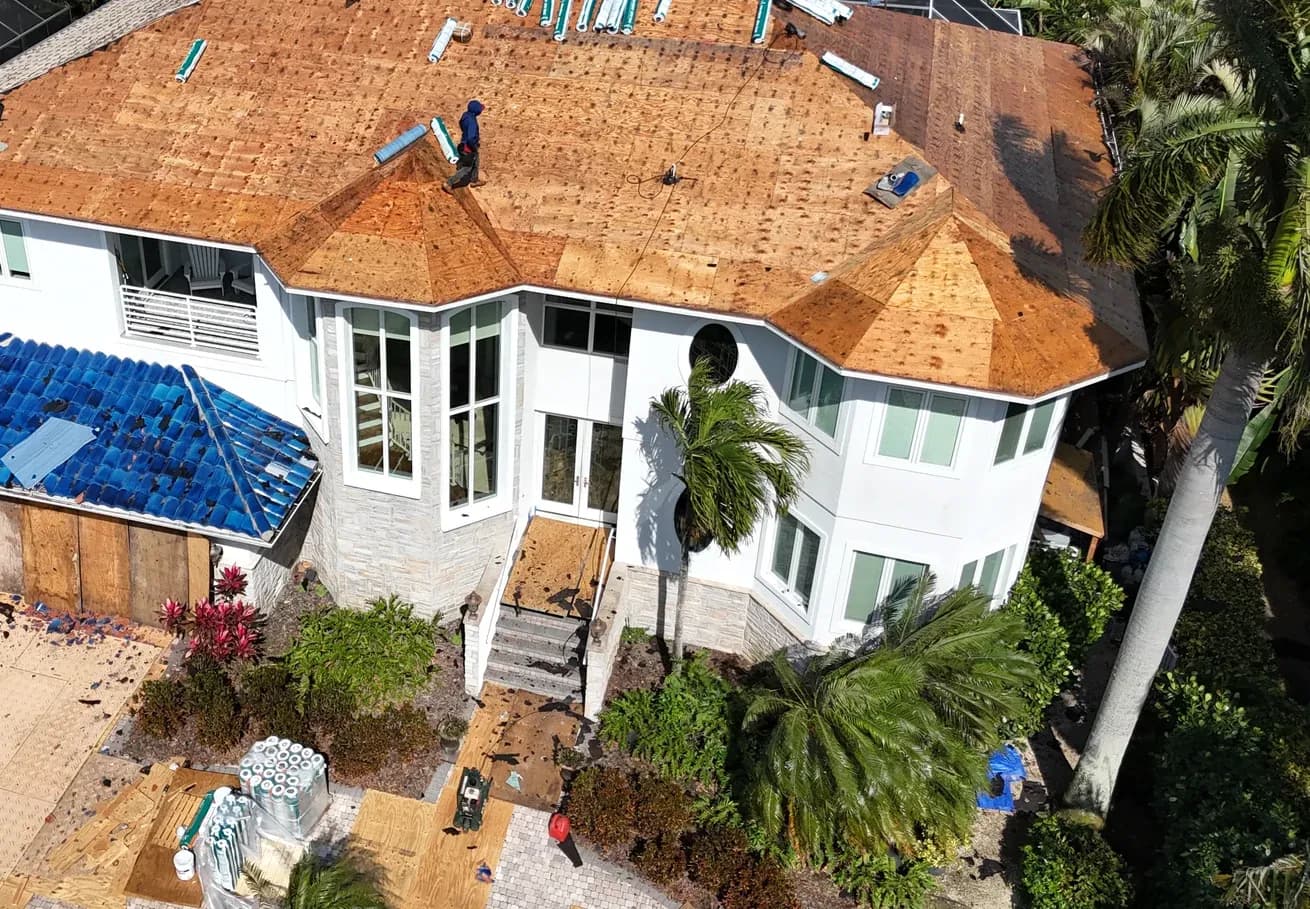
  • Aerial of the house with all tile removed and the roof deck bare, underlayment rolls staged on the plywood and on the driveway.
  • Roofing crew installing the two-ply underlayment across the roof, the gray cap sheet advancing over the teal base sheet.

Metal · St. Petersburg, FL

1 / 8

St. Petersburg, FL

Tile to standing seam metal conversion after Hurricane Milton

The finished conversion: 1.5 inch snaplock standing seam in .040 aluminum.

Read the full case study

FAQ

St. Petersburg roof replacement questions

Do I need a permit to replace my roof in St. Petersburg?
Yes; a full replacement is permitted work everywhere in Florida, and in Pinellas County reroof permits come with in-progress inspection requirements, so deck nailing and underlayment get verified before the covering hides them. Mitigation affidavits cover whatever the inspection cannot see. The contractor normally pulls the permit; the rules page carries the statute-cited version.
My roof was built before 2007. Does that change the job?
It can change the scope. The 2022 carve-out that limits code upgrades to the portion being worked applies only to roofs built, repaired, or replaced under the 2007 Florida Building Code or later; a roof that predates it falls under the full 25 percent rule, and on St. Petersburg's older housing stock that is common. The building official decides, and the permit history is the evidence.
Why did my neighbor's quote look so different from mine?
Because quotes differ on scope before they differ on price, and on St. Pete's older stock the biggest divergence is usually the decking allowance: on a deck that has carried multiple coverings, a bid with no allowance is a bid that has not looked. Tear-off versus recover, underlayment specification, permit and inspection inclusion, and warranty terms follow. The roof inspection questions guide doubles as a bid-leveling sheet.
How do I verify a St. Pete roofer's license?
On the DBPR licensee search at myfloridalicense.com; ours are published on the company page, and the Florida roof rules page walks exactly what to check. Any legitimate contractor invites the lookup.

St. Petersburg

Start in the permit record, end with a documented roof.

A K. Simon Construction inspection documents the existing system and deck in writing, checks the permit history against what the code will ask, and puts the options on paper. Licenses published, lookup invited.

Call now Inspection