
Metal · St. Petersburg, FL
1 / 8
St. Petersburg, FL
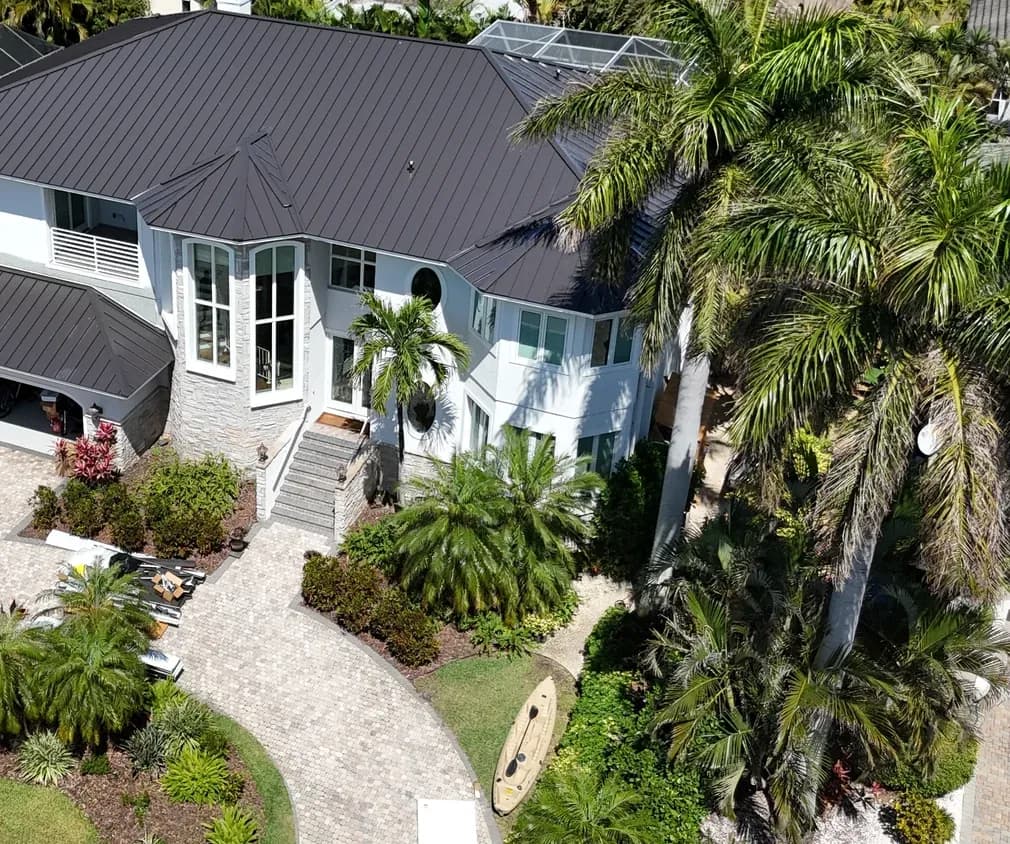
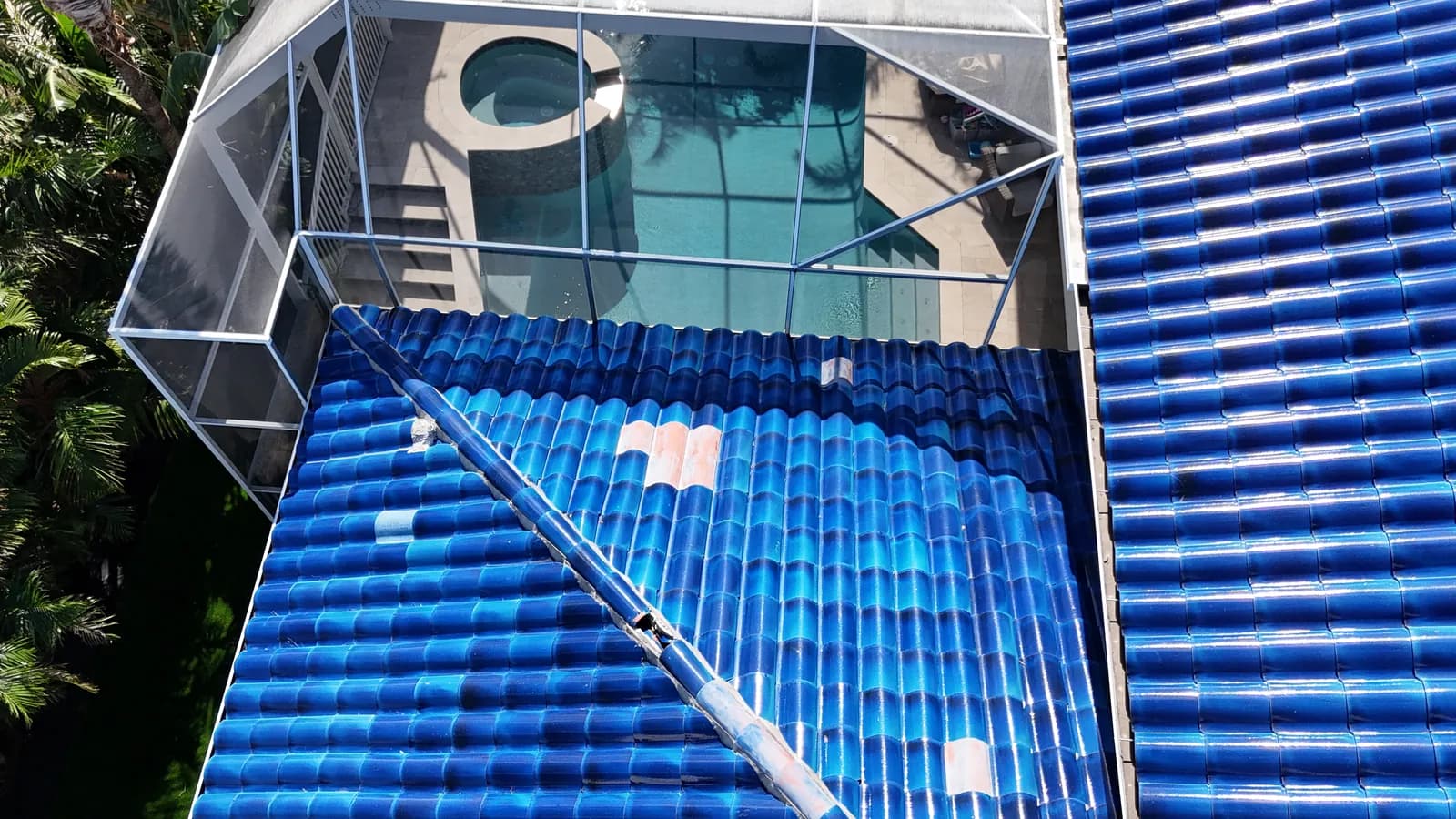
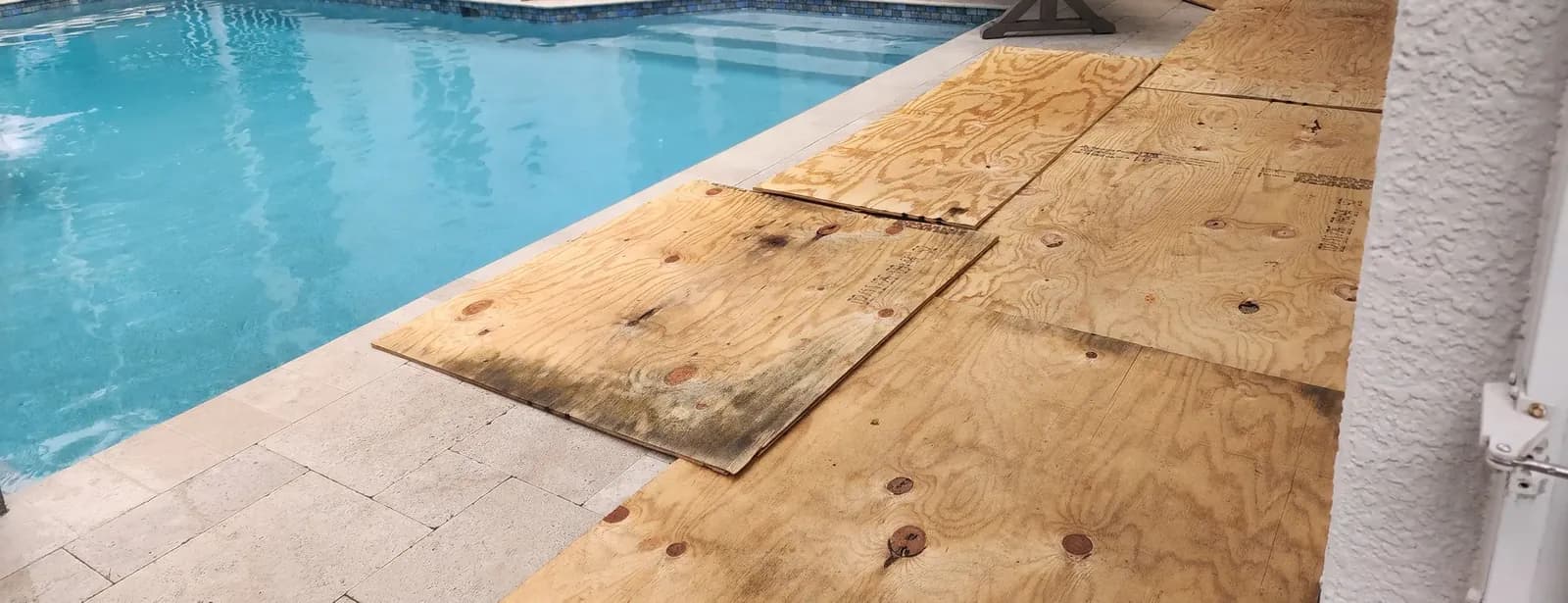
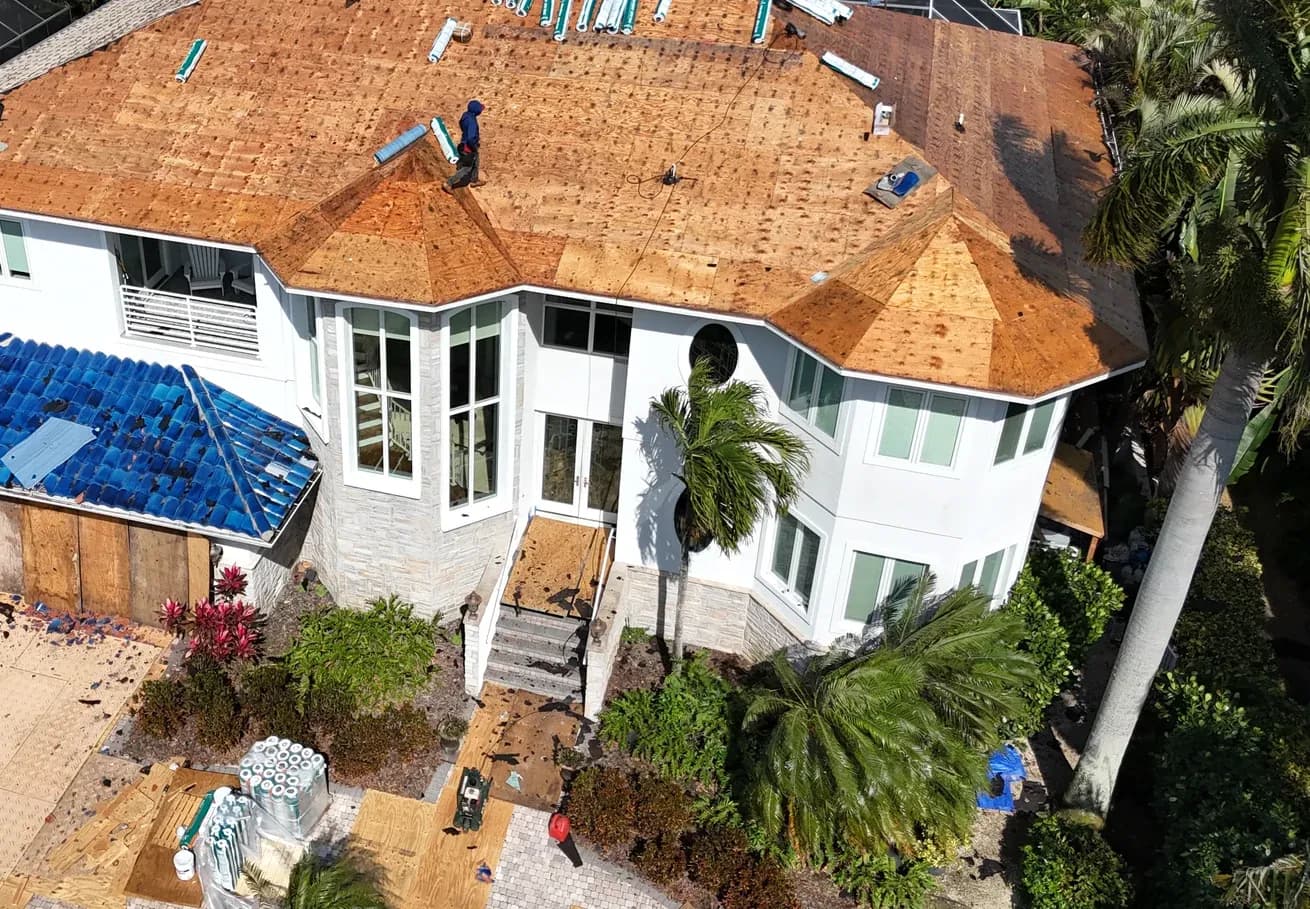
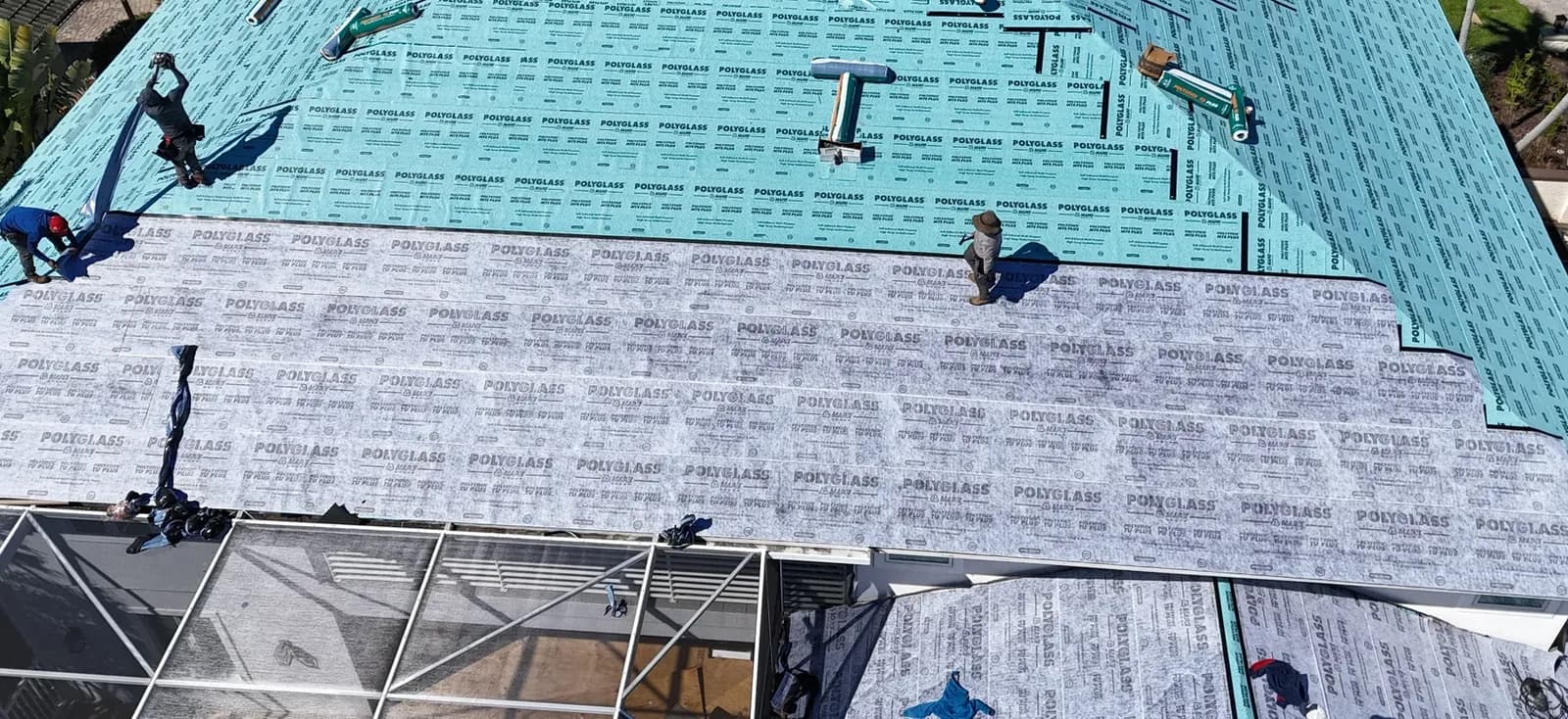
Tile to standing seam metal conversion after Hurricane Milton
The finished conversion: 1.5 inch snaplock standing seam in .040 aluminum.
Products, approvals, and wind classes
FL product approvals and how to look them up, Miami-Dade NOAs, what wind classes really mean, when a roof-over is allowed, why underlayment is the layer that matters, the FORTIFIED standard, and how the shingle-metal-tile choice should actually be made.
Reviewed August 20, 2026. General information, not legal or insurance advice; code determinations belong to your local building official, and product approvals govern by their own terms.
Florida runs a statewide product evaluation and approval system under Fla. Stat. 553.842, and roofing is one of the categories that must be approved before use in construction. An approved product carries an FL number anyone can look up in the state's public search at floridabuilding.org, which shows the approval document, its installation conditions, and its limits of use.
Two boundaries keep this honest. The approval attaches to the product as tested and installed under its stated conditions, not to any contractor's workmanship, and a single roof is many separately approved products: covering, underlayment, fasteners, and accessories. Second, a statewide FL number is the common credential but not the only lawful path; the law also allows local approval by the authority having jurisdiction, so a product without an FL number is a question for the building department, not automatically a violation.
Sources: Fla. Stat. 553.842 (flsenate.gov) and the Florida product approval search (floridabuilding.org).
A Notice of Acceptance is a product approval issued by Miami-Dade County's Product Control Section, built around the High-Velocity Hurricane Zone's testing protocols, the strictest in the state. By its own terms an NOA applies in Miami-Dade County and in other jurisdictions where the local authority chooses to accept it, and every NOA carries an expiration date, so currency matters as much as existence.
The practical reading for a Tampa Bay homeowner: "Miami-Dade approved" signals a product tested to the strictest zone's protocols, which is meaningful anywhere, but the credential a Florida building department ordinarily works from outside the HVHZ is the statewide FL approval. Miami-Dade's product search is public, so an NOA claim is checkable the same way an FL number is. The roof rules page covers why HVHZ requirements themselves stop at the Miami-Dade and Broward county lines.
They are laboratory test classifications, not promises about real storms. ASTM D3161 tests shingles with fan-driven wind and grades them A, D, or F; ASTM D7158 measures uplift resistance and grades them D, G, or H. The Florida Building Code requires shingles classified under these standards to match the site's design wind speed, and the Insurance Institute for Business and Home Safety cautions that the classes reflect new, properly sealed shingles and do not account for aging or weathering.
Two consequences follow. A wind class is a starting condition, not a lifetime guarantee: an unsealed or poorly fastened shingle is outside the tested condition entirely, which is why the roof systems library's line holds that nail placement and count, not the brand, decide wind performance. And the code's four-nail minimum per shingle is a floor: the product's own approval can require more, and the applicable approval governs. What class a specific address needs follows from its design wind speed, which the permit documents establish.
Sources: IBHS Roof 101 (ibhs.org) and the Florida Building Code shingle provisions (floridabuilding.org).
Sometimes, and the code decides, not preference. The Florida Building Code's existing-building provisions define a roof recover, installing a new covering over a prepared existing one, and prohibit it in specific conditions: a water-soaked or deteriorated existing roof, an existing wood shake, slate, clay, cement, or asbestos-cement tile covering, or a roof that already carries two or more coverings, which makes replacement mandatory.
Recovering also counts toward the 25 percent rule: the rule's own text covers roof area "repaired, replaced or recovered," and the 2022 carve-out for roofs built to the 2007 code or later uses the same three verbs, so a recover neither escapes the threshold nor loses the carve-out. The roof rules page walks both. Whether a specific roof qualifies for a recover is the building official's determination on inspection, and a contractor who quotes a roof-over without opening that question is quoting past the code.
Sources: Florida Building Code, Existing Building, reroofing provisions (floridabuilding.org) and Fla. Stat. 553.844 (flsenate.gov).
Because underlayment is the layer that keeps water out when the visible covering is damaged or blown off, which is exactly the Florida failure mode. The state's own code materials describe the sealed roof deck as the secondary water barrier, and for tile roofs outside the High-Velocity Hurricane Zone the code requires underlayment installed per the FRSA/TRI Florida high-wind tile manual, in its current referenced edition.
Underlayment matters doubly on tile: the site's roof systems library publishes the industry pattern that tile underlayment serves on a materially shorter clock than the tile above it, which is how a tile roof can leak while its covering still has decades left. That is also why Florida's reroofing law requires a secondary water barrier on replacement, covered on the rules page, and why an underlayment line on a quote deserves as much attention as the covering line.
Source: Florida Building Commission roofing fact sheets (floridabuilding.org).
In Florida practice, six. Outside the High-Velocity Hurricane Zone the code's base text sets a floor of four fasteners per strip shingle plus whatever the manufacturer requires, and manufacturers' enhanced high-wind nailing pattern, the one their maximum wind-speed warranties typically require, is six nails. Inside the HVHZ the code itself requires no fewer than six. Placement matters as much as count.
The Florida Roofing and Sheet Metal Contractors Association has written about exactly this question: shingle bundles carry a standard four-nail pattern and an enhanced six-nail pattern, the manufacturer's top wind warranty generally rides on the six-nail pattern, and many Florida building departments expect six regardless. A nail driven high, crooked, or through the wrong line is outside the tested condition the shingle's wind class assumes, which is why fastening shows up in inspections rather than being taken on faith. The covering carries the brand name, but the fastening schedule, the sealing, and the edge details decide the wind performance, and all three are workmanship.
Sources: FRSA, "What's Required, Four Nails or Six?" (floridaroof.com), Florida Building Code shingle fastening provisions (floridabuilding.org), and IBHS Roof 101 (ibhs.org).
FORTIFIED is a voluntary, beyond-code construction and reroofing standard from the Insurance Institute for Business and Home Safety, built on its wind research. A FORTIFIED Roof adds requirements the code does not: a sealed roof deck, enhanced roof-edge details, tighter deck nailing, and higher shingle wind classes, and the designation comes only through an authorized contractor with an evaluator's certification, never self-declared.
The useful mental model: code is the legal minimum, FORTIFIED is a published standard above it, and the gap between them is mostly the same features Florida's wind mitigation paperwork documents: deck attachment, sealed deck, and edge details. A homeowner planning a reroof can read the standard itself at fortifiedhome.org and decide whether to specify it; a contractor claiming FORTIFIED work should be checkable in the program's own directories.
By factors, not folklore: budget tier, typical service life, the structure's ability to carry the weight, the look the neighborhood or association requires, and climate fit, including salt air near the coast. No system wins all five. The honest comparison is published in the choosing guide and the roof systems library, with typical industry ranges rather than promises, and the visualizer renders each option on a photo of your own house.
The Florida-specific pressures worth weighing: the systems library publishes how heat and UV age shingles faster here than in mild climates, how salt air drives metal specification near the coast, and how tile's longevity story depends on the underlayment beneath it. Start with the choosing guide, then the visualizer for the look, and let a documented inspection answer what the existing roof and structure can actually take.
From the job files
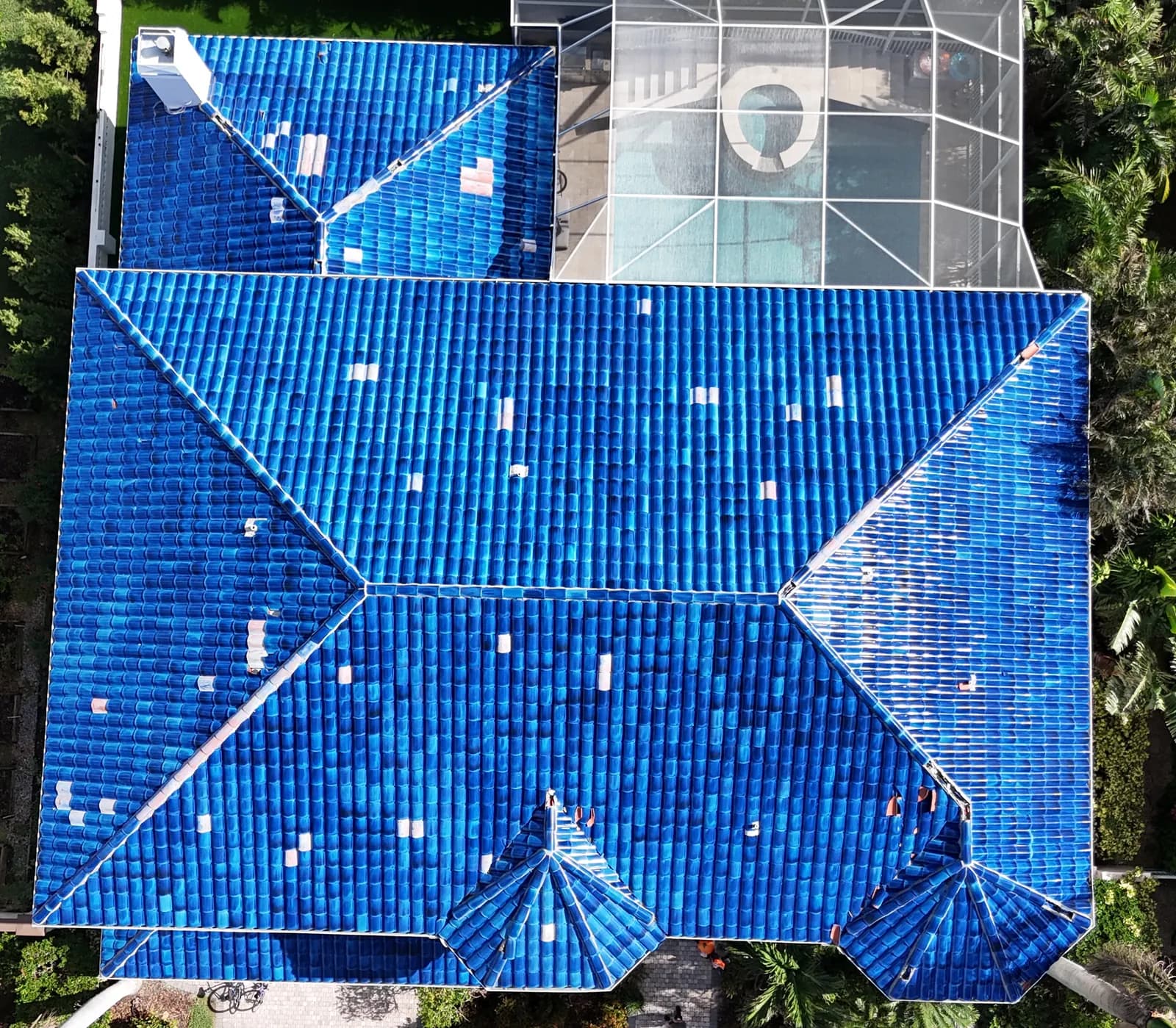
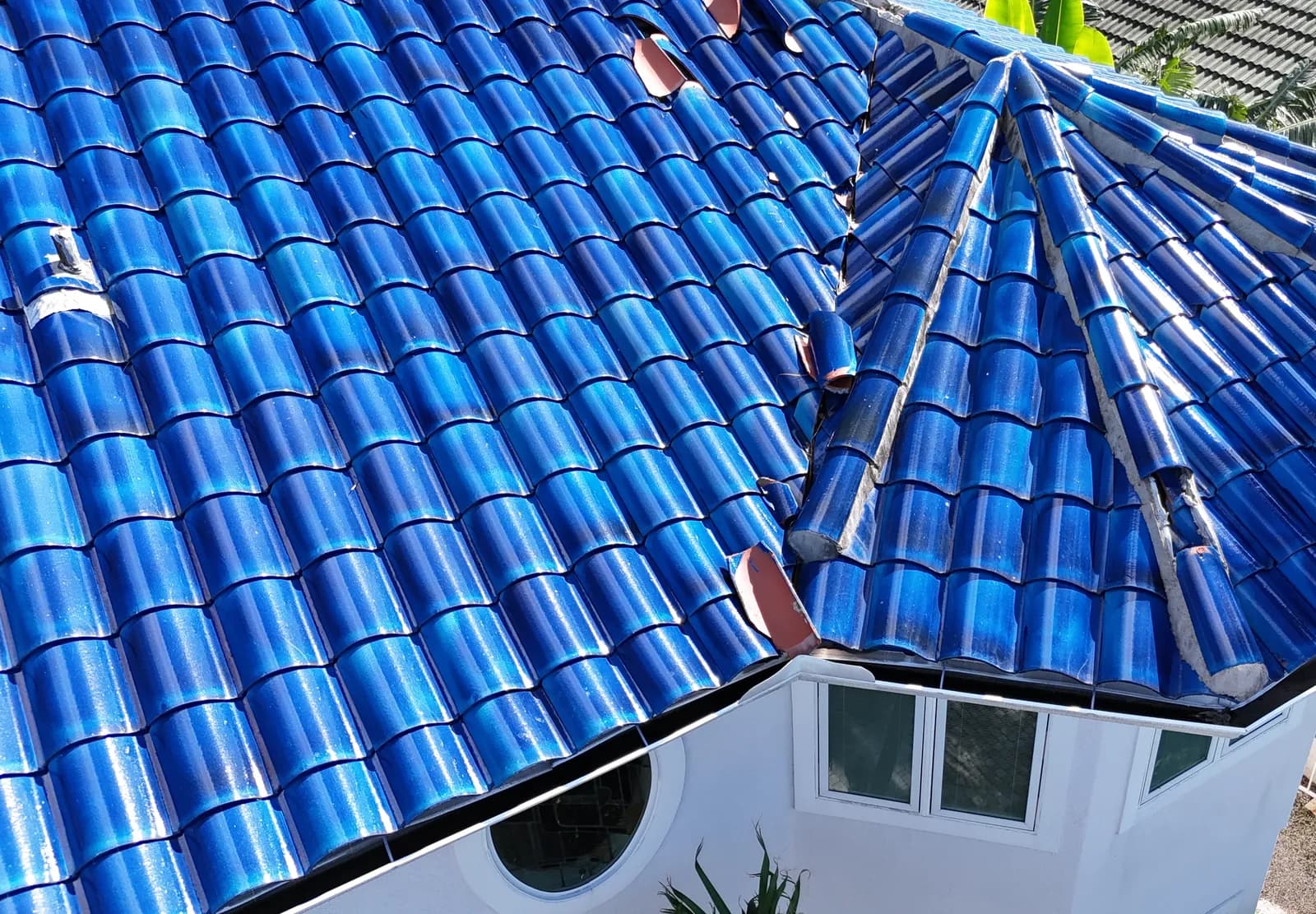
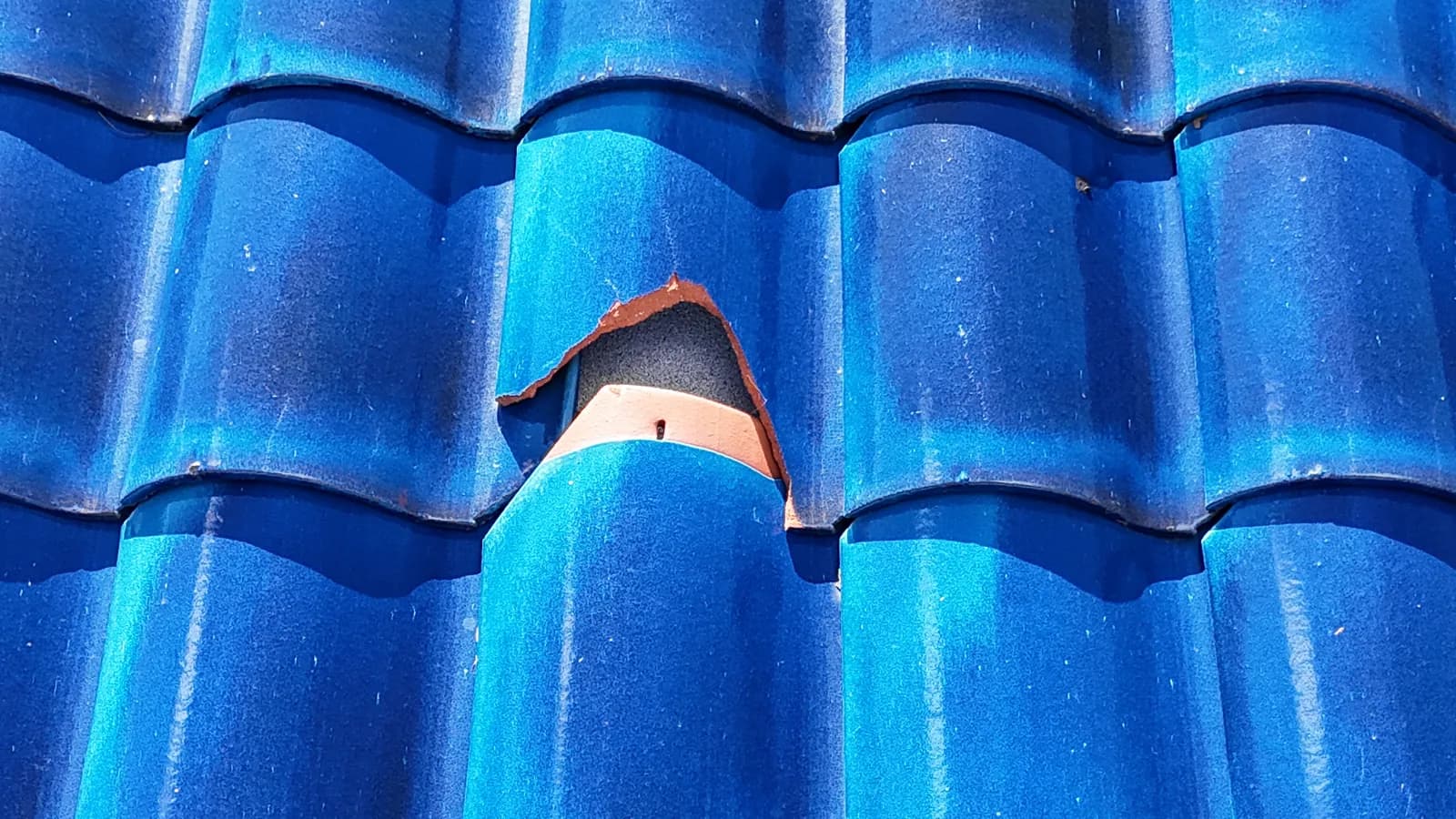
A St. Petersburg home that weighed tile against standing seam metal after Hurricane Milton, and what the conversion actually involved.
Metal · St. Petersburg, FL
1 / 8
St. Petersburg, FL
The finished conversion: 1.5 inch snaplock standing seam in .040 aluminum.
Keep going
The roof rules page carries permits and the 25 percent rule; the systems library carries the published service-life ranges these answers deliberately do not repeat.
From product questions to this roof
Approvals, wind classes, and recover rules all resolve against one thing: the roof you actually have. A K. Simon Construction inspection documents the existing system, deck, and details in writing, so material decisions start from the building instead of the brochure.