St. Petersburg · tile repair, re-lay, and replacement

Tile roofing in St. Petersburg

Tile turns up all over this city's older streets, and it is the covering most often misread at repair time: the tile almost never fails first. What the code requires beneath it, when re-lay beats replacement, and where honesty about matching begins.

The short answer

St. Petersburg tile work is usually underlayment work: by the typical industry ranges the roof systems library publishes, the tile itself serves on a fifty-plus-year clock while the waterproofing layer beneath it commonly serves twenty to thirty, so the leak arrives while the roof still looks perfect. Florida's code requires tile underlayment installed per the FRSA/TRI high-wind manual outside the HVHZ, prohibits covering over existing tile, and makes the re-lay, sound tile lifted, underlayment rebuilt, tile reinstalled, the honest middle path between patching and full replacement.

The two clocks

The tile outlives its own waterproofing

The systems library publishes the pattern plainly: clay and concrete tile carry a fifty-plus-year typical industry range while the underlayment beneath often serves in the twenty-to-thirty-year range, which is how a tile roof leaks at year twenty-five with a covering good for decades more. The code treats the layer accordingly: outside the High-Velocity Hurricane Zone, tile underlayment goes in per the FRSA/TRI Florida high-wind manual in its current referenced edition, and the materials questions page explains why that sealed deck is the layer that actually keeps St. Pete rain out of the house. When the underlayment is done and the tile is not, the re-lay exists for exactly this city.

What the code and the districts say

No covering over tile, and review when materials change

Two rules shape St. Pete tile projects. The code's recover provisions prohibit installing a new roof over existing clay or cement tile, so there is no shortcut past the tear-off or re-lay decision. And on locally designated historic properties, the certificate rules put a material change, tile to shingle, tile to metal, in front of the commission rather than staff, which makes the re-lay doubly relevant on designated streets: same materials and shape is the staff-level path. At the beaches, tile's salt-air inertness is a genuine advantage the systems library documents, provided the fasteners and flashings specified beside it hold up too. For what a documented St. Petersburg tile job actually looks like, the Verea clay tile case study walks one from inspection to closeout.

Factors, not folklore

What decides tile work pricing

Tile jobs price differently from shingle jobs for physical reasons; these are the levers.

  • Repair, re-lay, or replace. Lifting and salvaging sound tile, rebuilding the underlayment, and re-laying is a different scope from either patching or full replacement; the inspection decides which the roof has earned.
  • Salvage rate and matching. How much existing tile survives handling, and whether broken pieces are matchable or need sourcing, moves tile scope in ways shingle work never sees.
  • Weight and structure. Tile loads are a structural question; changing to or from tile brings the framing into the conversation.
  • Per-piece labor. Tile goes on piece by piece over battens; the labor window is inherently longer than sheet or strip systems.
  • The underlayment system. The FRSA/TRI-compliant underlayment build beneath the tile is the working heart of the quote, not a line item to trim.
  • Access, protection, and breakage control. Staging that protects the tile, the landscaping, and the crew's footing is part of honest tile pricing.

From the job files

A St. Petersburg tile roof, tile off to tile on

Hurricane Milton to Certificate of Completion on a 69-square clay tile roof a few miles from wherever you are reading this.
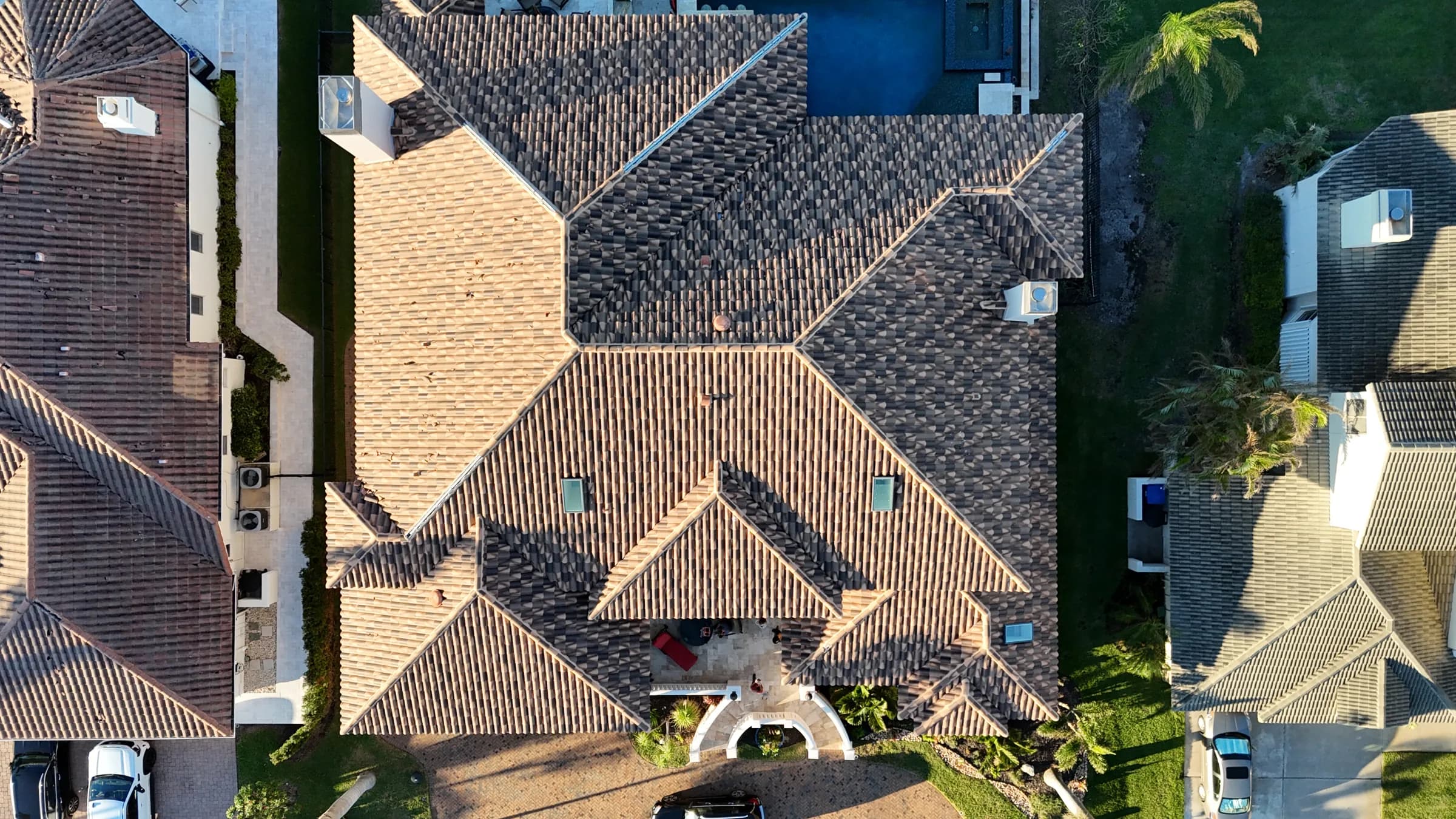
  • Straight-down aerial view of the existing brown barrel tile roof before replacement
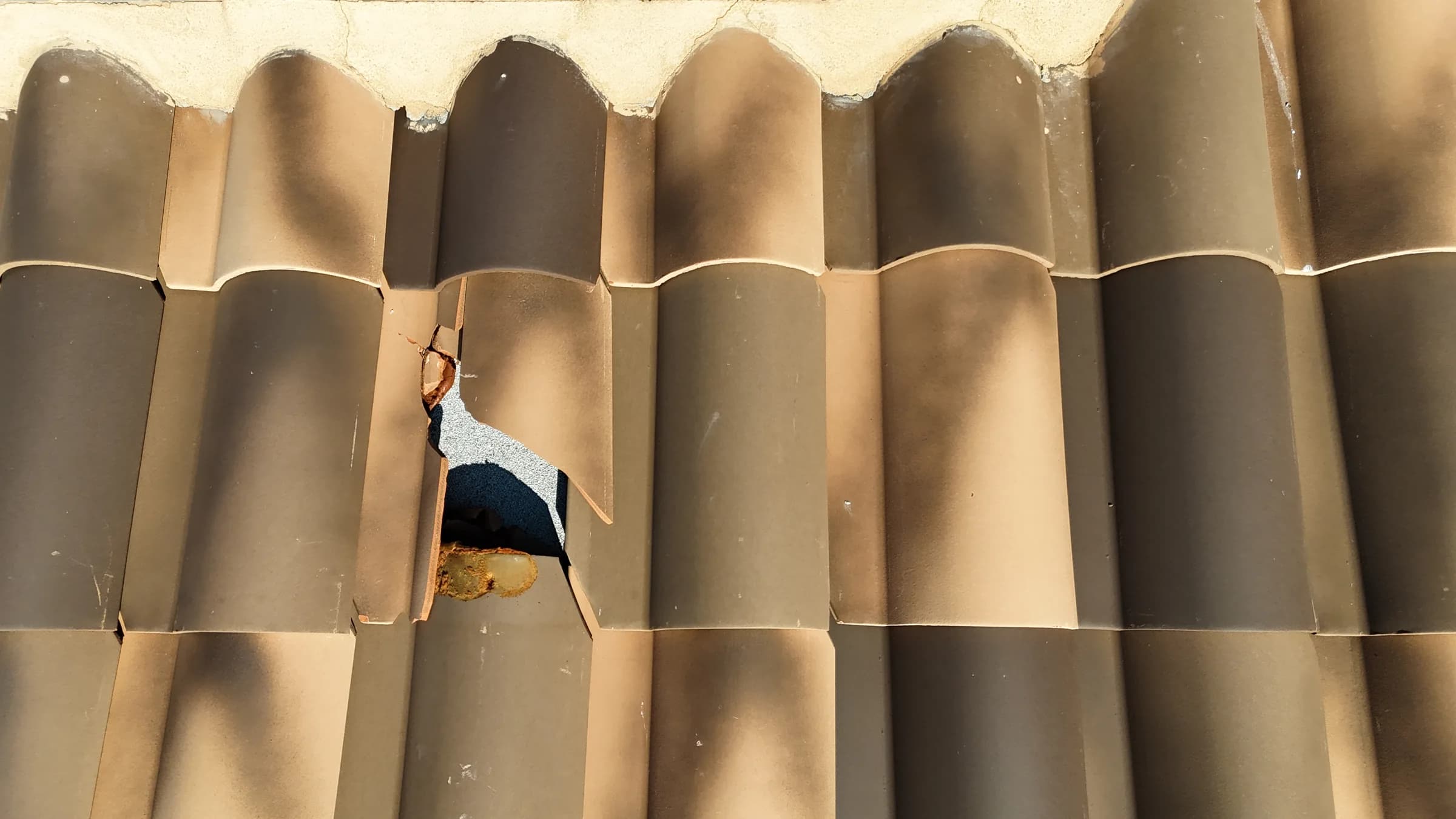
  • Close-up of broken brown barrel tiles with a hole exposing gray roof material below
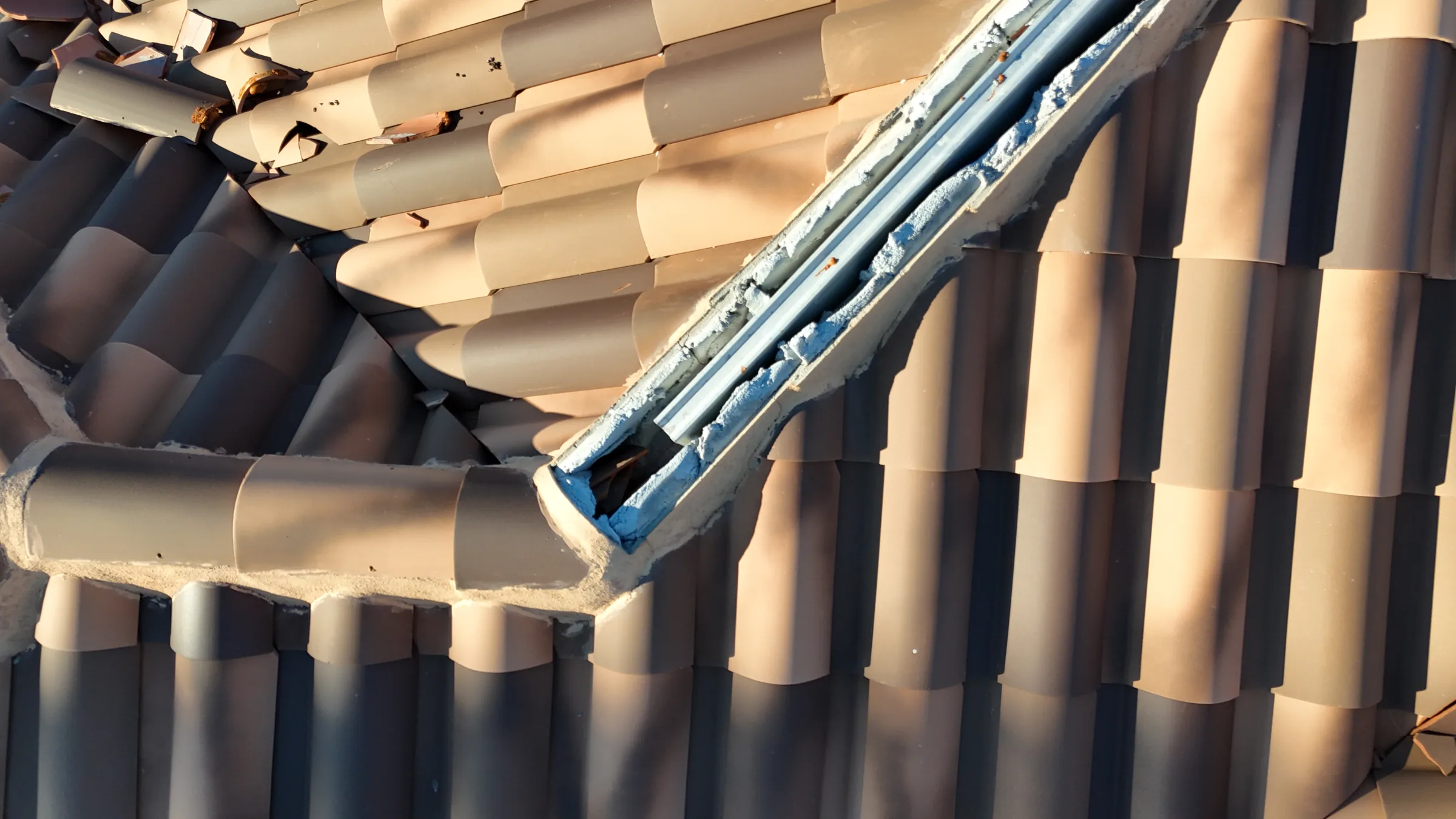
  • Close aerial view of broken and displaced barrel tiles beside an open metal valley
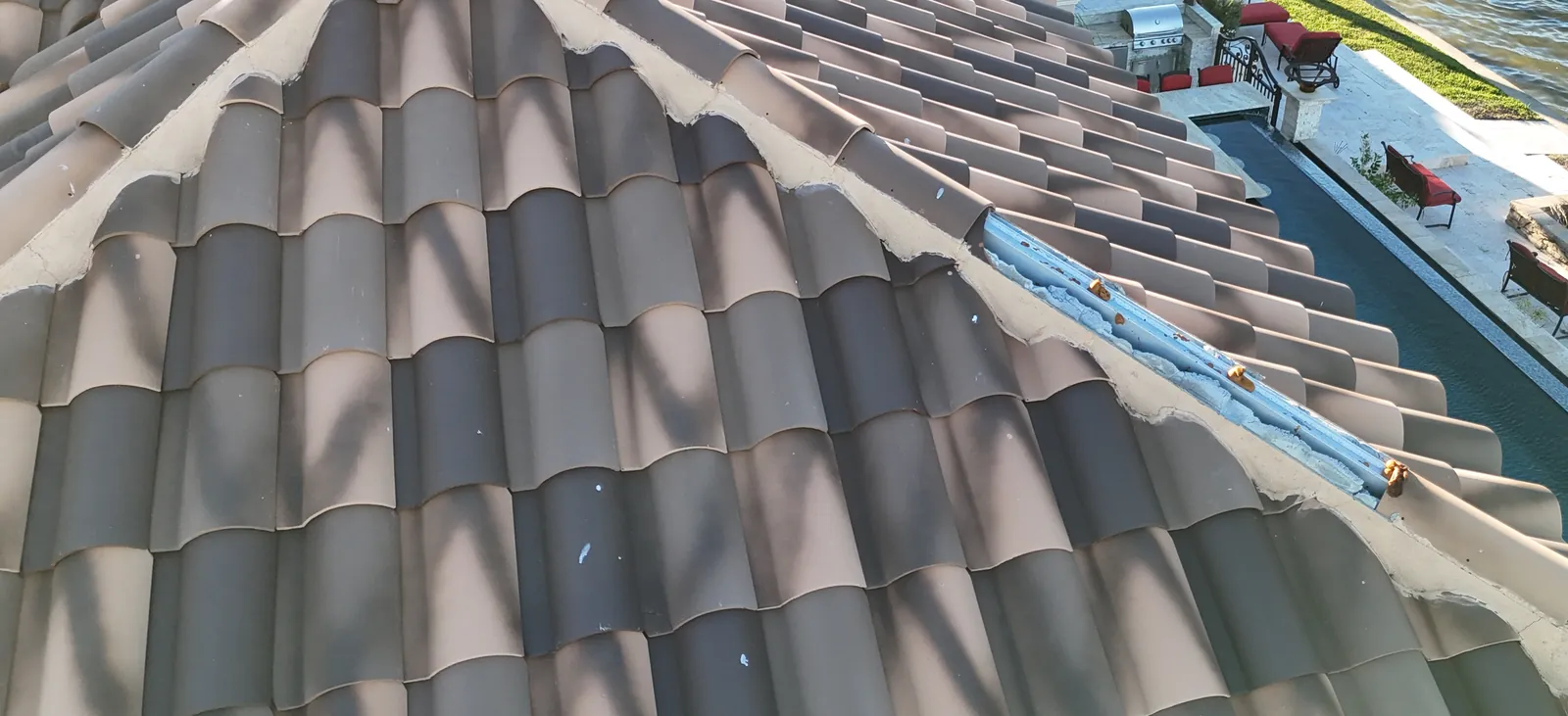
  • Roof hip with cap tiles missing, exposing the metal channel nailer that anchored them.
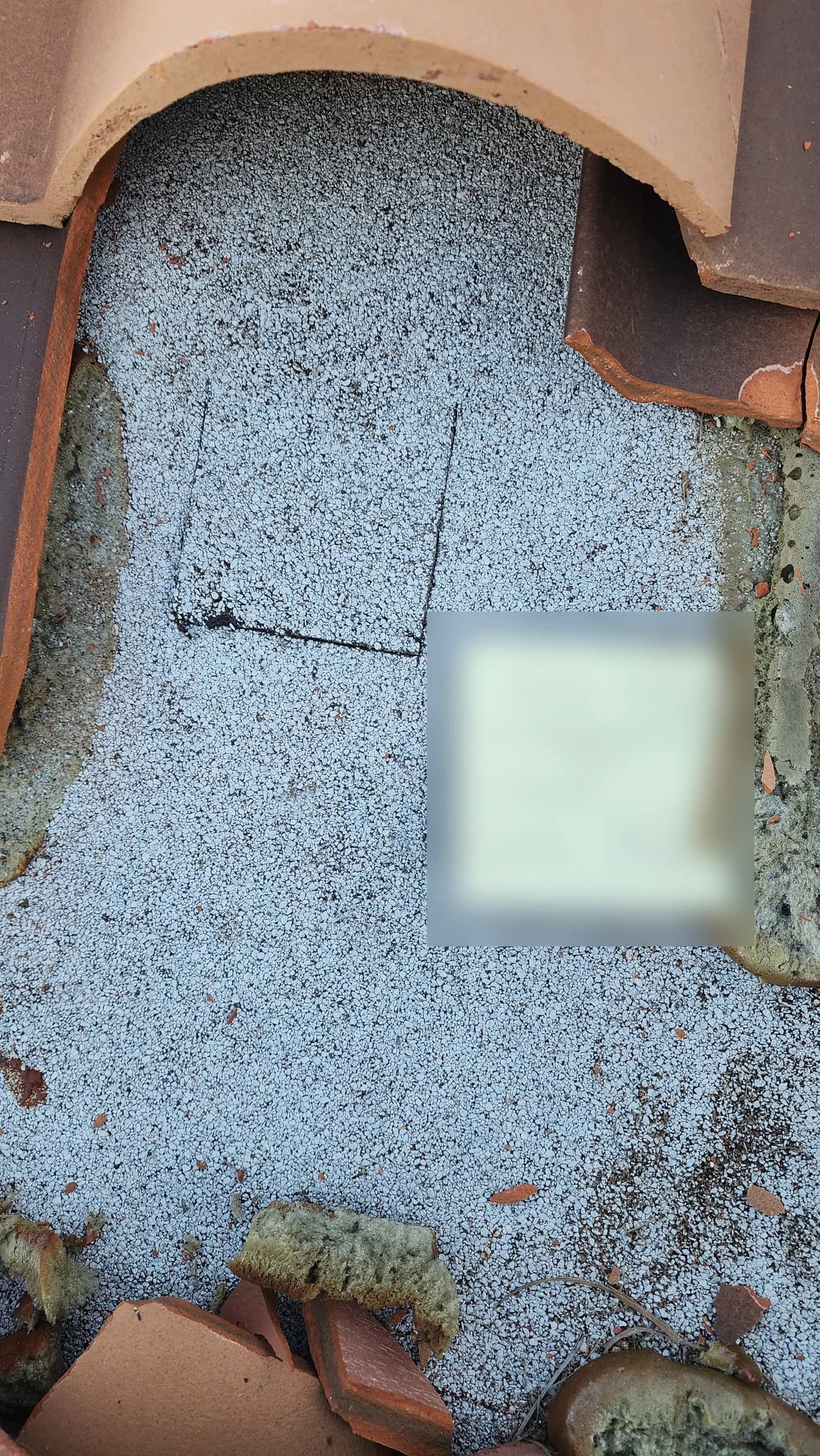
  • Close-up of a square core-test cut in gray granulated underlayment surrounded by removed clay tile pieces
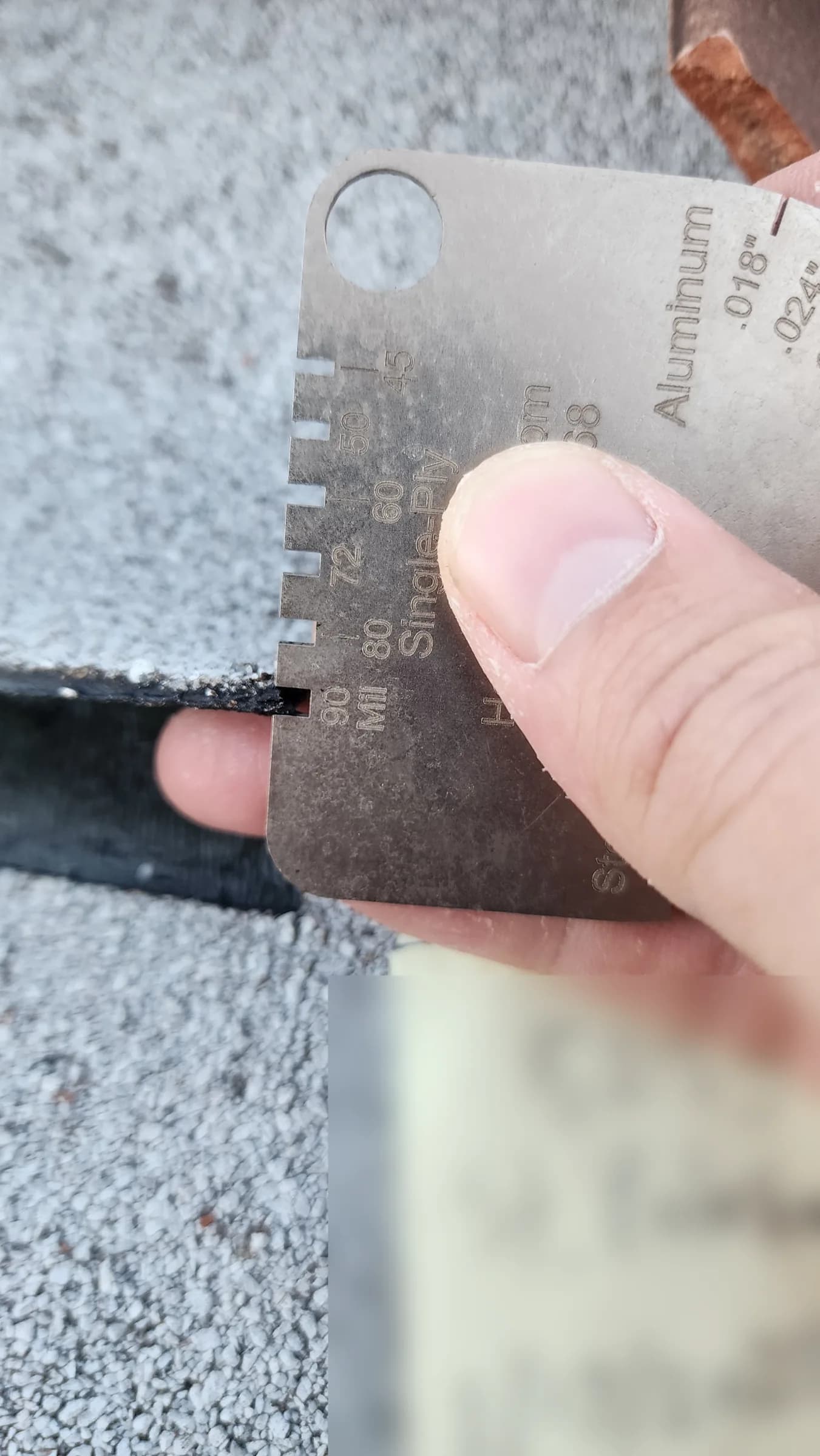
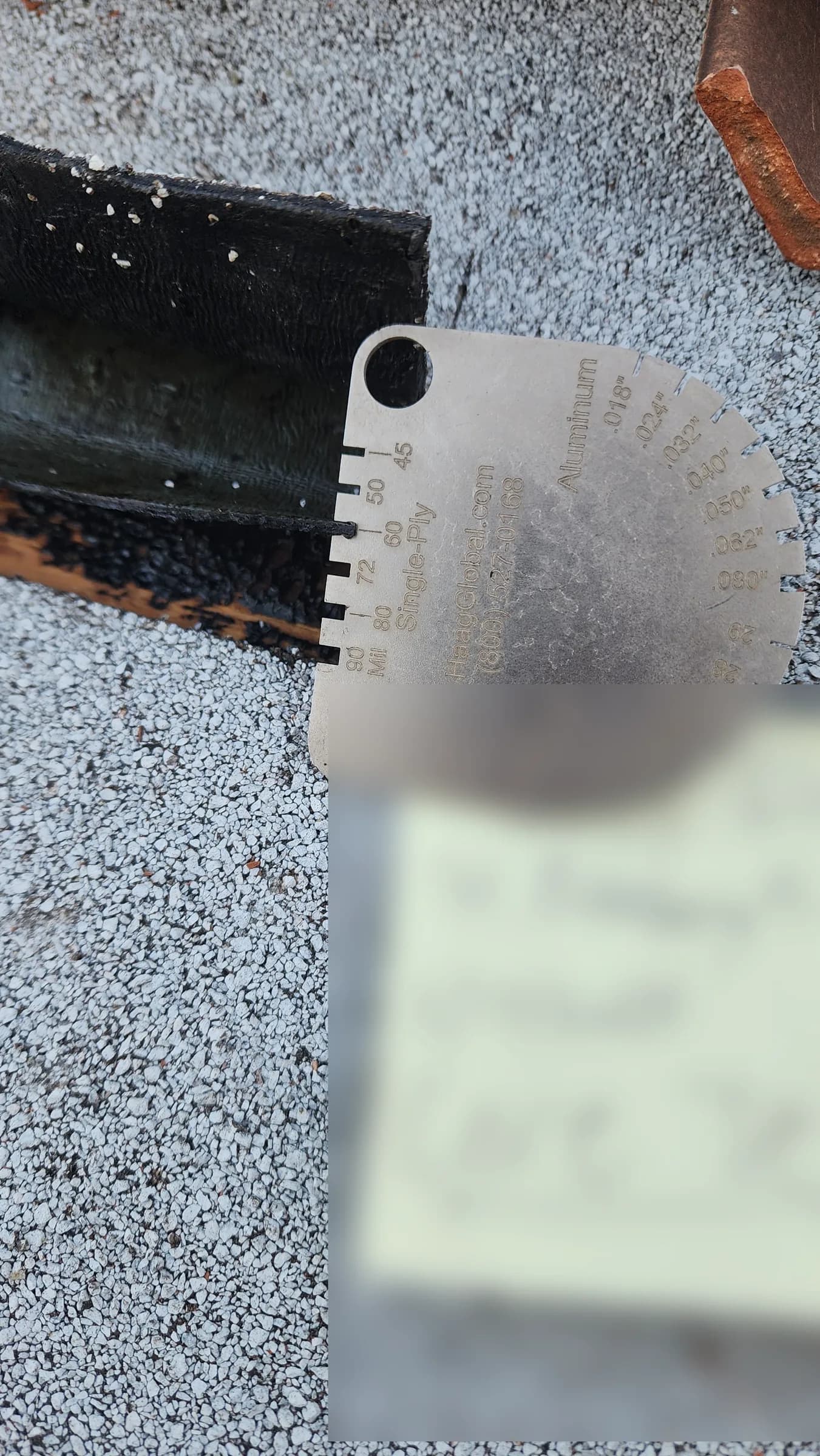
  • Thickness gauge held against the cut edge of gray granulated roof underlayment
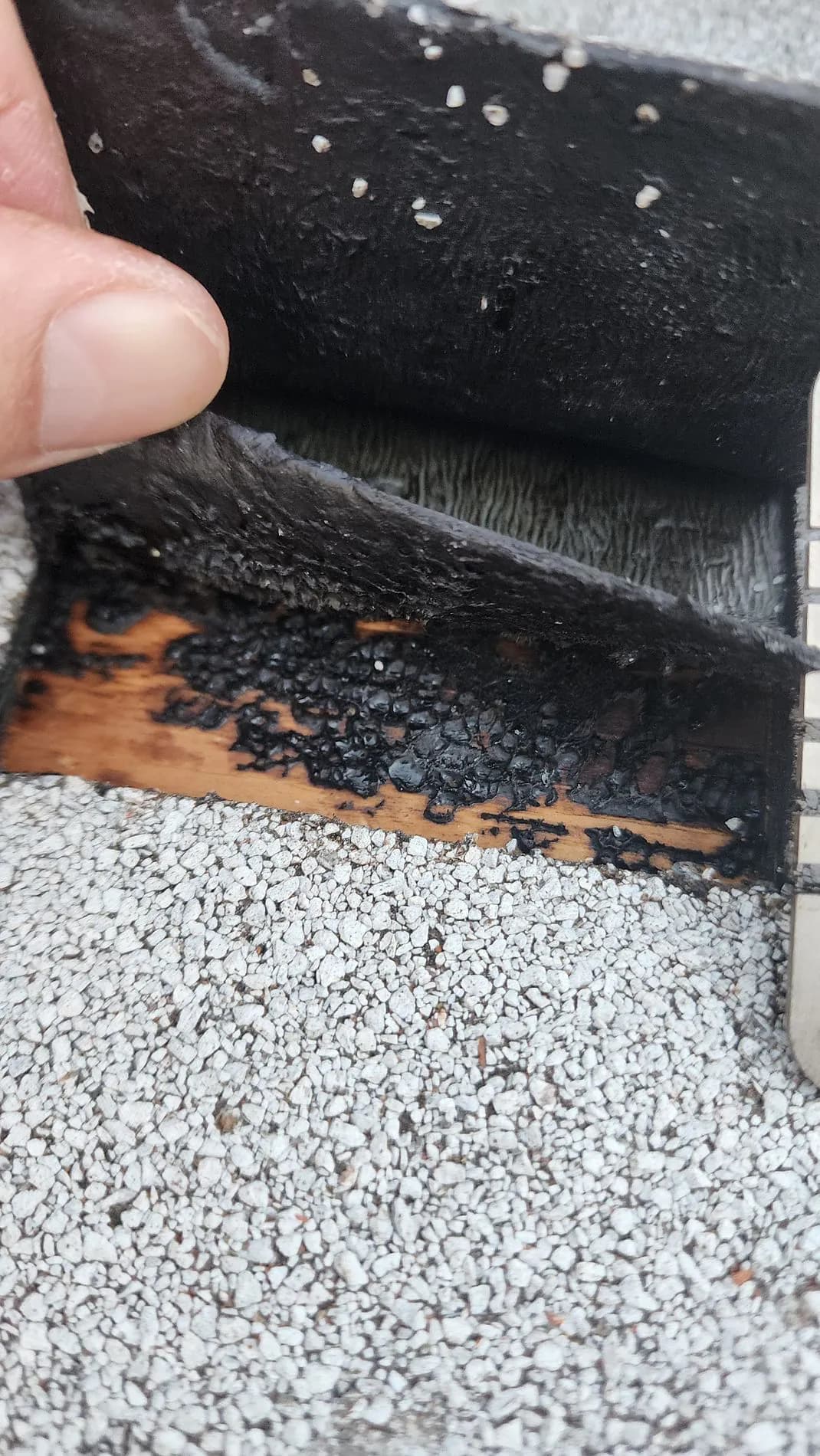
  • Thickness gauge placed against the black underside of a cut roof membrane sample on gray granulated underlayment
  • Old modified bitumen membrane torn during peel-back, exposing the wood deck beneath.
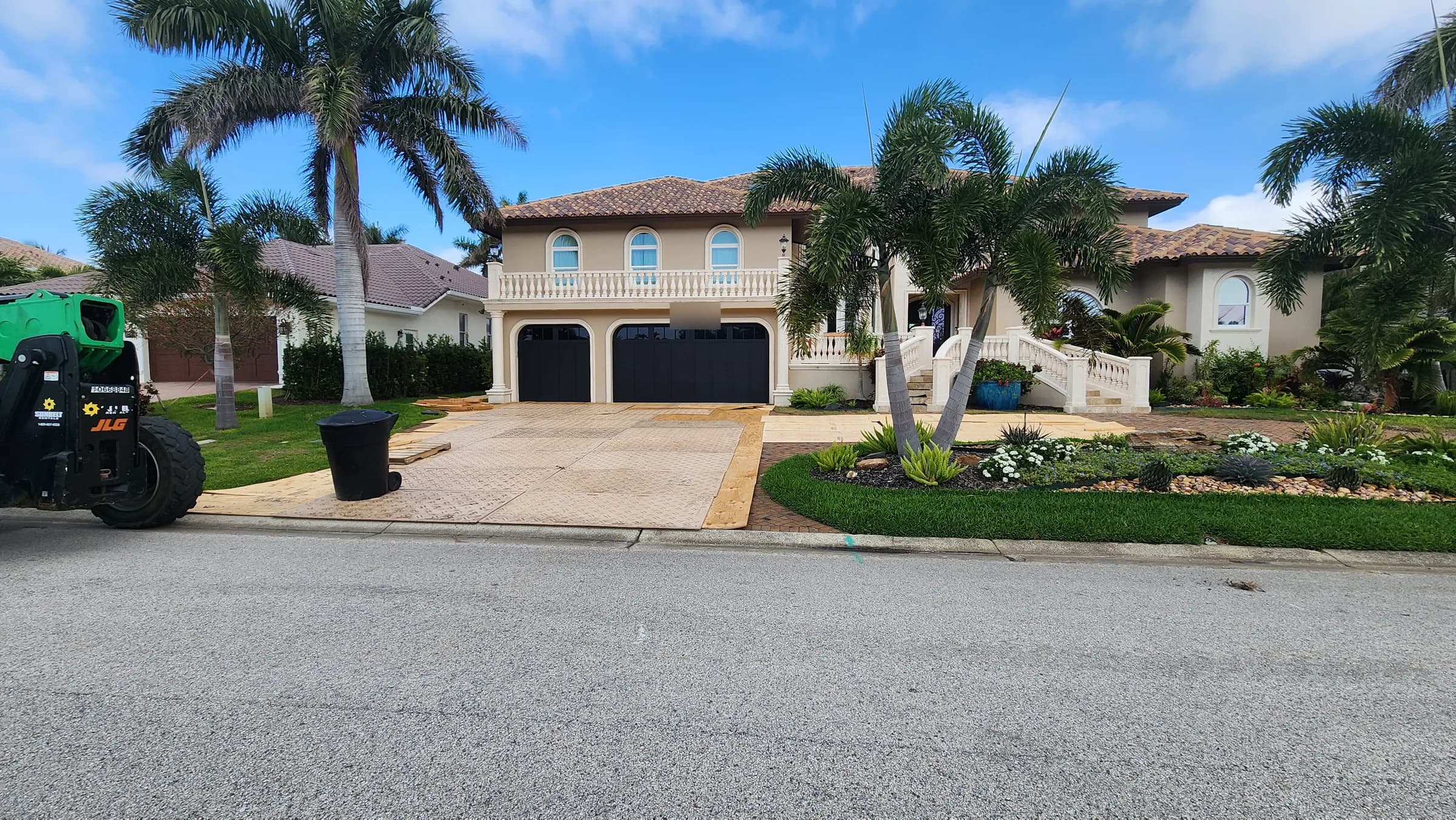
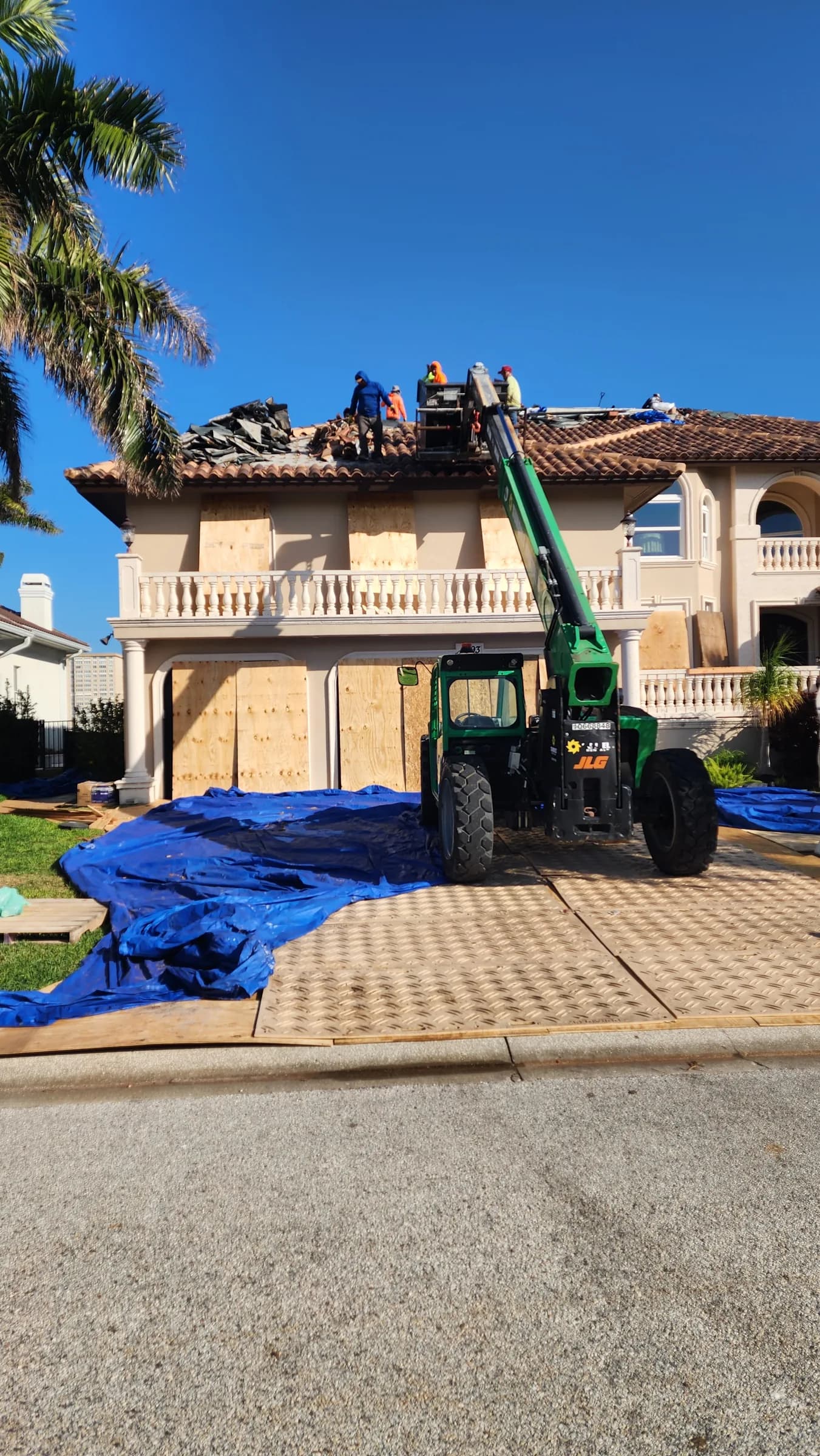
  • Two-story home with plywood and composite mats covering the clay brick driveway and a telehandler beside the curb
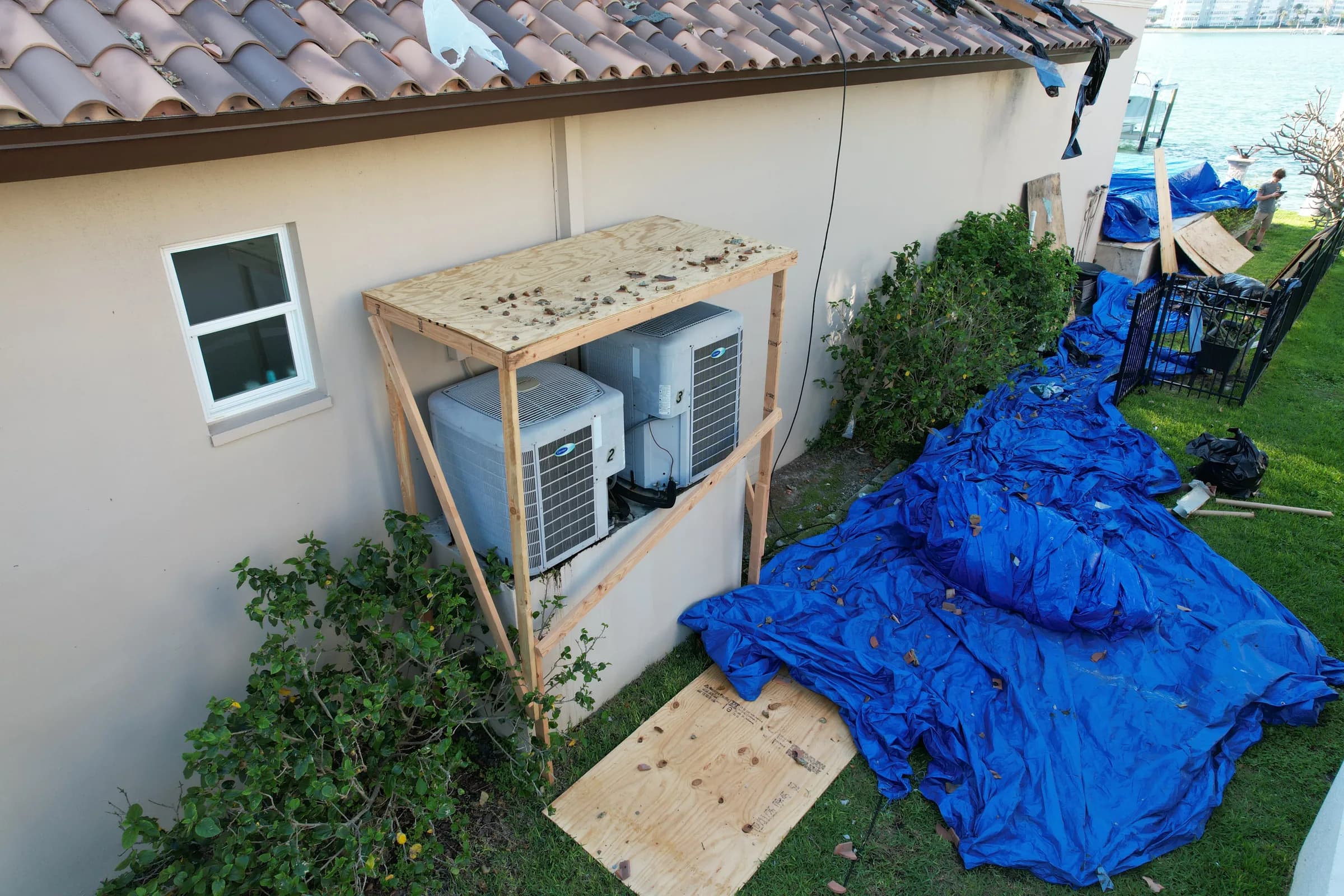
  • Plywood box built over two outdoor air-conditioning units with blue tarps covering the ground around the house
  • Roofing crew removing tile above boarded windows while a telehandler stands on the protected driveway
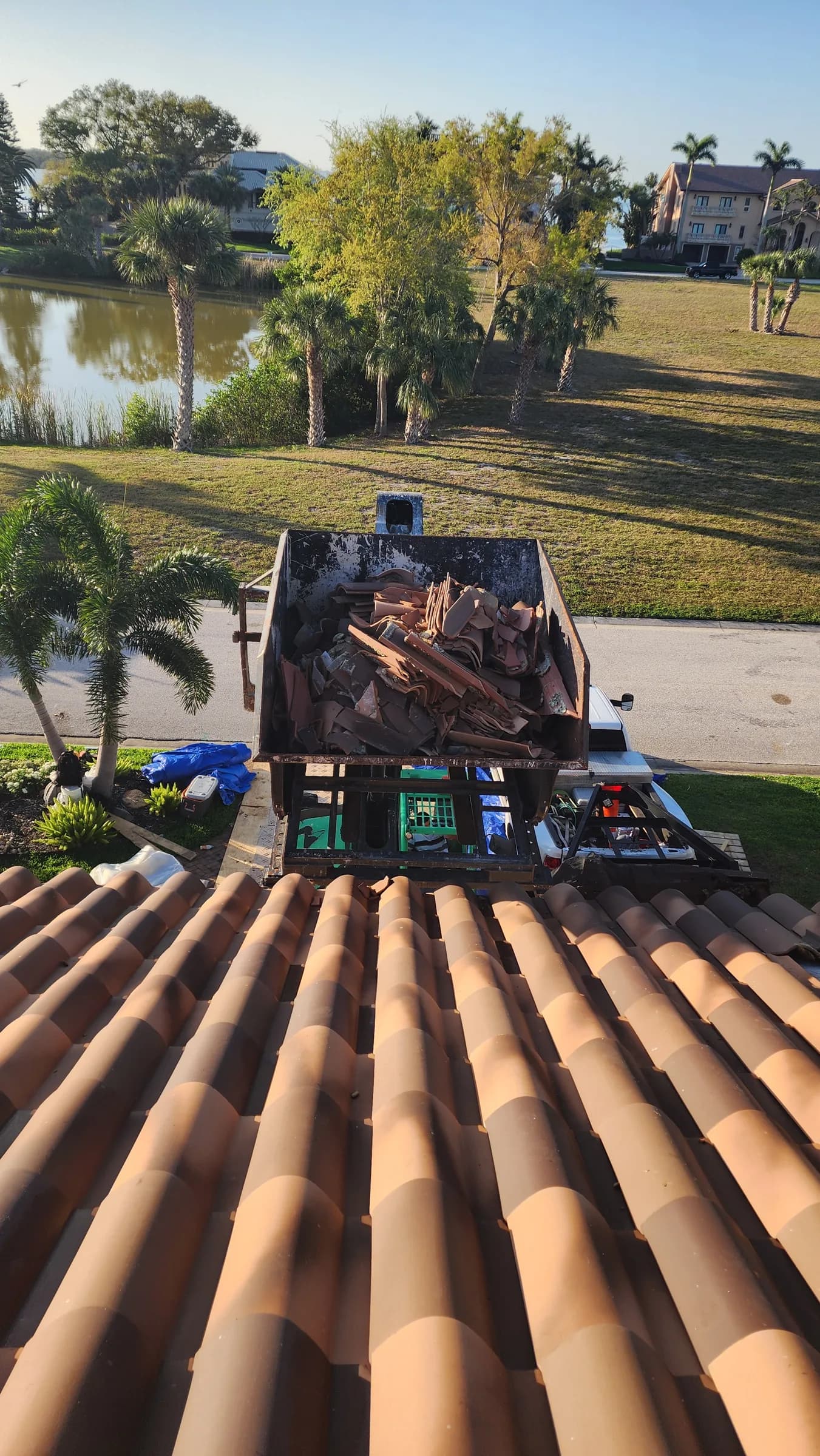
  • Roof-level view of a debris bin filled with removed clay tile beside the remaining tile field

Tile · St. Petersburg, FL

1 / 12

St. Petersburg, FL

Verea clay S-barrel re-roof, St. Petersburg, FL

The existing clay tile roof, documented from above before replacement.

Read the full case study

FAQ

St. Petersburg tile roofing questions

My tile roof is leaking but the tiles look fine. How?
Because the tile is the armor, not the waterproofing. The underlayment beneath does the sealing, and it ages on a much shorter clock than the tile above it, so a tile roof can leak while its covering has decades left. That is why tile roof work so often means lifting sound tile, replacing the underlayment, and re-laying, rather than replacing the tile itself.
Can a new roof go over my old tile?
No. The Florida Building Code's recover provisions prohibit installing a new covering over existing clay or cement tile; the existing tile comes off first. What is often possible instead is the re-lay: salvage the sound tile, rebuild the underlayment system beneath it to current code, and reinstall. The materials questions page carries the recover rules with sources.
Can you match my discontinued tile profile?
Sometimes, honestly not always. Older profiles get discontinued, and matching then depends on salvage sourcing and how visible the repair area is. An honest tile contractor tells you what is matchable before work starts, and where matching is impossible, shows you the options rather than promising the invisible. On locally designated historic properties, a material change also triggers commission review rather than staff sign-off.
Should anyone walk on my tile roof?
As little as possible, and with tile-specific technique when it cannot be avoided: tile is strong against weather and fragile under a misplaced foot, and walked-in breakage is a real damage category on inspections. Ground-level and edge-based assessment comes first; that caution is part of why tile inspections are specialist work.

St. Petersburg tile

Find out which clock your roof is on.

A K. Simon Construction tile inspection reads the underlayment's condition, the salvageability of the covering, and the honest path between them, in writing, with photographs tied to findings. Licenses published, lookup invited.

Call now Inspection