
Assembly
Deck or substrate, insulation, underlayment or membrane layers, attachment, and surfacing, specified as one assembly rather than a product name.
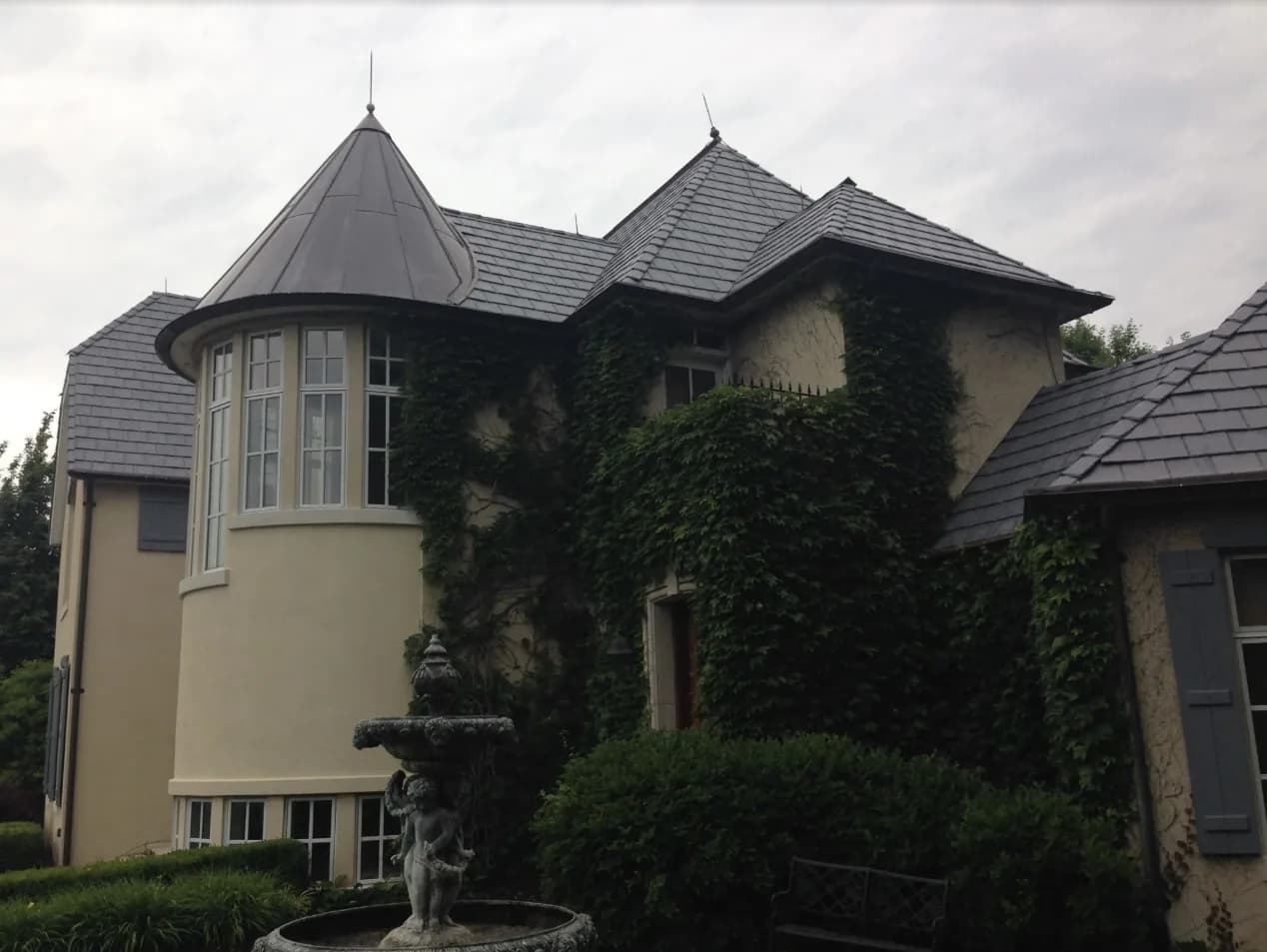
Heritage roof · Roof system record
Genuine quarried stone with one of the longest typical service lives in roofing.
Best-fit context
Natural slate is a premium, high-cost roof covering that can serve for generations. It is also very heavy, so the framing and load path must be engineered or verified to carry it. Individual slates are brittle under concentrated foot traffic, and repairs call for experienced slate work, compatible replacement stone, and durable flashing details.
75-100+ years typical industry range
Varies by climate, installation quality, detailing, and maintenance. A range starts the conversation; it is not a guarantee.
Deck or substrate, insulation, underlayment or membrane layers, attachment, and surfacing, specified as one assembly rather than a product name.
The conditions, measurements, and tests that determine whether this system actually fits the building.
Edges, penetrations, drainage, transitions, movement, and material compatibility: where roof performance is decided.
Photos, product records, inspection points, and maintenance guidance, delivered so the owner holds the evidence.
System anatomy
A slate roof is quarried stone hung on fasteners over a solid deck. Its century of life depends less on the stone, which is nearly permanent, than on the metal and fasteners that hold it.
Slate is very heavy, several times the weight of asphalt shingles, so the framing must be engineered or verified to carry it, along with the flashings and the full assembly. On a building not designed for slate, this comes first or the roof does not happen.
A sound, solid deck to nail the slate to. Because the roof is meant to last generations, the deck and everything fastened to it are chosen to keep pace with the stone.
A felt or membrane underlayment as a backup layer. Slate sheds water by lapping stone over stone, so the underlayment is a secondary defense rather than the primary barrier, which is the reverse of how a tile roof works.
Split from quarried stone and graded for expected life, hung with head-lap so each course covers the joints below it. Color, texture, and small natural variations are part of the material, which is why slate suits historic and high-end work.
The nails that hang each slate, and their longevity is a real design choice. Copper or stainless fasteners are used because a nail that corrodes before the stone will let slates slip, which is one of the classic ways a slate roof fails while its slate is still perfect.
Copper at the valleys, walls, and chimneys, sized and specified to last alongside the slate. Undersized or non-durable flashing is the other classic slate failure, because it wears out decades before the stone above it.
Listed from the structure up. On slate, the stone is nearly permanent, so the fasteners and flashings that hold it decide when the roof actually needs work.
What it does well
Slate offers things no manufactured roof can, which is why it endures on historic and architecturally serious buildings.
A well-built slate roof can serve for a century or more, longer than any common alternative. On the right building it may be the last roof covering the structure ever needs, replaced only in parts rather than wholesale.
Slate is split from quarried rock, so its color and texture are the material itself, not a printed or molded imitation. That authenticity is exactly what historic and high-end architecture calls for, where a manufactured look would change the building's character.
A properly specified slate assembly carries a Class A fire rating, and individual slates can be replaced without redoing the roof, so damage stays local when the work is done by someone who knows the craft.
Where it fails
Slate almost never wears out in the way people expect. The stone outlives the things that hold it, so failure shows up at the fasteners and flashings.
When fasteners corrode before the stone, slates slip out of place and leave gaps, sometimes across a whole roof. The stone is fine; the fix is re-securing or re-laying slates, not replacing them, which is why matching the fastener life to the slate matters so much at install.
Undersized or non-copper flashings at valleys and chimneys fail long before the slate, and valleys are the classic slate leak. A slate roof that leaks is usually telling you the metal, not the stone, has reached the end.
Foot traffic cracks brittle slate, and lower-grade stone can flake or delaminate over time. Careless prior repairs, walked-on fields, and mastic smeared over cracked slates all show up as recurring trouble on an otherwise sound roof.
Florida climate fit
Honesty first: slate is a heritage material whose strengths are built for other places, and it is uncommon in Florida for practical reasons worth naming.
Slate's advantages, a century of life and a look suited to historic northern architecture, are not what most Florida homes need, and its weight and premium cost make it a specialized choice here. It belongs to specific historic or architecturally serious homes with a structure verified to carry it, not to the typical re-roof.
Slate is inert to salt air and unbothered by UV, and it is noncombustible, so where it is chosen for the right building it holds up against exposures that trouble lighter materials. The material itself is not the obstacle; the weight, the cost, and the structure are.
Hurricane-zone wind plus slate's mass raises the stakes on the structure and the fastening, so both get more scrutiny, not less. In practice this reinforces why slate stays a considered, verified decision in Florida rather than a common one.
Maintenance rhythm
Slate is close to maintenance-free for long stretches, and the maintenance it does need is about the metal and the fasteners, not the stone.
Slate is brittle, so it is walked only by specialists using hook ladders and planks that spread the load. Casual foot traffic to check the roof is how sound slates get cracked, so inspection is planned to avoid it.
Because valleys and flashings fail first, those get the attention, and a pattern of slipped slates signals the fasteners are reaching their limit. Copper details and matched replacement slate keep repairs consistent with the roof's long horizon.
A slipped or cracked slate is replaced with stone matched in size, thickness, and weathered color, secured properly rather than smeared with mastic. Done right, a repair disappears into a roof meant to last generations.
Quality versus shortcut
The gap between a slate roof that lasts a century and one that fails early is almost entirely in the metal, the fasteners, and the hand that hangs the stone.
A verified structure, copper flashings sized to outlast the slate, copper or stainless fasteners, correct head-lap, and nails set to hang the slate rather than crush it. The details are chosen so everything lasts alongside the stone.
Galvanized nails and flashings that corrode decades before the slate, over-driven nails that crack the stone, walked-on fields, wrong-grade or mismatched replacement slate, and mastic troweled over cracks. Each one shortens a roof the stone would otherwise carry for a century.
Ask what flashing metal and fasteners are specified and why, and how the crew avoids walking the field. On slate, quality is a conversation about longevity of the metal and the skill of the installer, because the stone itself is rarely the question.
Repair or replace
With slate the honest question is rarely whether to tear off the stone. It is whether the fasteners and flashings need renewal underneath it.
Slipped or cracked slates and worn flashings are replaced piece by piece on a roof whose stone is sound. Most slate service is exactly this: local, specialized, and far short of a full replacement.
When fasteners fail across a roof, sound slate is re-secured or taken down and re-laid over new underlayment and fasteners, reusing the stone. It is a major project that still keeps the original material.
Only when lower-grade slate has reached the end of its own life, or the structure can no longer be carried, does a full replacement make sense. Premium slate rarely gets there; the metal and fasteners around it usually set the timeline.
How it ages
A rough picture of how a slate roof tends to age, with the stone far outlasting the metal and fasteners around it. Slate grade, flashing metal, and installation quality move every stage.
Years 0-25
Essentially maintenance-free when installed right, aside from the occasional slate replaced after impact or a careless step. The roof simply does its job.
Years 25-50
Flashings and valley metal approach their limits and are renewed, sometimes before the fasteners, and the roof gets watched for early signs of slipping.
Years 50-75
If fasteners begin to fail, a re-nail or re-lay reusing the sound slate keeps the roof going. Flashing renewal continues; the stone carries on.
Years 75-100+
Lower-grade slate may finally reach the end of its life, while premium stone soldiers on with selective replacement. Few roofing materials get to have this conversation.
These are general aging patterns for the system, not a schedule. Climate, installation quality, and maintenance move every date, which is why service life is written as a range.
Strengths and limitations
Slate's appeal is real: natural variation, historic character, Class A fire performance in a properly specified roof assembly, and a service life that can exceed a century. The tradeoffs are equally real.
Natural slate is split from quarried stone. Its color, texture, and small variations are part of the material, which is why it suits historic work and high-end architecture where a manufactured look would change the building's character.
Traditional slate is many times heavier than asphalt shingles or lightweight metal. A building that was not designed for it may need structural engineering and reinforcement before the roof covering can be considered.
Cracked or missing slates can be replaced, but matching size, shape, texture, and weathered color takes specialized sourcing and workmanship. Foot traffic is minimized, and copper flashings are common because the surrounding details should last alongside the slate.
Decision questions
These are the conditions an inspection verifies before this assembly is worth recommending. If one fails, the recommendation changes.
Structural capacity for the slate, flashing, and full roof assembly
Slate source, grade, thickness, color, and replacement availability
Access plan that keeps avoidable foot traffic off brittle slates
Experienced slate repair and compatible copper or other durable flashings
FAQ
The questions owners and facility managers actually ask about this system, answered plainly.
For most homes, no, and it is honest to say so. Slate is a heritage material whose strengths, a century of service and a look built for historic northern architecture, are not what a typical Florida home needs, and its weight and premium cost make it a specialized choice. It suits specific historic or architecturally serious homes with a structure verified to carry it, rather than the ordinary re-roof.
Because the stone is rarely what fails. The fasteners that hang the slates and the metal flashings at valleys and chimneys wear out decades before the stone, and when a nail corrodes a slate slips, or a worn valley lets water in. A leaking slate roof usually needs its fasteners or flashings addressed, not its slate replaced.
Yes, by someone who does slate work. A replacement is matched in size, thickness, texture, and weathered color, and secured properly rather than mastic-patched. Sourcing a close match takes some effort because slate weathers and quarries vary, which is exactly why specialized workmanship matters on these roofs.
Real slate is quarried stone with a very long life and a genuine natural surface. Synthetic slate is a manufactured product molded to resemble it, typically lighter and less costly, with a different and generally shorter service life. They are separate decisions, and the right one depends on structure, budget, and whether authenticity matters for the building.
By having the structure verified, not by assuming it. Slate is several times heavier than asphalt shingles, so the framing must be engineered or confirmed to carry the stone, the flashings, and the full assembly before slate is on the table. On a home not designed for it, structural reinforcement may be required first.
Keep going
Where to go next, whether you are weighing slate against other systems or planning the detailing a heritage roof depends on.
See where a premium, long-life covering fits against the common systems.
Open
Why flashings and valleys, not the field, decide a roof like slate.
Open
Understand when a heritage roof is a repair rather than a replacement.
Open
The light, specialized upkeep a slate roof actually needs.
Open
System review
An inspection documents the deck, drainage, and details this decision depends on, then the options get explained against the building in plain language.