
Assembly
Deck or substrate, insulation, underlayment or membrane layers, attachment, and surfacing, specified as one assembly rather than a product name.
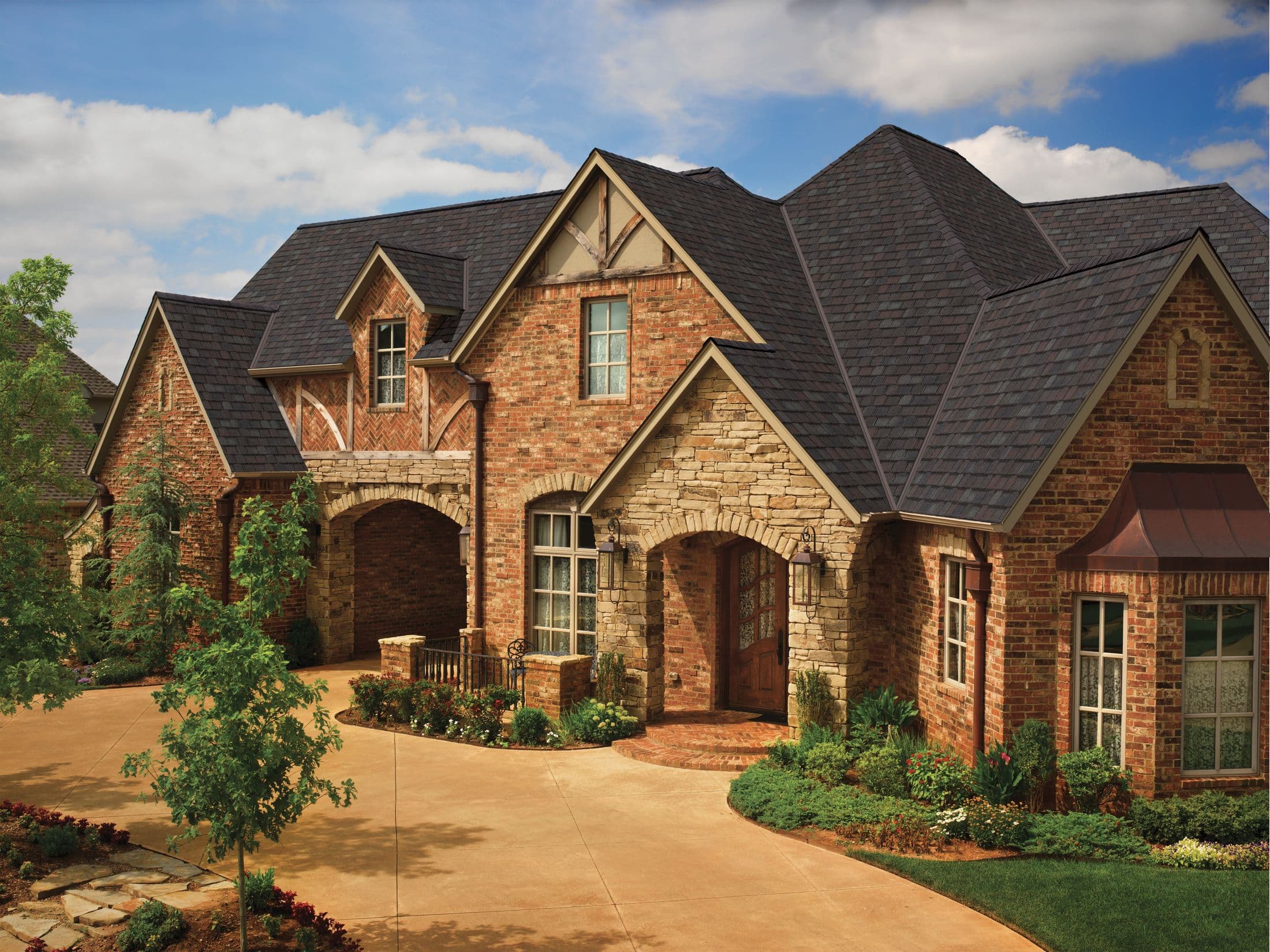
Steep-slope · Roof system record
The most common steep-slope system, with broad aesthetic and performance options.
Best-fit context
The final assembly should be selected around deck condition, ventilation, flashing geometry, wind exposure, and manufacturer requirements, not color alone. Underlayment, starter courses, and ridge details do as much work as the visible shingle.
20-30 years typical industry range
Varies by climate, installation quality, detailing, and maintenance. A range starts the conversation; it is not a guarantee.
Deck or substrate, insulation, underlayment or membrane layers, attachment, and surfacing, specified as one assembly rather than a product name.
The conditions, measurements, and tests that determine whether this system actually fits the building.
Edges, penetrations, drainage, transitions, movement, and material compatibility: where roof performance is decided.
Photos, product records, inspection points, and maintenance guidance, delivered so the owner holds the evidence.
System anatomy
The shingle is the part you see, and the smallest part of the decision. Under it sits an assembly that does most of the work of keeping the house dry.
The plywood or OSB sheathing the whole roof is nailed to. It has to be dry, sound, and properly fastened before anything goes over it. Soft or delaminated decking gets replaced at tear-off, not covered up.
A synthetic or felt sheet over the whole deck, with a self-adhered membrane at the eaves, valleys, and penetrations where wind-driven rain is most likely to get under the shingles. This is the roof's second line of defense when water gets past the surface.
Metal drip edge at the eaves and rakes gives water a clean path into the gutter, and a starter strip with a factory adhesive bead seals the first course down so wind cannot lift it. Skipping starter at the rakes is a common reason edges peel in a storm.
The laminated fiberglass-and-asphalt shingles, fastened in a specific nail line so each course is held by its own nails and the sealant strip of the course above it. Nail placement and count, not the brand, decide wind performance.
Cap shingles finish the hips and ridges, usually over a ridge vent that lets hot attic air escape. Balanced intake at the eaves and exhaust at the ridge keeps the underside of the deck from cooking the shingles from below.
Metal at the walls, chimneys, valleys, and pipe penetrations. Step flashing woven into the courses at walls, and sound pipe boots, are where most shingle roofs actually leak first, long before the field wears out.
Listed from the deck up. The layers you never see from the street decide whether the surface you do see keeps water out.
What it does well
Asphalt shingles are the default steep-slope roof for good reasons, not just price.
The widest selection of colors and profiles in roofing, stocked everywhere, installed by the largest base of crews. When a few shingles are damaged years from now, matching replacements are usually a stock item, not a special order.
The lowest upfront cost of the common systems, and laminated shingles add depth and hide minor deck irregularities that flat three-tab shingles show. A wind-rated, impact-rated class is available when the exposure calls for it.
Individual shingles and flashings can be replaced without specialized trade skills, so a small problem stays a small, affordable repair when it is caught early.
Where it fails
Shingles rarely fail all at once. They tell you they are aging, and they usually leak at a detail before the field gives out.
The colored granules protect the asphalt from the sun. As they wash off, you see them collecting in the gutters and bald, darker patches on the roof. Bare asphalt then ages fast under UV, so granule loss is the clearest sign a roof is entering its last chapter.
When the sealant strip lets go, wind folds tabs up and back. A creased shingle rarely reseals and becomes the next blow-off. Damage concentrates at the rakes, ridges, and anywhere the shingle was nailed high or overdriven.
Late in life shingles curl and crack as they dry out, especially over a hot, under-ventilated attic. Before that, the rubber collar on a plumbing vent boot cracks and leaks, which is why a boot is often the first thing to fix on an otherwise sound roof.
Florida climate fit
Florida ages a shingle roof differently than a northern one. Heat and sun, not freeze and thaw, set the clock, and wind sets the design.
Constant sun drives the volatiles out of the asphalt faster, so a shingle in Florida generally reaches the older end of its behavior sooner than the same shingle in a mild climate. Attic ventilation matters even more here because it lets the deck shed heat instead of baking the shingles from below.
A coastal or storm-exposed roof lives or dies on its fastening: the right nail count in the right line, sealed starter at the eaves and rakes, and a shingle class rated for the exposure. A secondary self-adhered underlayment matters more here because wind-driven rain works its way under the surface.
The black streaks common on Florida shingle roofs are algae feeding in the humidity, not storm damage. Algae-resistant shingles with copper or zinc granules slow it, and streaking is cosmetic, so it is worth telling apart from real wear before anyone sells a roof over it.
Maintenance rhythm
Shingles are low-maintenance, not no-maintenance. A little attention on a regular rhythm is what earns the full service life.
From the ground or with binoculars, scan the rakes and ridge for lifted, creased, or missing shingles after any strong wind event. Catching a few displaced shingles early keeps water off the underlayment before it finds a seam.
Clear gutters and valleys so water is not backing up under the courses, and watch for granules collecting in the gutter as an aging signal. Trim branches that abrade the surface or drop debris that holds moisture.
Pipe boots and exposed sealant at flashings age faster than the shingles. Replacing a cracked boot on schedule is a minor cost that prevents a ceiling stain, and a professional look every few years, plus after any hurricane, catches the rest.
Quality versus shortcut
Two shingle roofs with the same shingle can be very different roofs. The difference lives in the parts a photo of the finished surface never shows.
Tear off to a sound, re-fastened deck. New drip edge, proper starter at eaves and rakes, correct nails placed in the shingle's nail line, fresh flashings and pipe boots, self-adhered membrane at the vulnerable areas, and balanced intake-and-exhaust ventilation.
A second layer shingled over the old roof, which hides deck rot and traps heat. Reused flashings and boots, a bead of caulk standing in for step flashing, nails driven too high or too deep so the tabs never seal, and no starter at the rakes.
Ask what the closeout will document: deck condition and any replacement, the nailing pattern, ventilation, and flashing details, with photos. A contractor who works to a standard is glad to show it; a shortcut job stays quiet about the layers underneath.
Repair or replace
Most shingle problems are repairs, until enough of them stack up that repair stops being the honest answer.
A handful of wind-lifted shingles, a cracked pipe boot, a tired valley, or flashing at one wall are targeted fixes on a roof with years left. A sound roof with an isolated leak should be repaired, not replaced.
Widespread granule loss and curling, repeated leaks in different areas, or a roof already at the older end of its range means each repair buys less time. When you are paying to chase leaks across the roof, replacement is often the cheaper path over a few years.
Age alone does not condemn a roof, and a clean surface does not clear it. A documented inspection of the field, flashings, and deck is what turns the repair-or-replace question into an answer you can see the basis for.
How it ages
A rough picture of how an architectural shingle roof tends to move through its typical 20 to 30 year range. Heat, ventilation, and installation quality move every stage earlier or later.
Years 0-5
The sealant strips fully bond and the roof is at its best wind resistance. Little changes, and any trouble this early usually traces to an installation detail rather than wear.
Years 5-15
Color softens and granule loss begins gradually. Maintenance is minor and predictable: a pipe boot, a few wind-lifted shingles, gutters kept clear.
Years 15-25
Granule loss becomes visible, some shingles begin to curl or crack, and sealant bonds weaken. Repairs grow more frequent, and an under-ventilated roof shows its age faster here.
Years 25+
Widespread granule loss, brittleness, and leaks returning at flashings and valleys. Each repair buys less, and the conversation shifts to replacement.
These are general aging patterns for the system, not a schedule. Climate, installation quality, and maintenance move every date, which is why service life is written as a range.
Aerial documentation
Aerial photos at the dry-in stage put the parts of a shingle re-roof no one sees from the street on the record: the underlayment, the prepared deck, and the condition of the roof before the finished surface covers it.
Overhead and oblique photos of the dried-in roof document that the deck was prepared and the underlayment installed before shingles went on, not just that the finished roof looks clean.
The same aerial record supports the closeout file, so the owner keeps evidence of what was installed and when, alongside permits and inspections.
This system, on a real roof
Jobs from our own project records that installed this system, with the client's details blacked out. The facts below come from measurement reports, material orders, and completion paperwork.
Shingles · Residential
Problem. On September 26, 2024, hurricane winds tore into the shingle roof of a single-story waterfront home and the same storm pushed flooding through the entire main level. Every room took water.
Result. TAMKO Titan XT shingles fastened with six nails each, mastic at the eaves, rakes, valleys, and gable ends, and the 224 feet of seamless gutters reinstalled intact rather than replaced. Inside: 568 linear feet of flood cut, 72 sheets of drywall, a rebuilt kitchen, ten new interior doors, new vanities and trim, and prime and paint through the whole home. The roof's Certificate of Completion was signed February 26, 2025.
Shingles · Residential
Problem. Hurricane winds on September 26, 2024 stripped shingles off every slope of a one-story home. Both roof areas went under emergency tarps, and tear-off then exposed rot in the original plank decking.
Result. Over 2,300 square feet of new CDX plywood, 64 feet of truss repairs, and spaced-decking repairs on the low-slope section, then double-coverage synthetic underlayment and TAMKO Titan XT shingles in Virginia Slate. The Certificate of Completion was signed February 13, 2025, about twenty weeks after the storm.
Decision questions
These are the conditions an inspection verifies before this assembly is worth recommending. If one fails, the recommendation changes.
Deck condition and fastener pull-through
Attic ventilation and moisture path
Wind rating and exposure category
Flashing geometry at walls, chimneys, and valleys
FAQ
The questions owners and facility managers actually ask about this system, answered plainly.
The typical industry range is about 20 to 30 years, but Florida heat and sun tend to push a given roof toward the shorter end of how that shingle behaves, while ventilation and installation quality move it in either direction. Treat the range as a starting point, not a guarantee, and let a condition inspection set expectations for a specific roof.
Three-tab shingles are flat and uniform with a single layer. Architectural, or laminated, shingles bond two layers for a dimensional look, better wind performance, and a longer typical life. Most new residential roofs use architectural shingles because the added durability is usually worth the modest cost difference.
Sometimes it is allowed, but it is usually the wrong call. A second layer hides deck rot and failing flashings, traps heat that ages both layers faster, and can shorten warranties. A tear-off lets the deck, underlayment, and flashings be inspected and renewed, which is where a roof's real durability lives.
They are algae growing in the humidity, not storm damage or a failing roof, and the stains are cosmetic. Algae-resistant shingles with copper or zinc granules slow the growth. It is worth telling algae apart from genuine wear before treating it as a reason to replace.
Almost always a detail, not the field: a cracked plumbing vent boot, tired step flashing at a wall, or a worn valley. That is why an honest inspection looks hard at the flashings and penetrations, and why a leak on a mid-life roof is often a small repair rather than a sign the whole roof is done.
Keep going
Where to go next, whether you are choosing a color, sizing a replacement, or deciding between repair and a new roof.
Render manufacturer shingle colors on a photo of your own house before you commit.
Open
Get a rough measurement to frame a shingle budget conversation.
Open
Compare shingle against metal and tile across cost, life, weight, and look.
Open
Sort out whether your current roof is a repair or a replacement.
Open
The ground-level habits that earn the full life from a shingle roof.
Open
System review
An inspection documents the deck, drainage, and details this decision depends on, then the options get explained against the building in plain language.