
Assembly
Deck or substrate, insulation, underlayment or membrane layers, attachment, and surfacing, specified as one assembly rather than a product name.
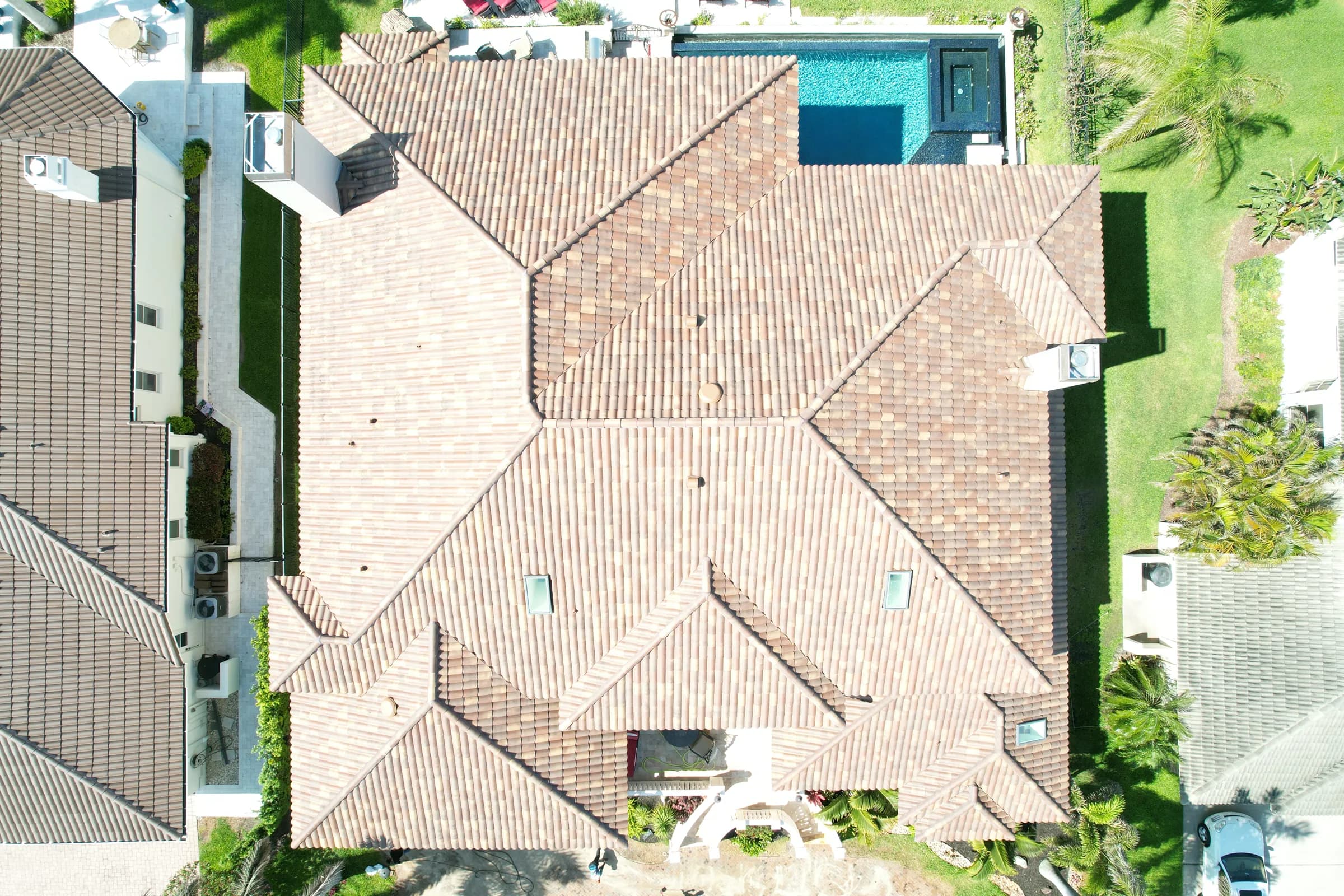
Steep-slope · Roof system record
A heavyweight steep-slope system in clay or concrete, with barrel and flat profiles.
Best-fit context
Tile is a structural decision before it is a color decision. The framing has to carry the weight, and the underlayment beneath the tile does the real waterproofing, on a shorter clock than the tile above it. Clay and concrete differ in weight, cost, and how the color ages; that comparison belongs in the decision, not after it.
50+ years typical industry range for the tile itself
Varies by climate, installation quality, detailing, and maintenance. A range starts the conversation; it is not a guarantee.
Deck or substrate, insulation, underlayment or membrane layers, attachment, and surfacing, specified as one assembly rather than a product name.
The conditions, measurements, and tests that determine whether this system actually fits the building.
Edges, penetrations, drainage, transitions, movement, and material compatibility: where roof performance is decided.
Photos, product records, inspection points, and maintenance guidance, delivered so the owner holds the evidence.
System anatomy
A tile roof surprises people: the tile is the sunshade, and the underlayment beneath it is the roof. Understanding that order explains almost everything about how tile behaves.
Tile is heavy, so the decision starts under the roof. The framing has to be verified to carry the load before color or profile is even discussed. A roof that cannot be confirmed structurally for tile is not a tile roof, whatever the sample board shows.
The sheathing the underlayment and tile attach to, sound and properly fastened. On a re-roof it is inspected once the old tile is off, because problems here have been hidden under the tile for years.
This is the layer that actually keeps the house dry. A robust self-adhered modified-bitumen underlayment, often two plies, sheds the water the tile lets past. It ages on a shorter clock than the tile above it, which is the single most important thing to understand about a tile roof.
Battens, mortar, foam, or mechanical fasteners hold the tile down, chosen to match the wind exposure. Barrel tile also leaves an air gap that ventilates the roof and helps in heat. The attachment method is a wind decision, verified for the site.
Clay or concrete tile in barrel or flat profiles, lapped so water always runs over the next course. The hips and ridges, with their closures, are the lines that take the most wind and the first to need attention after a storm.
Corrosion-resistant metal at valleys, walls, and penetrations, plus birdstops and weep details at the eaves so water that gets under the tile can drain and dry. These decide whether the water the underlayment sheds actually makes it off the roof.
Listed from the structure up. On tile, the underlayment is the roof and the tile is its shade, which is why a tile roof can leak while its tile is still perfect.
Clay versus concrete
Both make a tile roof, both come in barrel and flat profiles, and both need a structure verified for the load. The practical differences are weight, budget, how the color ages, and what regional plants actually stock.
Fired clay: the color is the material itself, not a coating.
Molded concrete: more weight, lower cost, wide color range.
Neither material is simply the upgrade of the other. Weight and structure, budget, color longevity, and regional availability decide it, and the structural question gets answered by inspection, not preference.
What it does well
Tile is a heavyweight system with strengths no lightweight roof matches, in the right climate and on the right structure.
The tile itself can outlast several shingle roofs, and it will not rot, burn, or lose its color the way lighter materials do. Fired clay carries its color through the material, so it holds for the life of the tile.
Tile suits hot and coastal architecture for a reason. Its mass, and the air gap under barrel profiles, moderate the heat the roof passes into the house, and clay and concrete are inert to the salt air that punishes metal.
Tile is noncombustible, and its barrel and flat profiles give a building a look that no other roof imitates convincingly up close. For Spanish and Mediterranean homes it is often the only covering that reads as authentic.
Where it fails
Tile failure is different from any other roof, because the part that fails is usually the part you cannot see, while the tile looks fine.
The classic tile situation: the roof leaks at twenty years while the fifty-year tile is still perfect. The waterproofing underneath has reached the end of its life, and the fix is to renew the underlayment, often by lifting and relaying the sound tile over it.
Tile breaks underfoot, under falling limbs, and under hail, and it slips when a fastener or mortar bed fails. A broken tile exposes the underlayment to UV and weather, so it is worth replacing promptly even though the leak may not show right away.
The mortar or closures along the ridges and hips take the most wind and weather. When they crack or wash out, those lines are where a storm opens the roof first, which is exactly the damage pattern a restored tile roof has to rebuild.
Florida climate fit
Tile is at home in Florida heat and salt, but hurricane wind and foot traffic write their own rules for how it is attached and serviced.
In hurricane-zone exposure the attachment method has to match the uplift, and the ridges and hips need detailing that holds. Wind-driven rain is handled by the underlayment and proper headlap, not the tile alone, which is another reason the underlayment specification matters so much here.
Clay and concrete shrug off salt air that corrodes cheaper metal roofs, which is a genuine coastal advantage. The catch is that the flashings and fasteners are still metal, so those have to be corrosion-resistant or they fail beneath tile that is still fine.
Foot traffic breaks tile, so inspecting one after a storm should not create more damage than the storm did. Documenting condition from the air, rather than by walking the field, is the safer way to see a tile roof, and it grounds the repair-or-replace discussion in what is actually visible.
Maintenance rhythm
Tile maintenance is mostly about protecting the underlayment underneath and keeping the wind-exposed lines sound, without breaking tiles in the process.
Look the roof over from the ground or the air each year and after storms, watching the ridges, hips, and valleys and any broken or slipped tiles. Keeping foot traffic off the field is part of maintenance, not separate from it.
Debris damming a valley backs water up under the tile and onto the underlayment, which is the layer you least want tested. Clear valleys and gutters are cheap insurance on an expensive roof.
The real long-term item is a mid-life assessment of the underlayment, because that clock, not the tile, sets the roof's leak-free life. In the meantime, replacing broken tiles promptly keeps UV and water off the layer that matters.
Quality versus shortcut
The most expensive tile shortcut is invisible, because it is the underlayment nobody sees under a fifty-year tile.
The structure verified, a robust self-adhered underlayment that can approach the tile's own life, an attachment method matched to the wind zone, proper headlap, corrosion-resistant flashings and fasteners, and a planned access approach that keeps foot traffic off the field.
A cheap single-ply felt underlayment under a fifty-year tile, which guarantees an early leak while the tile still looks new. Wrong attachment for the wind zone, careless walking that cracks field tile, mortar-only ridges in high wind, and mismatched replacement tiles that do not seat.
Ask what underlayment is specified and why, how the tile is attached for the wind exposure, and how access will avoid breaking tile. On tile, the honest answer is about the layers under the tile, because that is where the roof's real life is.
Repair or replace
Tile forces a distinction other roofs do not: replacing the tile and replacing the roof are two different jobs, and most tile roofs need the second one first.
Broken or slipped tiles, a washed-out ridge, or a failed flashing are targeted repairs that trace the leak through the tile, fasteners, and underlayment rather than assuming the visible break is the whole problem.
When the underlayment has reached the end of its life while the tile is still sound, the roof is renewed by carefully removing the tile, installing new underlayment, and relaying the salvaged tile. It is a roof replacement that keeps the tile you already own.
When the tile itself is widely broken, the profile is discontinued, or the structure and deck are compromised, a full replacement is the honest path. An inspection distinguishes a tile problem from an underlayment problem, and they carry very different costs.
How it ages
A rough picture of how a tile roof tends to age, with the tile and the underlayment on very different clocks. Attachment, climate, and underlayment quality move every stage.
Years 0-15
Tile and underlayment are both sound. Maintenance is limited to the occasional broken tile and keeping the valleys and ridges clear.
Years 15-25
The tile still looks new, but the underlayment is approaching the end of its typical service. This is the window to watch for the first leaks and to assess the layer underneath.
Years 25-40
The underlayment likely needs renewal, usually a lift and relay of the salvageable tile over fresh waterproofing, while ridges and hips get maintained. The tile itself is often still viable.
Years 40-50+
A second underlayment cycle comes due and some tile has been lost to breakage over the decades, but quality tile can still have life left in it.
These are general aging patterns for the system, not a schedule. Climate, installation quality, and maintenance move every date, which is why service life is written as a range.
Tile roof repairs
Tile sheds most rain, while the underlayment beneath it is the continuous waterproofing layer. A sound repair traces the leak through the tile, flashing, fasteners, and underlayment instead of assuming the visible break is the whole problem.
A repair carefully removes the damaged piece, checks the exposed underlayment and old fastener locations, replaces or secures a compatible tile, and confirms that surrounding tiles are seated without blocking their water channels.
Profile, dimensions, interlock, and headlap have to work before color is considered. Clay color also weathers, and an exact replacement may not be readily available, so a repair should distinguish a functional match from the closest practical color blend.
Clay tile is brittle. Access should be planned to minimize traffic, and adjacent tiles should be lifted or moved carefully so replacing one damaged tile does not create several more.
Drone inspections
Many clients do not want people walking on their clay tile roofs because foot traffic can break tiles. K. Simon can inspect tile roofs by drone to document condition without walking the roof.
Overhead and oblique images document broken, slipped, or missing tiles; ridge, hip, and valley conditions; visible flashing; and the overall damage pattern.
A drone cannot see underlayment, deck condition, concealed fasteners, or hidden moisture paths beneath the tile. Those need a carefully planned close-up review when it can be done safely.
The photo record gives the owner a broad view without unnecessary foot traffic, and grounds the repair-versus-replacement discussion in what is actually visible.
Storm mitigation
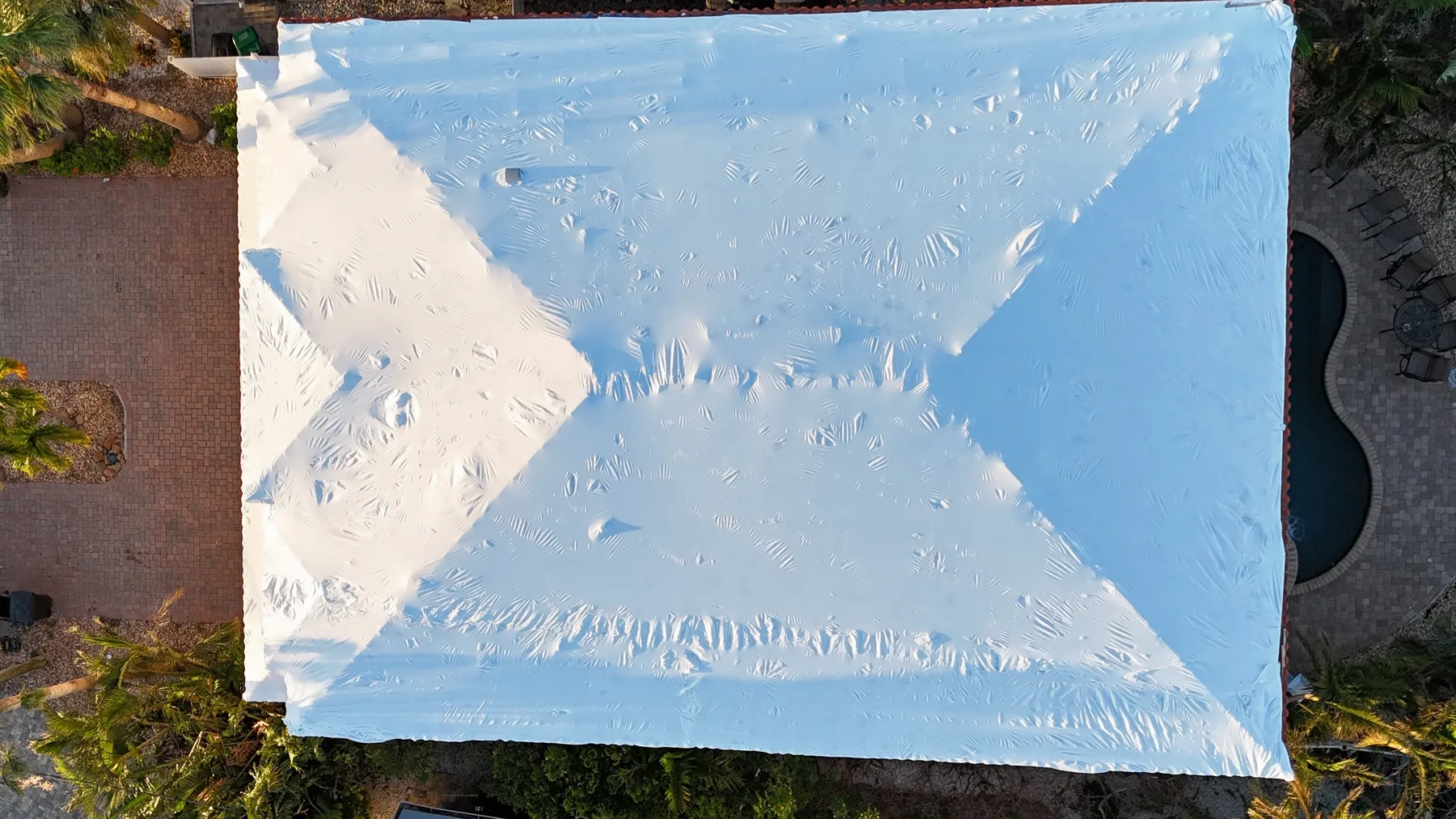
When a storm opens a tile roof, the temporary cover has to survive until the permanent decision is made. Shrink wrap is our preferred longer-duration cover on tile and metal wherever site conditions allow it: it seals the whole roof without field penetrations, and it avoids the constant re-tarping cycle that brittle tile punishes.
Tarps on tile are hard to secure without penetrations, and coastal wind works them loose. Re-tarping every few weeks means repeated cost, repeated sandbags, and repeated foot traffic on tile that breaks underfoot.
On this St. Pete Beach home, hurricane winds shredded the emergency tarp. The shrink wrap system that replaced it stayed watertight for 14 months, long enough for the owner to work through the insurance claim without another emergency call. That is this roof's record; how long a wrap holds elsewhere depends on the roof and the weather it takes.
On this job the wrap ran roughly twice the cost of a full emergency tarping, and it outlasted tarping many times over, so the total spent on temporary protection came out lower rather than higher. What a wrap costs on any other roof depends on its size, pitch, and access, and gets quoted before the work.
Restored
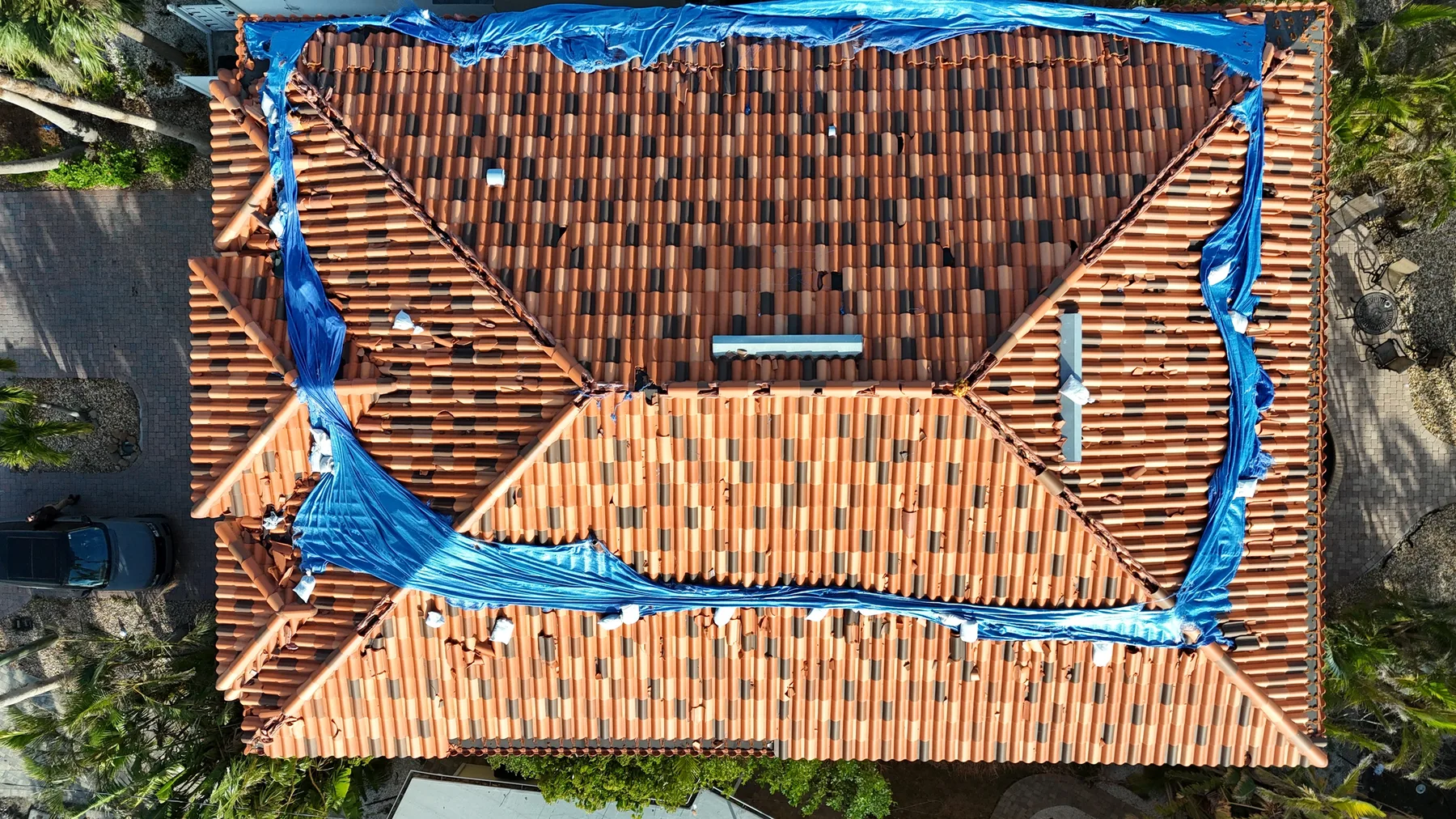
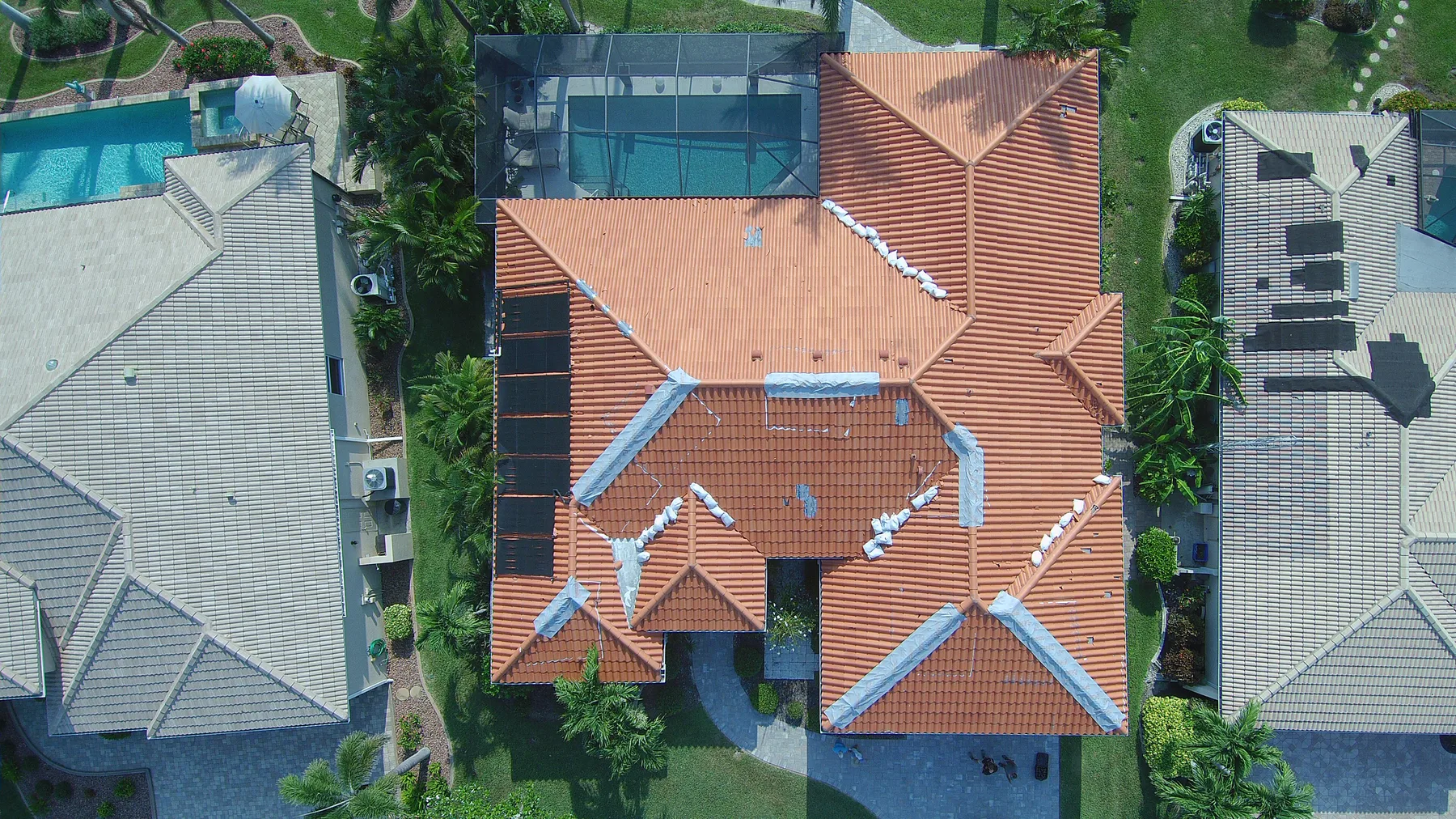
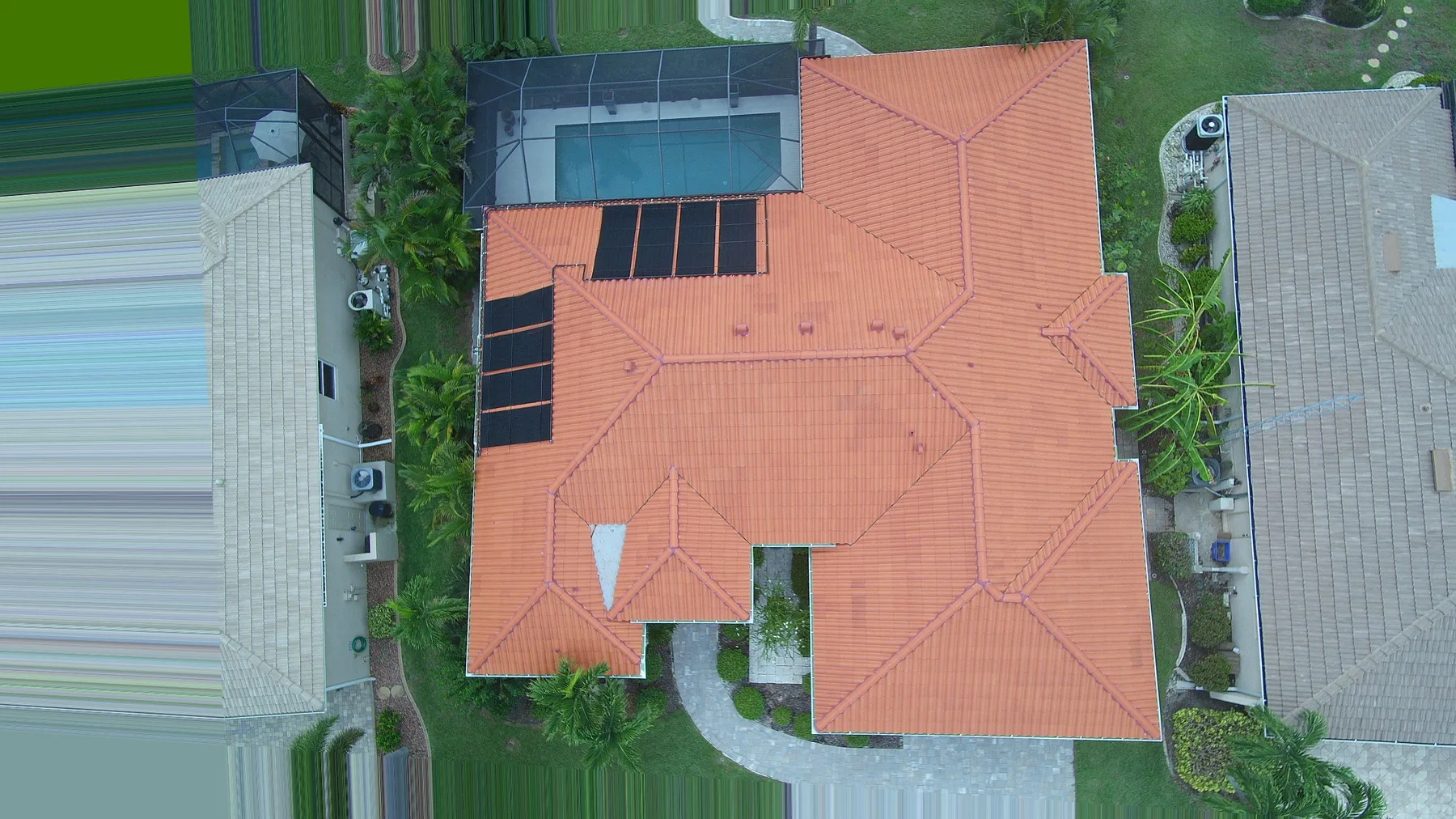
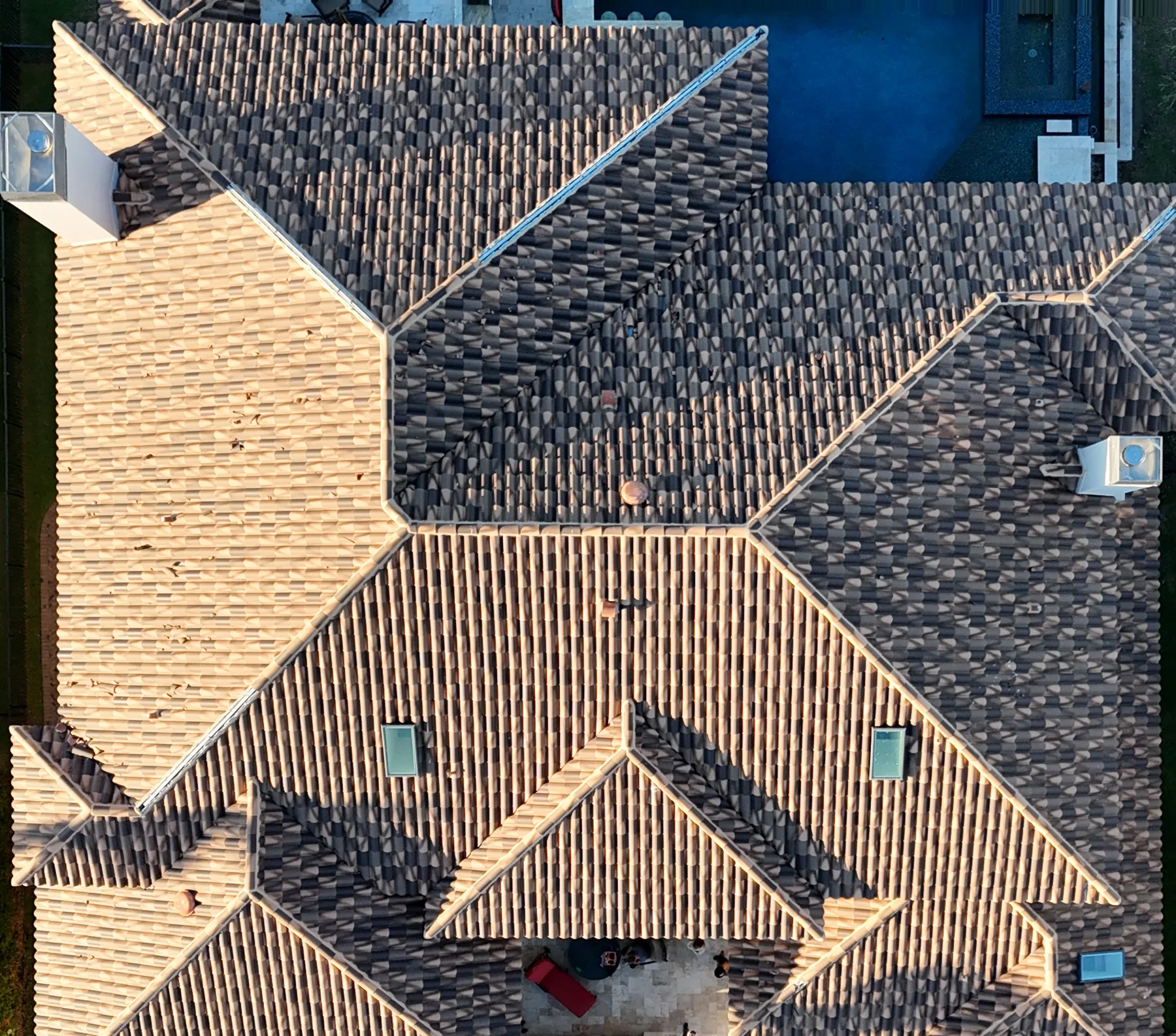
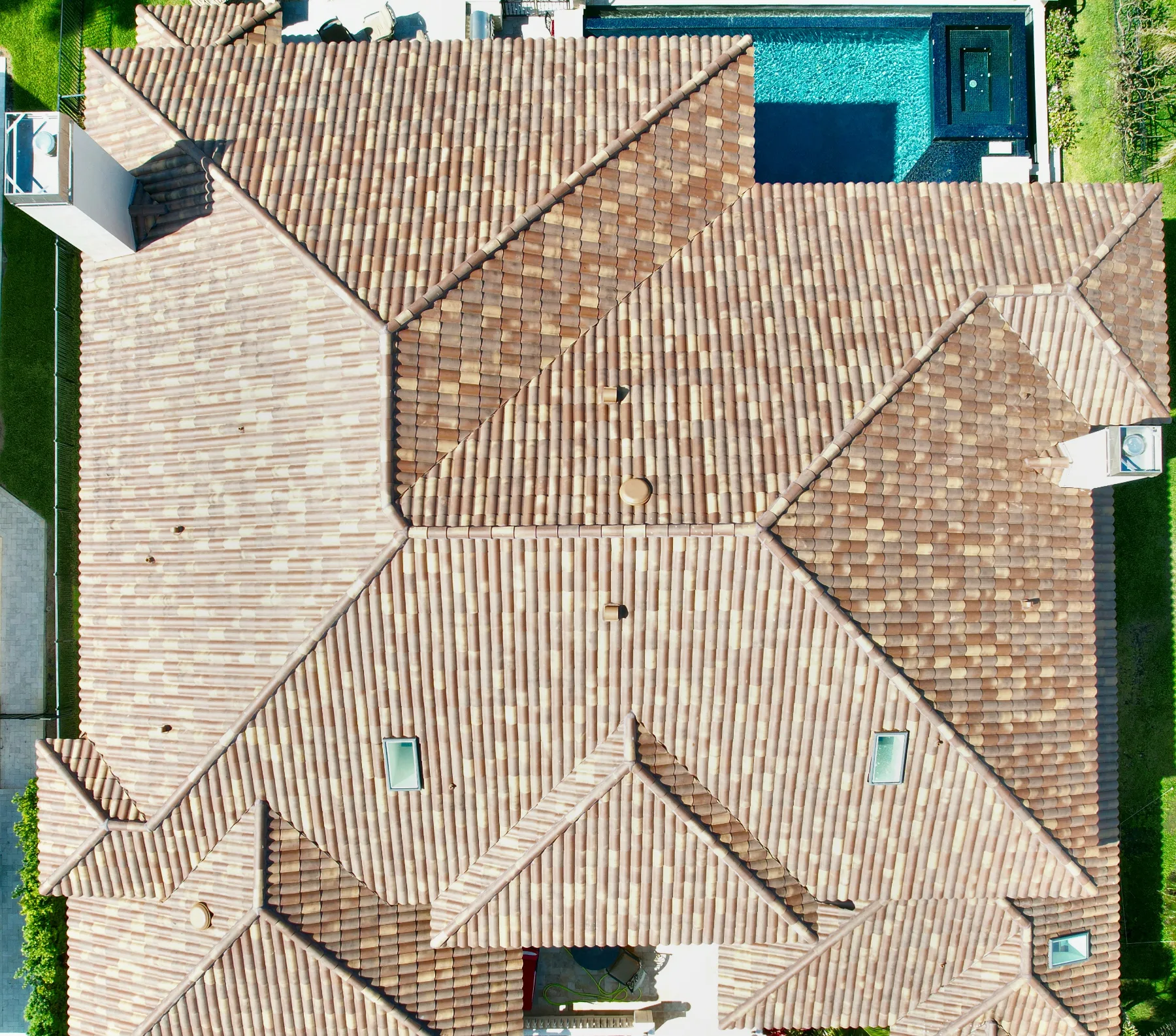
Storm damage on clay tile concentrates at the ridge and hip lines. This Cape Coral roof came back with its ridges rebuilt, field tile matched and reset, and the rooftop solar array back in service.
The before photo shows displaced ridge and hip caps under temporary weatherproofing along nearly every line of the roof. The after shows those same lines rebuilt straight and complete.
Damaged field tile was replaced and reset so the restored slopes read as one surface, not a patchwork of repairs.
The rooftop array was reinstalled on the restored slopes, visible in the after photo in its original position.
Built record
Verea Clay S Barrel in the Fume mix was installed over a 2-ply self-adhered modified-bitumen system. The full protection protocol covered the clay brick driveway in two load-spreading layers, protected the perimeter, and boxed exposed equipment. The complete roof process finished in under eight days, including required City of St. Petersburg mid-roof inspections.
Decision questions
These are the conditions an inspection verifies before this assembly is worth recommending. If one fails, the recommendation changes.
Framing and deck capacity for the tile weight
Underlayment selection and its renewal cycle
Attachment method matched to wind exposure
Foot-traffic plan, because walking on tile breaks tile
FAQ
The questions owners and facility managers actually ask about this system, answered plainly.
Because the tile is not what keeps the house dry. The tile sheds most of the rain and shields the sun, while a self-adhered underlayment beneath it is the actual waterproofing, and that layer ages on a shorter clock, often in the twenty to thirty year range. A leaking tile roof with sound tile usually needs its underlayment renewed, frequently by lifting and relaying the same tile over new underlayment. It is the most important and least understood fact about tile.
Often yes, on a roof whose underlayment still has life. A sound repair removes the damaged piece, checks the underlayment and old fastener locations underneath, and sets a compatible tile that seats without blocking its neighbors' water channels. Matching matters: profile, dimensions, and interlock have to work first, and weathered color may only match closely rather than exactly.
Both make a tile roof, both come in barrel and flat profiles, and both need a structure verified for the load. The practical differences are weight, budget, and how the color ages: clay fires its color into the material and usually costs more, while concrete generally costs less, weighs more, and carries color by pigments and finishes that age differently by product line. Neither is simply the upgrade of the other.
It is best not to. Tile is brittle and breaks under concentrated foot traffic, so walking it to check condition can create the damage you were looking for. Documenting a tile roof from the ground or the air avoids that, which is why many owners prefer an aerial look over having people walk the field.
Usually yes, compared to shingle or metal, because tile is far heavier. The framing has to be verified to carry the load before tile is on the table, and that answer comes from inspection, not preference. A home not originally built for tile may need structural work before the covering can be considered.
It is how a tile roof is renewed without buying all new tile. The sound tile is carefully removed and set aside, new underlayment is installed across the deck, and the salvaged tile is relaid over it. Because the tile outlasts the underlayment, lift and relay is often the right answer when a tile roof starts to leak but its tile is still good.
Keep going
Where to go next, whether you are choosing clay or concrete, checking colors, or sorting out a repair from a full renewal.
Render clay and concrete tile colors on a photo of your own house.
Open
Weigh tile against shingle and metal, and clay against concrete.
Open
Tell a tile repair apart from an underlayment renewal or a full replacement.
Open
How to protect the underlayment that sets a tile roof's leak-free life.
Open
How storm damage to tile ridges and field is documented and rebuilt.
Open
System review
An inspection documents the deck, drainage, and details this decision depends on, then the options get explained against the building in plain language.