
Shingles · St. Petersburg, FL
1 / 8
St. Petersburg, FL
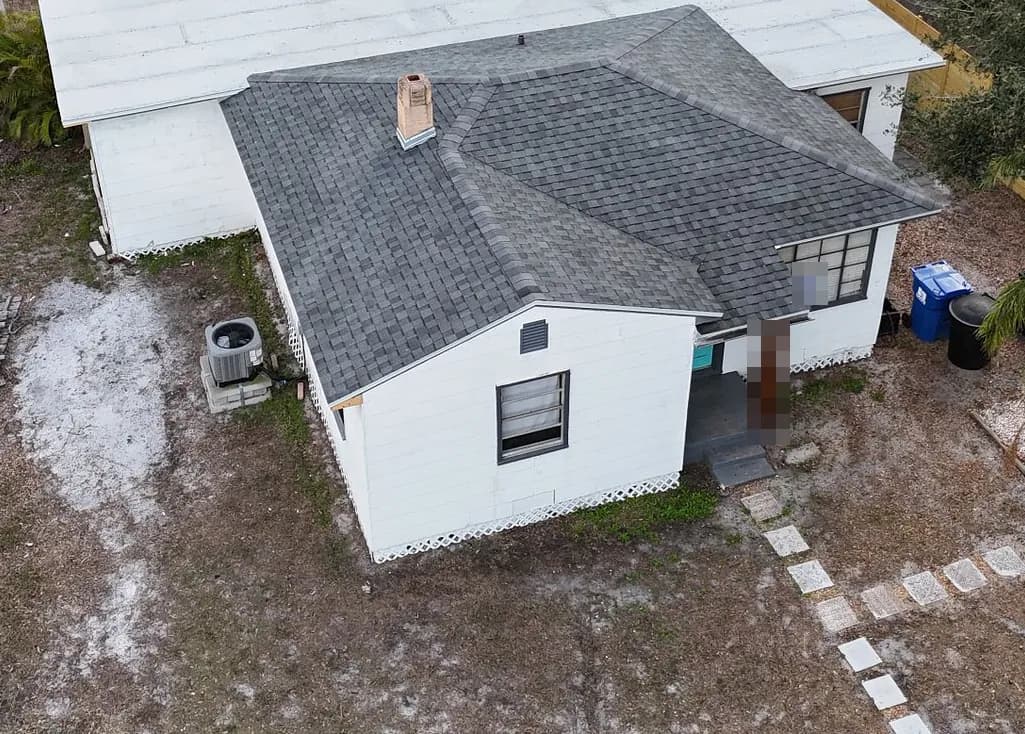
Shingle roof replacement after hurricane winds
Completion aerial, February 13, 2025. The house number on the porch post is blurred.
What the job itself is like
The questions owners ask once the decision is made: how long it really takes, what the permit clock looks like and where to watch it, whether to be home, how loud it gets, what to move, and what rain does to the plan.
Reviewed August 25, 2026. General information from a roofing contractor about how these jobs run, not a schedule commitment for any specific project.
The on-roof work is the short part: days for a typical single-family shingle roof, longer stretches for tile or standing seam metal. The full project, contract to permit to final inspection, runs weeks, and the calendar is driven by permit turnaround, material lead times, weather windows, inspection scheduling, and what tear-off uncovers. A one-number answer is hiding at least one of those variables.
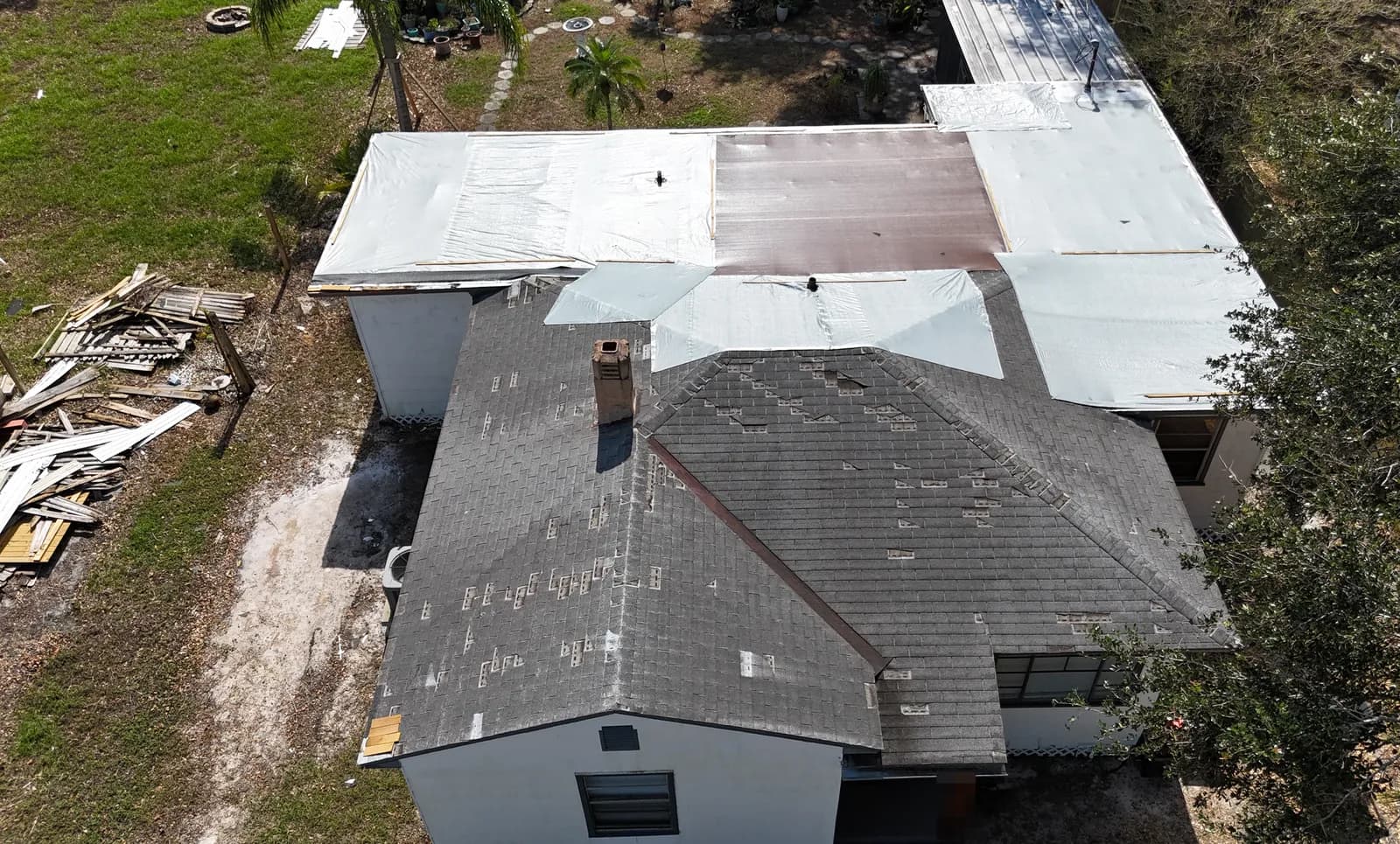
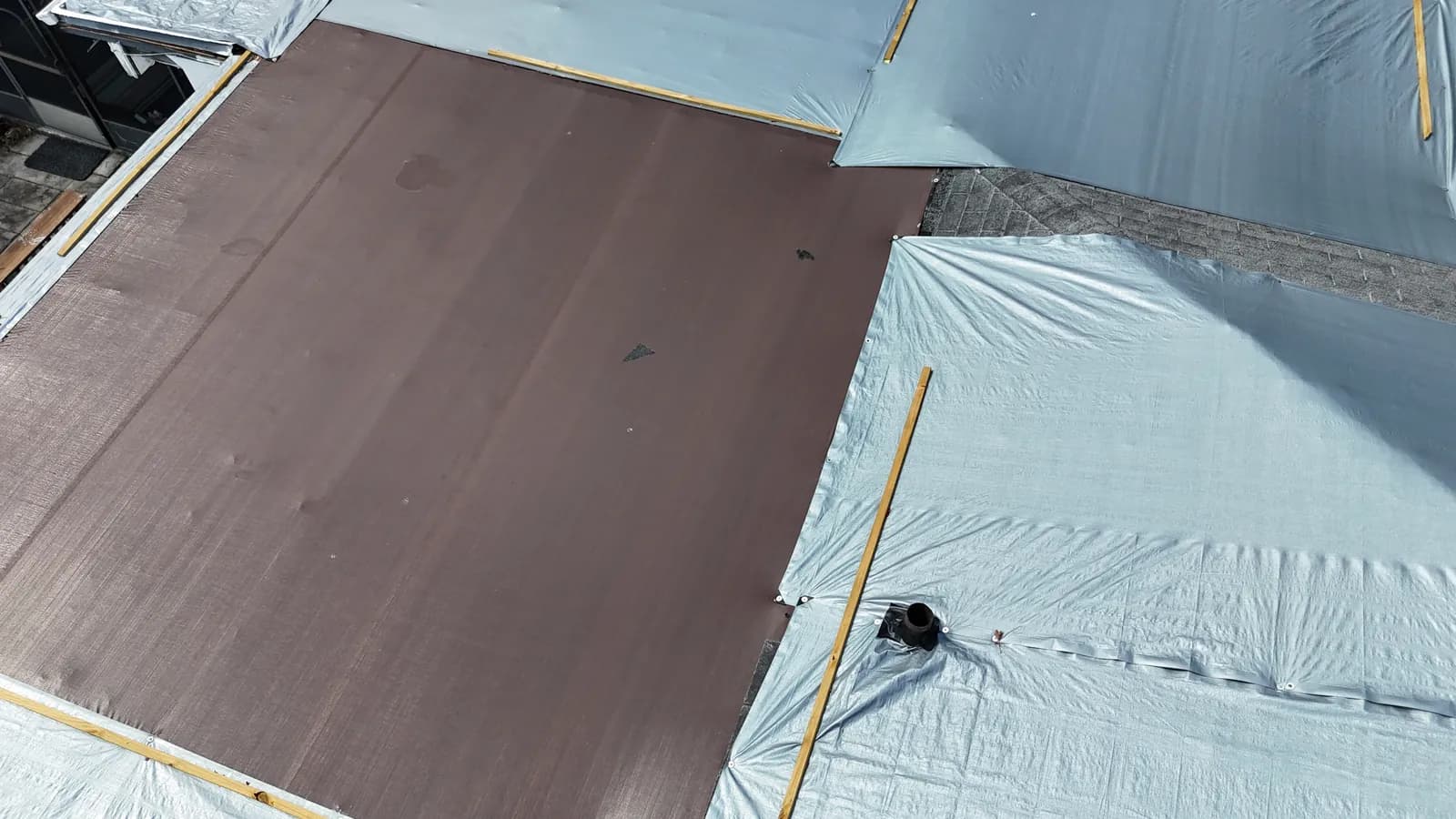
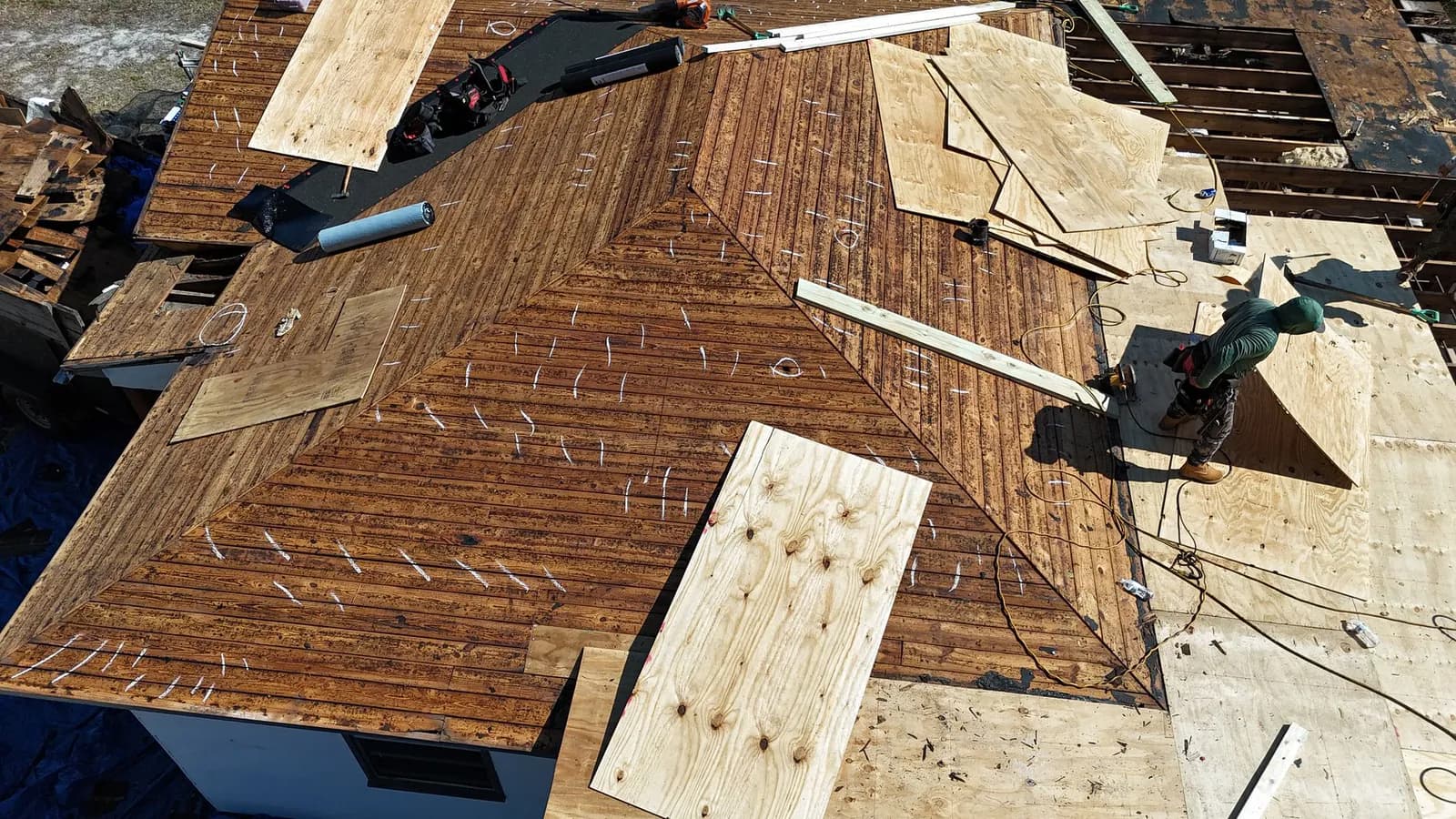
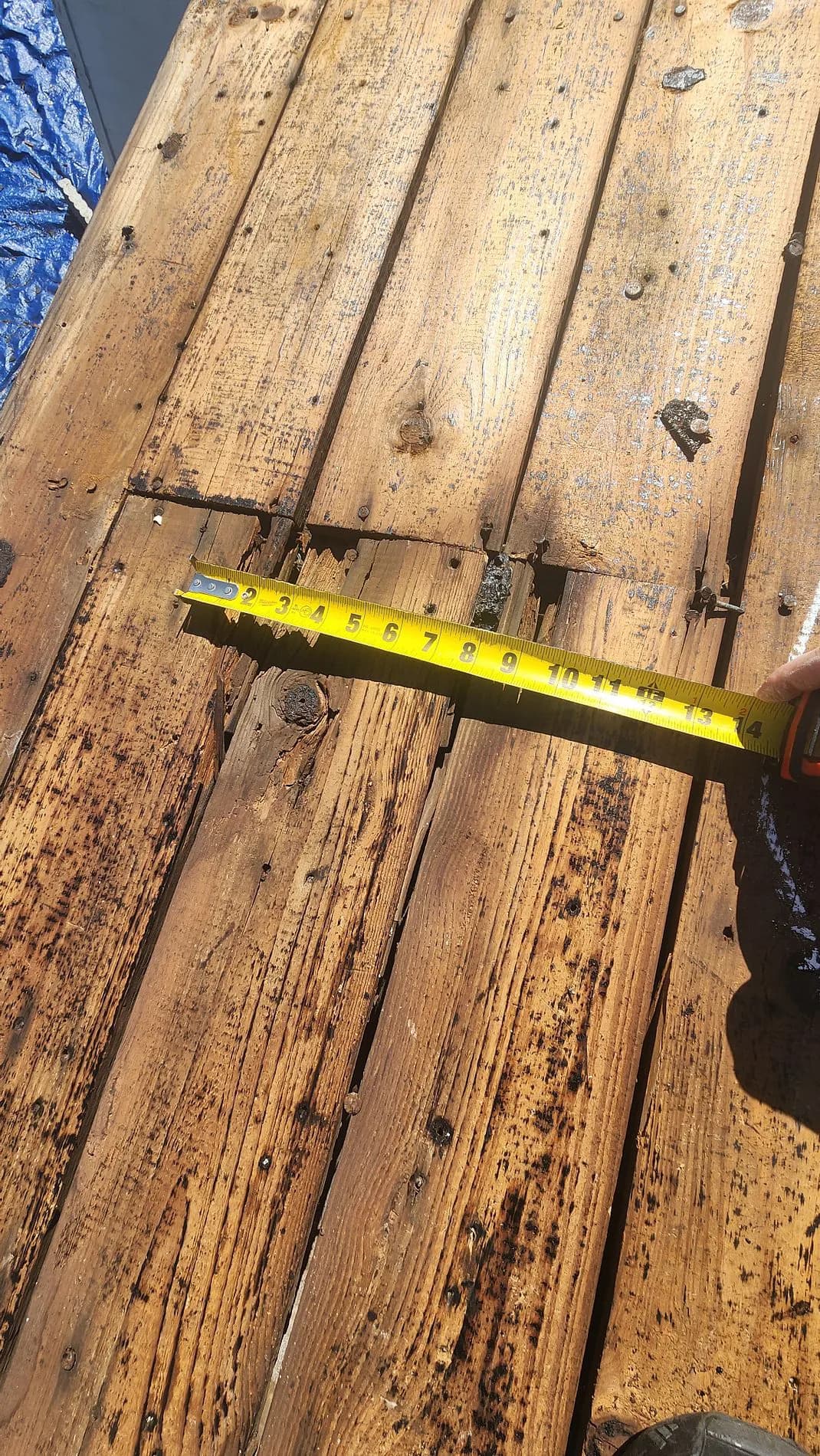
One of this site's own published records shows the honest shape of the calendar. On a St. Petersburg hurricane-wind replacement, the work was authorized November 11, 2024, tear-off in January 2025 exposed rotted plank decking that had to be rebuilt and photographed across a 36-page record, the new shingle field went on January 29, and the Certificate of Completion was signed February 13, 2025. The roof work itself moved fast; the decking discovery, the approval step, and the paperwork are what the calendar was actually made of. That is the pattern to expect, not the exception: the full dated timeline is published here.
Because almost nothing about it goes on in sheets. Tile is set piece by piece over a two-layer sealed underlayment, the loaded field is staged in stacks the structure must carry, and the tile itself often carries a longer lead time. In Tampa Bay, local jurisdictions add in-progress inspection hold points on reroofs, Pinellas among them, where work stops until the inspector signs.
The two-layer dry-in is the part owners never see afterward and the reason the inspection holds exist: the sealed membrane under the tile is the actual waterproofing, and the inspector verifies it before the tile covers it forever. Which counties require what, with the sources, is on the rules page. The tile system page covers the system itself, and the published St. Petersburg Verea record shows a tile job's stages photographed in order, staging and load, dry-in, field, and finish.
The permit clock belongs to the jurisdiction, not the roofer, and you can watch it yourself. Pinellas County publishes a live dashboard of its permit review times, refreshed daily, with stated review targets of 14 days residential and 21 commercial. Tampa runs permits through its Accela portal, with public status lookup by permit number or address. A contractor promising a specific permit date is promising something they do not control.
Who pulls the permit, when one is required, and what the counties inspect mid-job are covered on the rules page, so this answer stays on the clock itself. The useful habit: get the permit number from your contractor as soon as it is applied for, then track it at the source.
Sources: Pinellas County permit review times dashboard (pinellas.gov), Pinellas County Access Portal (pinellas.gov), and City of Tampa Accela Citizen Access (aca.tampa.gov). Targets are the counties' own published figures as of August 2026 and can change; the dashboard shows general trends, and a specific permit's status lives on the Access Portal.
An honest answer is a sequence, not a date: signed contract, permit application, material order, then a slot on the crew schedule, and the start date firms up as each of those clears. A start date quoted before the permit is applied for and the materials are confirmed is a sales number, not a schedule. After a major storm, every one of those steps stretches at once.
The two questions that test any promised date: has the permit been applied for yet, and are the materials confirmed or just assumed in stock? Specialty material stretches the second one furthest; imported tile and custom metal orders are measured in production runs, not warehouse shelves. The inspection question set includes the scheduling questions worth asking in writing before signing anything.
Not for most of it. The work happens outside, and a crew with driveway access, an exterior power source, and a way to reach you does not need anyone inside the house. The two moments that matter are the start of tear-off, when decking surprises get found and a decision may be needed the same day, and the final walk-through. Be reachable by phone on tear-off day.
The mid-job decision is the real reason to stay reachable. Rotted or under-nailed decking only shows itself after tear-off, and the honest contractors stop, photograph it, and get approval before rebuilding rather than burying it under new roofing. On this site's published St. Petersburg shingle record, that is exactly what the job file shows: the material order instructed the crew to wait for approval after tear-off, and the decking rebuild went into a dated photo record before the first new shingle went on.
Tear-off is the loudest phase, and the noise is not just heard but felt: the impact carries through the frame, hard enough to shake items on walls and shelves. Calls and meetings inside are unrealistic on tear-off and nailing days. Pets handle it worst of anyone; a day elsewhere, or the quietest room on the far side of the house, is the kind move.
The phases in noise order: tear-off is percussive and constant, decking repair and nailing are rhythmic, loading and staging are intermittent and heavy, and dry-in and detail work are the quiet stretches. Two practical notes that surprise people: vibration, not sound, is what knocks pictures off walls, so take down anything fragile before the crew arrives, and attic dust shakes loose during tear-off, so anything stored directly under the decking is worth covering.
The driveway first: the dumpster and material delivery arrive early, land where the truck can reach, and cannot be moved once placed, so get vehicles out the night before. Then patio furniture, grills, and pots away from the eaves, fragile items off walls and shelves inside, and anything delicate below the roofline pointed out to the foreman before work starts.
Inside the attic, lay an old sheet or tarp over anything stored directly under the roof deck; grit and dust sift through the board gaps during tear-off on nearly every job. Outside, walk the yard with the foreman before the first shingle comes off and name the things that matter, the crew protects what it knows about. Magnetic sweeps for nails are standard practice at cleanup, and the walk-through at the end is when to check the lawn and driveway against how they started.
Florida crews plan for it, because in summer it is not an if. The working rule is simple: only open as much roof as can be sealed watertight the same day. The dry-in, the sealed underlayment membrane that goes down immediately after tear-off, is the waterproof line: a dried-in roof can sit through rain, open decking cannot. Work pauses for lightning, then resumes.
This is also the honest way to judge a crew mid-job: the question is never whether rain fell, it is whether decking was left open to it. A properly sequenced job never has more roof open than the day's dry-in can close. What underlayment is and why it is the layer that matters has its own answer on the materials page, and the glossary defines the terms the crew will use when they explain the day's plan.
From the job files
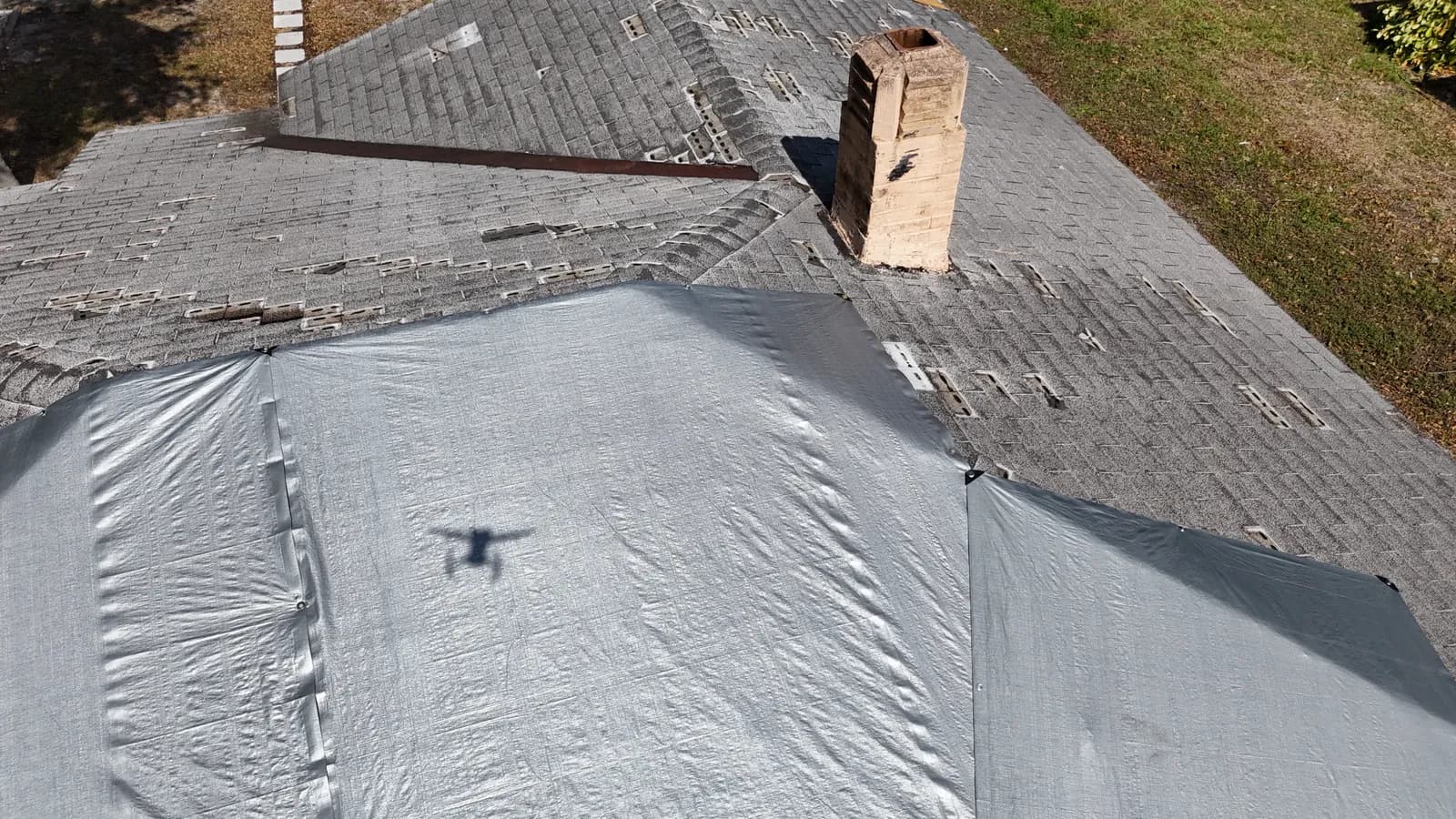
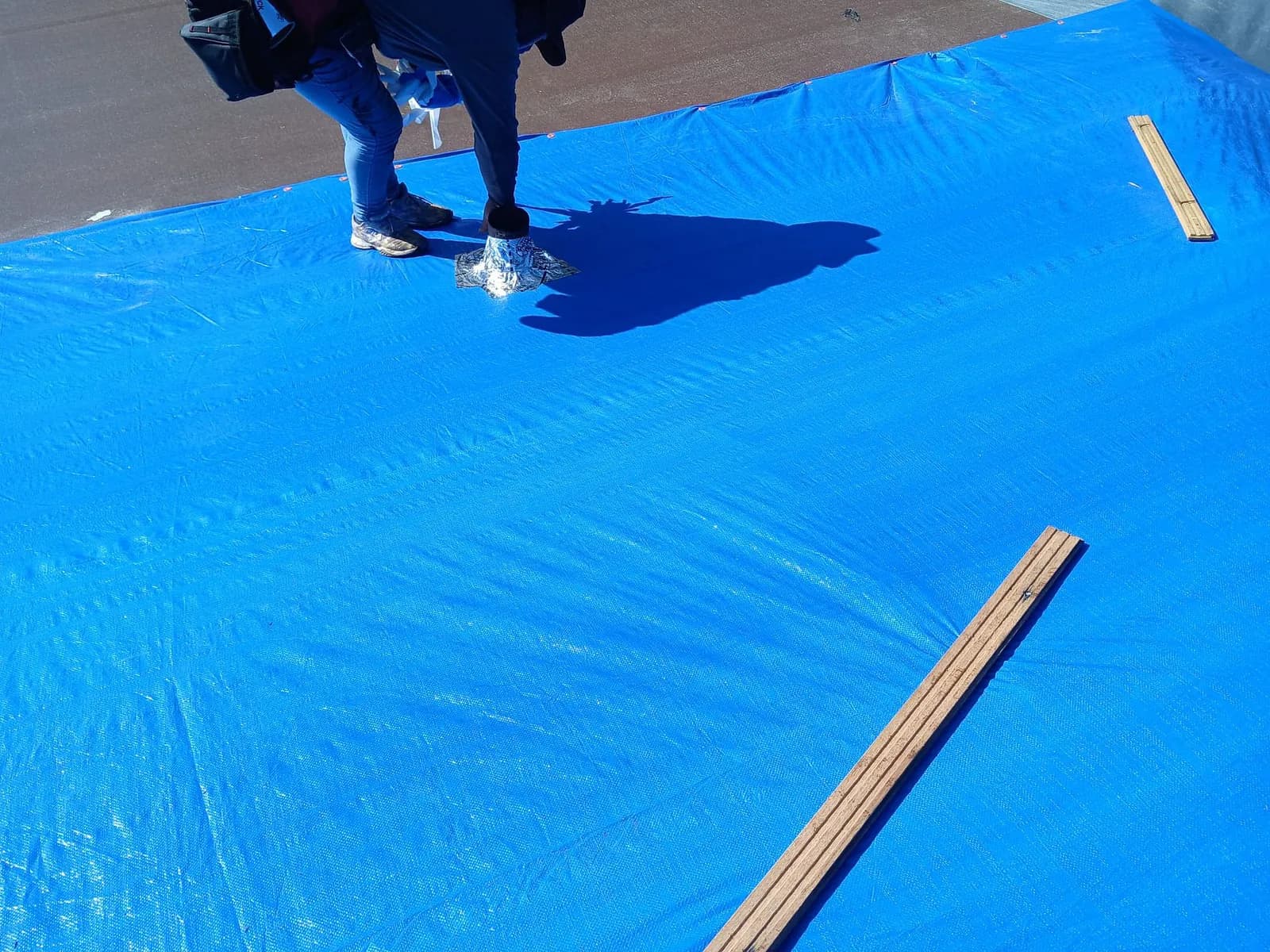
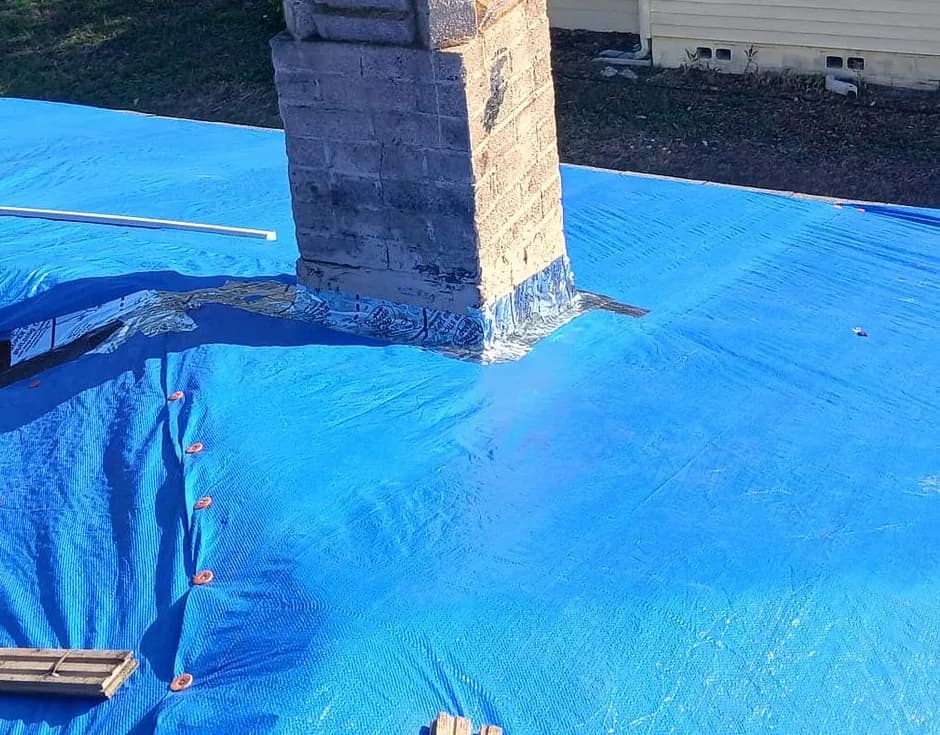
A St. Petersburg replacement that ran the whole sequence: drone survey, tarps, tear-off, a decking rebuild caught and approved mid-job, dry-in, and the finished field.
Shingles · St. Petersburg, FL
1 / 8
St. Petersburg, FL
Completion aerial, February 13, 2025. The house number on the porch post is blurred.
Keep going
The rules page carries permits, inspections, and the 25 percent rule; the materials page carries what actually goes on the roof.
Before the sequence starts
Every honest schedule starts from a documented scope. A K. Simon Construction inspection puts the roof's condition, the recommended work, and the sequence in writing with photographs tied to findings, so the calendar conversation starts from facts.