
Shingles · Treasure Island, FL
1 / 8
Treasure Island, FL
Shingle roof and flooded interior rebuilt after a hurricane
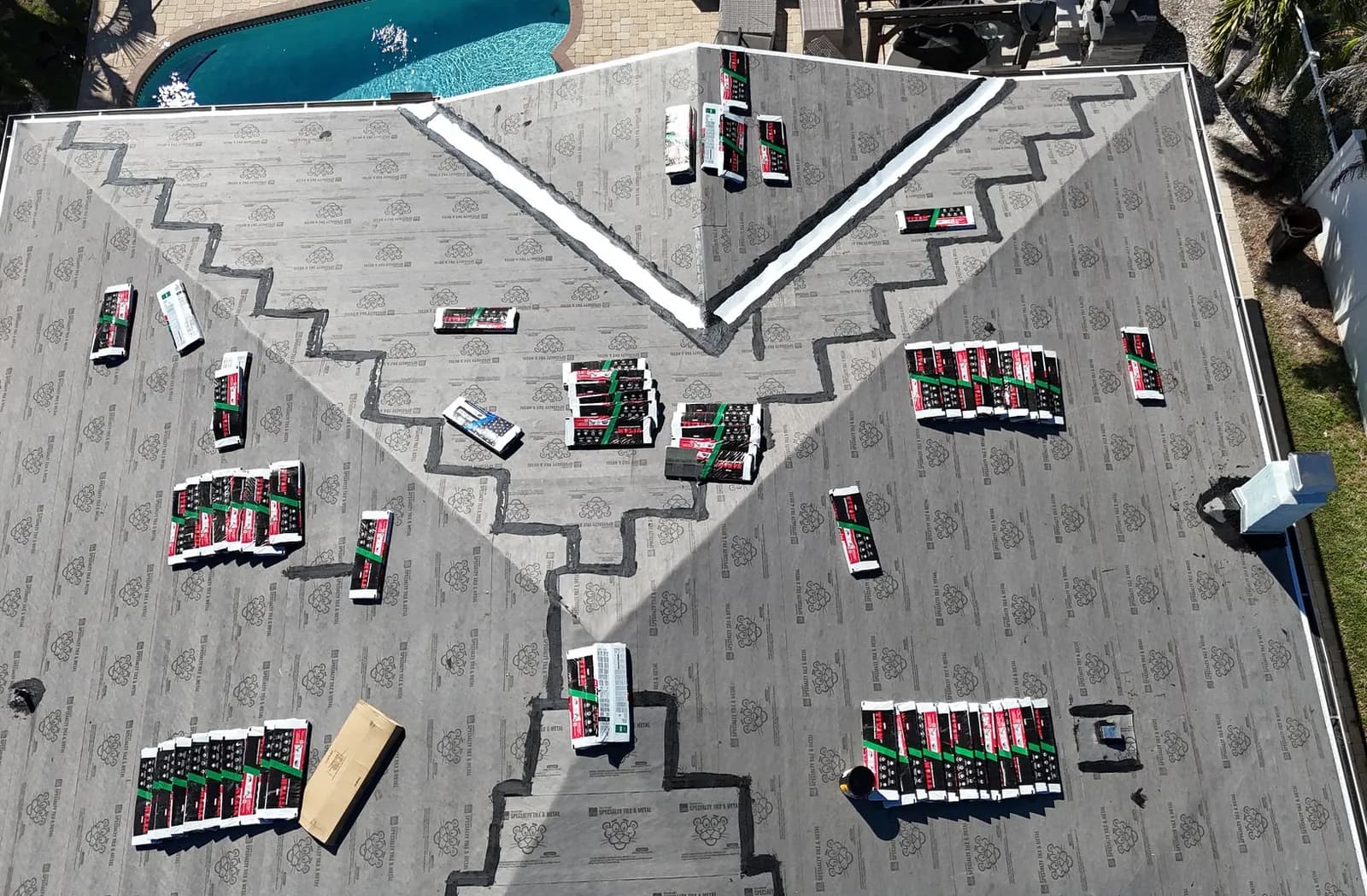
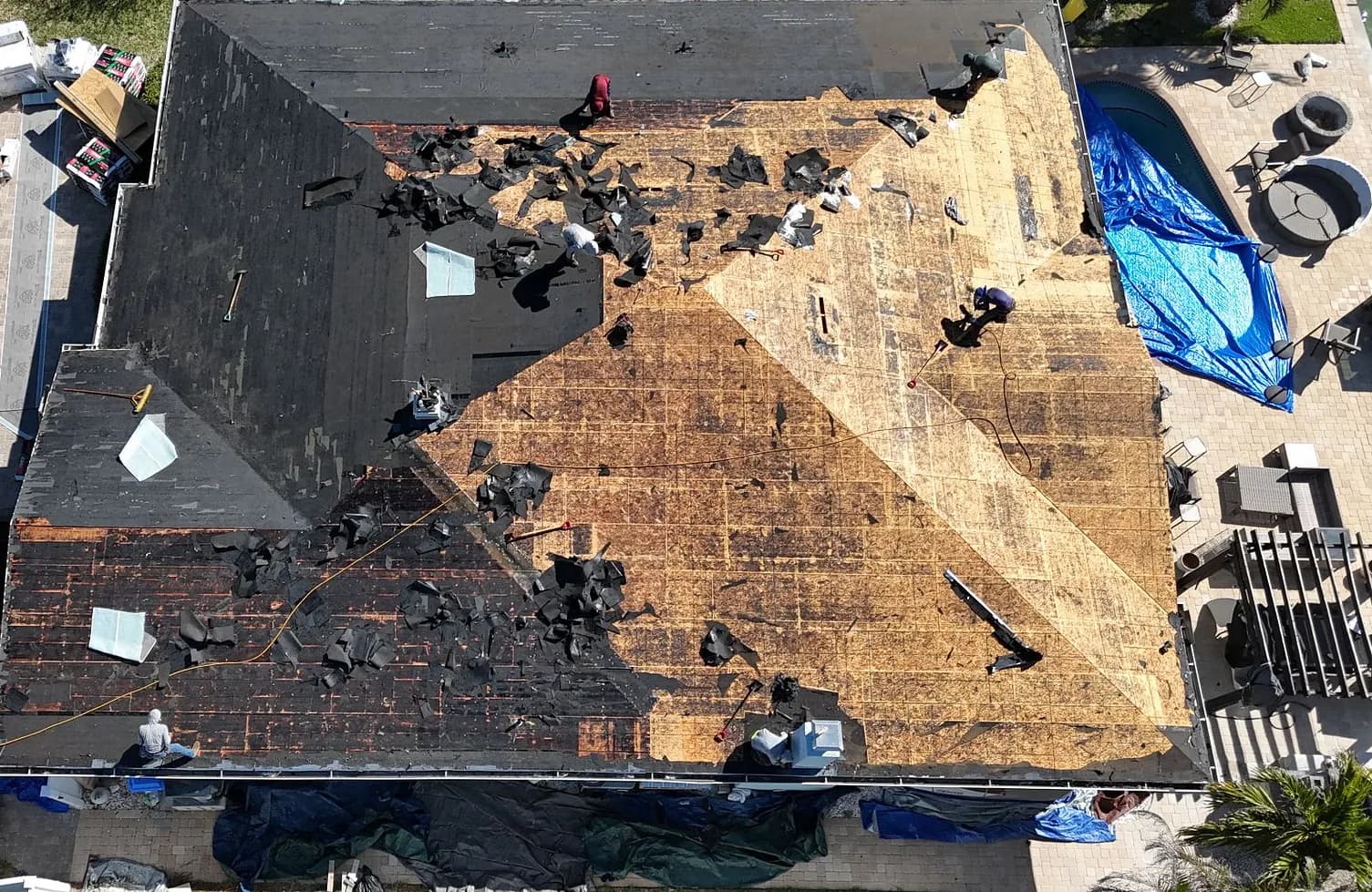
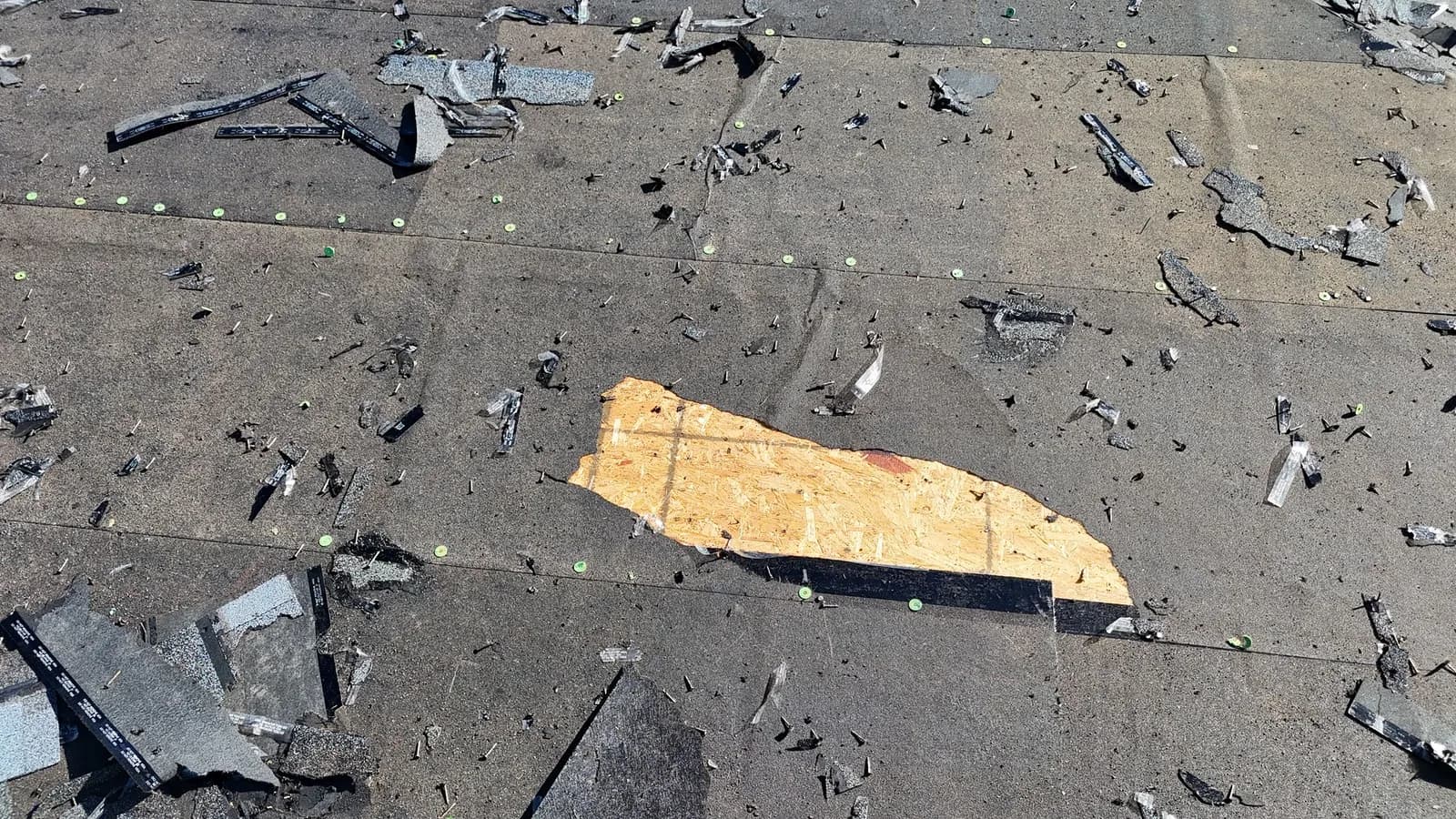
Dry-in, documented from the air: ice and water shield across the entire deck and bundles staged before the first shingle went on.
After the storm, plainly
Emergency tarping and the order to document in, the rules on post-storm door knockers, deductible offers, canceling a storm contract, signing over benefits, public adjuster fee caps, and state hardening money.
Reviewed August 20, 2026. General information from a roofing contractor, not legal or insurance advice; whether damage is covered is the insurer's decision under the policy.
In order: account for people and treat downed lines and gas smells as emergencies; walk the property from the ground, never the roof; rank buildings or areas by active water entry; start a dated log; and photograph conditions as found, wide to tight, before anything is cleaned up or tarped. Then mitigate, notify the insurer per the policy, and verify every vendor before they touch the building.
That sequence is the condensed version of the storm response playbook, which carries the full first-2-hours-to-day-30 framework, a printable eight-document toolkit, and the vendor verification checks referenced throughout this page. The single most expensive mistake in the first day is destroying evidence: material discarded or damage covered before it is photographed is proof the claim file never gets back.
Yes, for safety and to stop the damage from spreading, and the order matters: photograph the conditions as found first, then tarp, and keep the receipts and photographs of the temporary protection itself. Property policies commonly address what a policyholder is expected to do after a loss; those duties are set by the policy's own terms, which the policyholder can read or ask their insurer or agent about.
Reasonable emergency mitigation and a documented as-found record are not in tension; the record comes first by hours, not weeks. Tarping is also genuinely dangerous work on anything beyond trivial access, which is why emergency tarping is a professional task. Whether any particular damage is covered remains the insurer's decision under the policy. What is in the property owner's control is stopping the loss from growing and keeping a dated record of the conditions and the temporary work.
Florida law puts specific limits on post-storm contractor behavior. Under Fla. Stat. 489.147, a contractor may not solicit you through a prohibited advertisement encouraging you to contact them to file a roof claim, may not offer you anything of value in exchange for letting them inspect the roof or file a claim, and may not interpret your policy or adjust the claim for you unless separately licensed to do so.
Violations carry fines of up to $10,000 per violation for licensed contractors, and the statute reaches paid door-knockers and lead generators acting on a contractor's behalf. None of this makes a knock on the door illegal by itself, and established local contractors do storm canvassing lawfully; the statute draws the line at claim-baiting. The practical filter is the same five vendor checks the playbook uses: license looked up by you, insurance certificate in hand, a findable business, nobody getting the claim signed over, and a documented inspection as the product.
Source: Fla. Stat. 489.147 (flsenate.gov).
No. Under Fla. Stat. 817.234(7), a contractor who knowingly pays, waives, or rebates an insurance deductible on a repair funded by a property insurance claim commits a third-degree felony, and Fla. Stat. 489.147 separately prohibits offering anything of value in exchange for a roof inspection or claim. Treat the offer itself as the strongest possible signal to choose a different contractor.
The deductible exists because the policy prices it, so a contractor who "absorbs" it is covering that money somewhere: in an inflated claim, which is what the fraud statute addresses, or in a quietly cut scope. Florida's insurance fraud statute reaches false and inflated claims generally, not only the contractor's side of them, and Florida requires roofing contracts to carry a notice about deductibles to the same effect. The clean arrangement is the boring one: the deductible is paid by the policyholder, and the contract price matches the real scope.
Sources: Fla. Stat. 817.234(7) (flsenate.gov) and Fla. Stat. 489.147 (flsenate.gov).
Sometimes, on a short clock. For a contract signed while a state of emergency is in effect, Fla. Stat. 489.147 gives a residential owner the right to cancel without penalty within 10 days of signing or before the official start of work, whichever comes first. No Florida statute grants a cancellation right merely because an insurance claim is later denied. What any of this means for a specific signed contract is a question for a lawyer.
Notice the "whichever comes first": if the contractor pulls a permit or begins real work on day three, the window can close before day ten. Fla. Stat. 489.147 also requires roofing contracts to carry specific consumer notices, so the notices are worth reading for as much as the price. What a missing notice means for a particular contract, how a valid cancellation is delivered, and anything past the window are questions for a lawyer, not for a roofing page.
For Florida residential and commercial property policies issued on or after January 1, 2023, no: Fla. Stat. 627.7152 bars policyholders from assigning post-loss insurance benefits, with narrow exceptions. An assignment-of-benefits form presented after a storm deserves scrutiny against your actual policy's issue date, and an assignment is a legal document that warrants independent review before any signature.
The practical consequence: on newer policies, the claim stays yours, the insurer pays you under the policy, and you pay the contractor under the contract. A contractor can still help you document damage and provide estimates; what they cannot do is take over the claim. Older policies may predate the prohibition, which is exactly why the issue date matters and why the playbook's vendor checks treat anyone leading with an AOB as a red flag.
Fla. Stat. 626.854 caps public adjuster fees at 10 percent of claim payments for claims arising from events under a governor-declared state of emergency, for one year after the declaration, and 20 percent otherwise. The same statute sets cancellation windows for public adjuster contracts, measured more generously than the roofing-contract window: 10 days after signing, or for emergency-declaration claims, 30 days after the loss if that is longer.
Two further caps rarely make it into summaries: narrower limits apply where the insurer has already paid or committed to pay policy limits, or in certain re-opened claim situations, so the 10 and 20 percent figures are ceilings, not entitlements. Whether a public adjuster helps in a given claim depends on the claim; what this page can say factually is what the fee caps are and that the cancellation window for adjuster contracts is measured differently, and more generously, than the roofing contract window in the question above.
Florida's My Safe Florida Home program, established in Fla. Stat. 215.5586 and run by the Department of Financial Services, has offered free wind mitigation inspections and matching hardening grants: $2 of state money for every $1 from the homeowner, up to $10,000 of state contribution, with low-income homeowners eligible without the match. Terms and funding come in legislative cycles, so the state's own site is the authority on current availability and rules.
Eligibility currently centers on owner-occupied, site-built single-family homes with a homestead exemption, insured value at or below $700,000, and construction before 2008, though the Legislature has adjusted the criteria between cycles. Qualifying work includes exactly the mitigation this library keeps mentioning: roof-deck attachment, roof-to-wall connections, secondary water barriers, and opening protection. One hard rule worth underlining: grant-funded work must not begin before grant approval, so sequence the paperwork before the crew.
Sources: Fla. Stat. 215.5586 (flsenate.gov) and the My Safe Florida Home program page (myfloridacfo.com).
From the job files
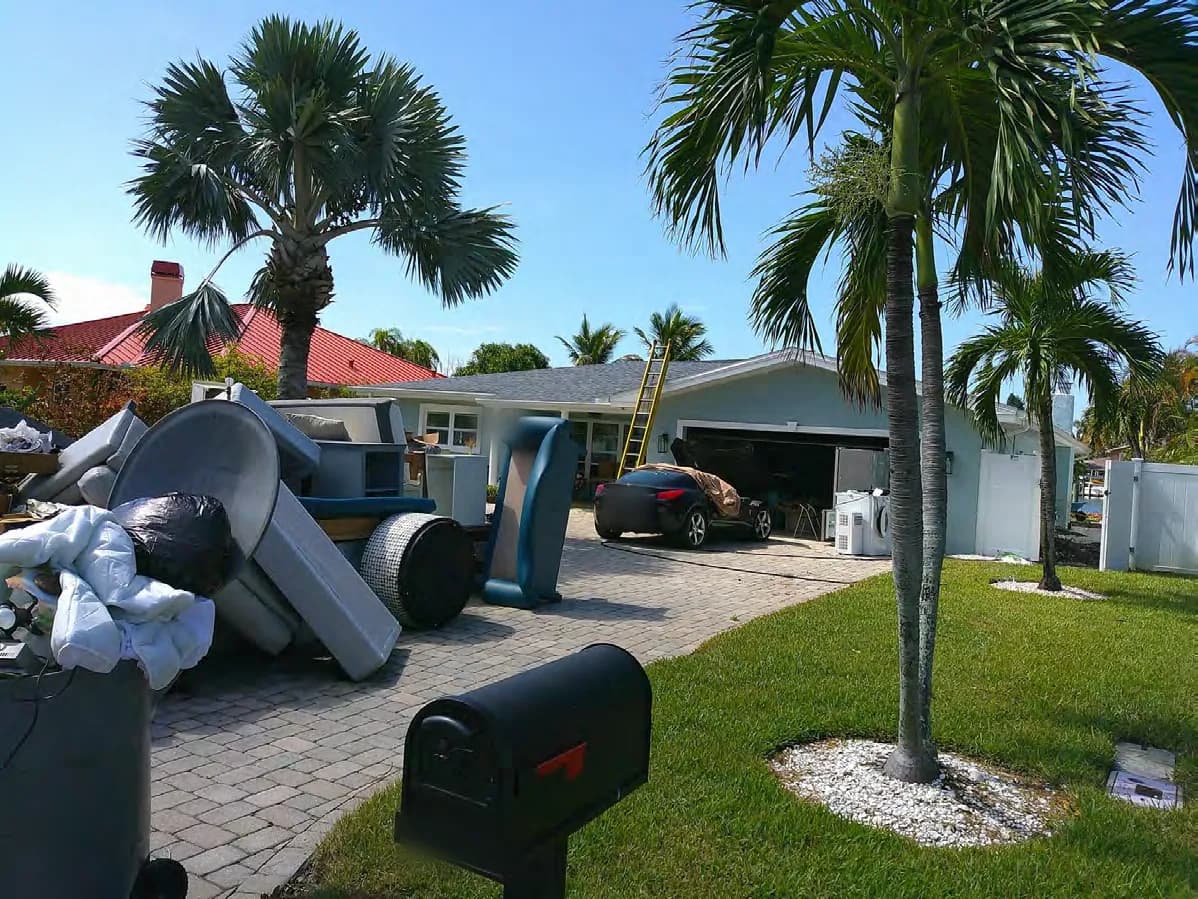
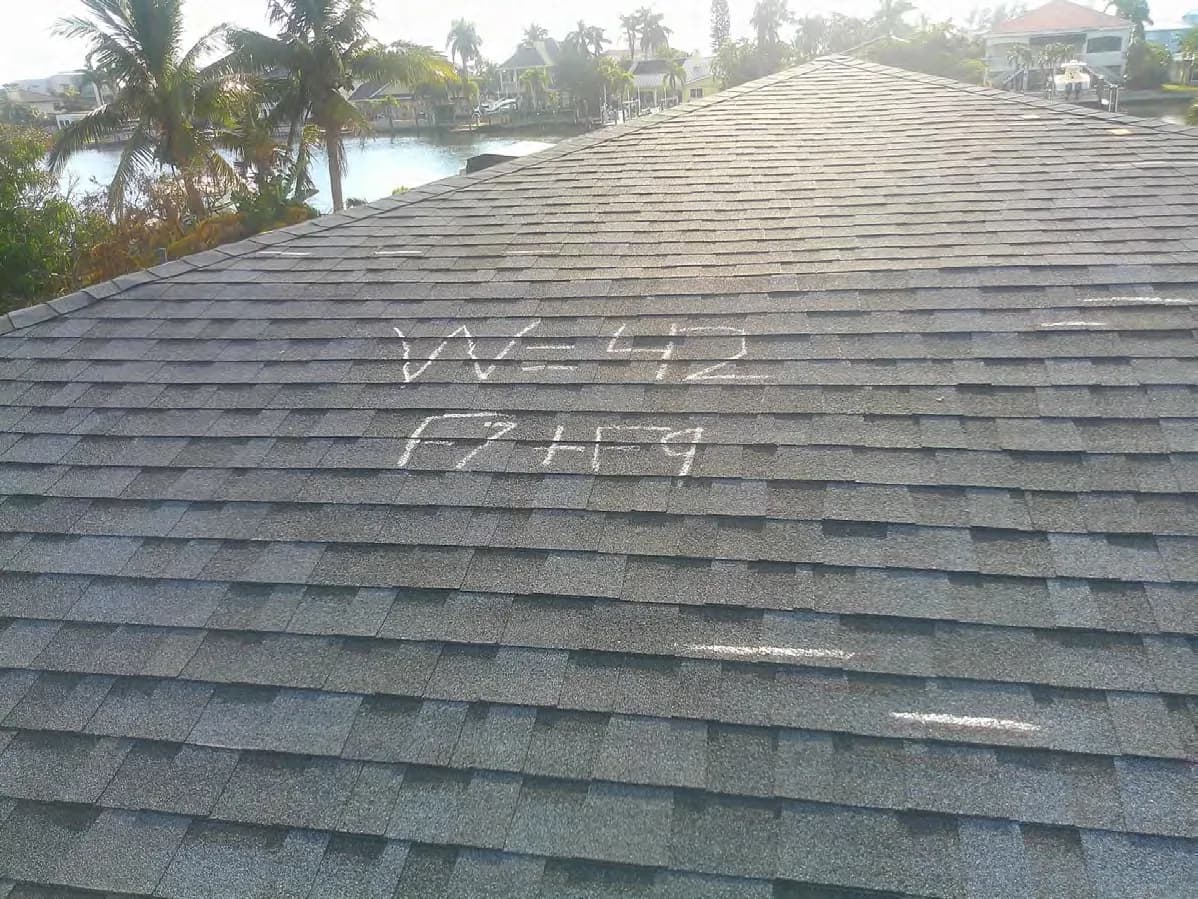
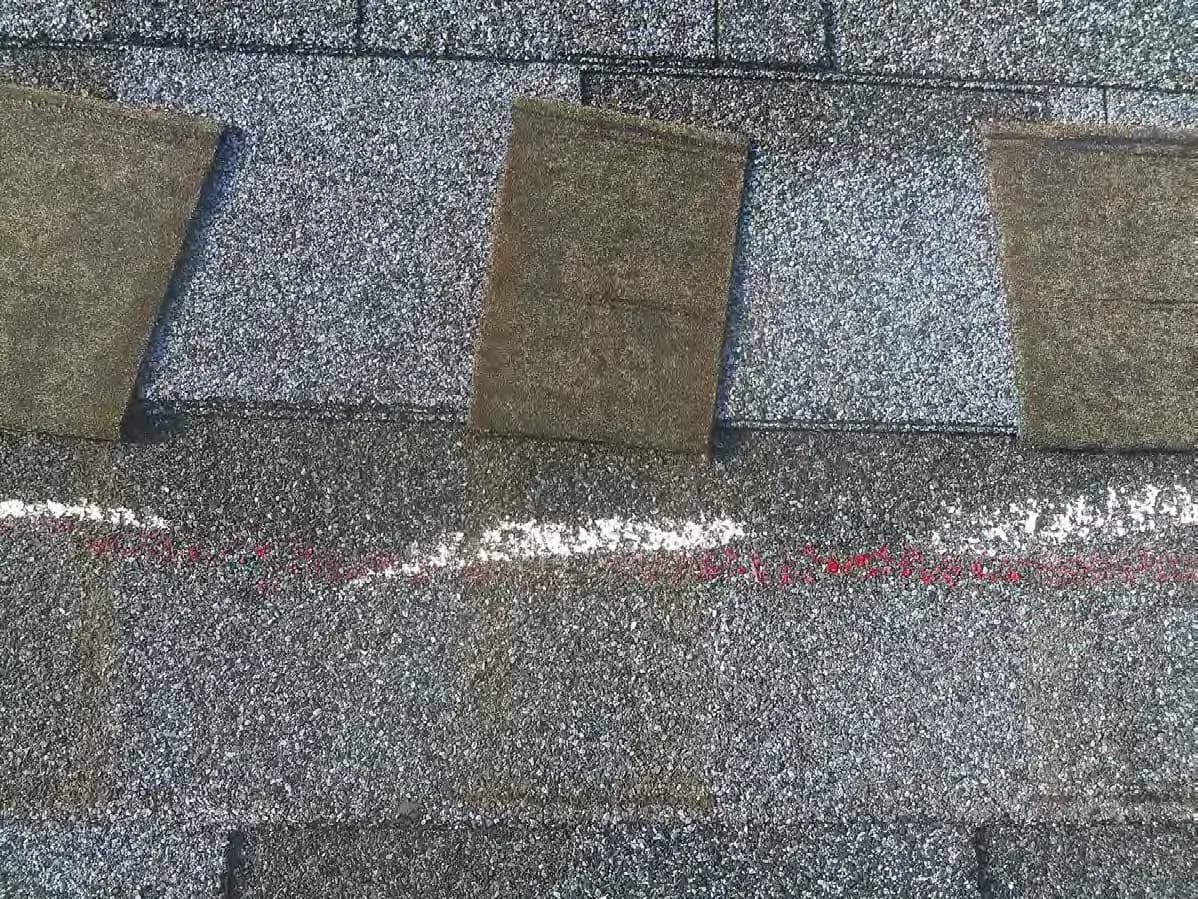
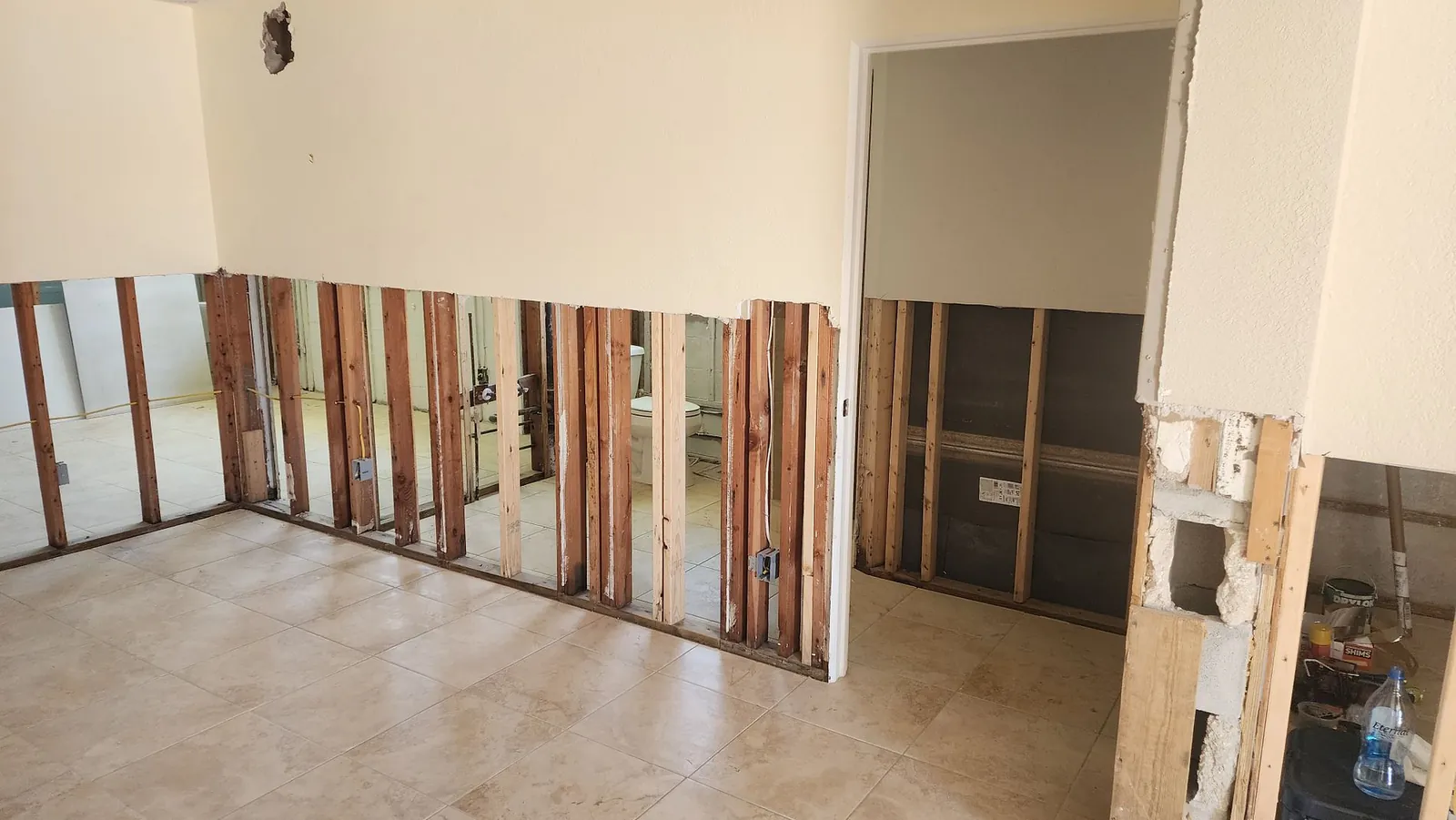
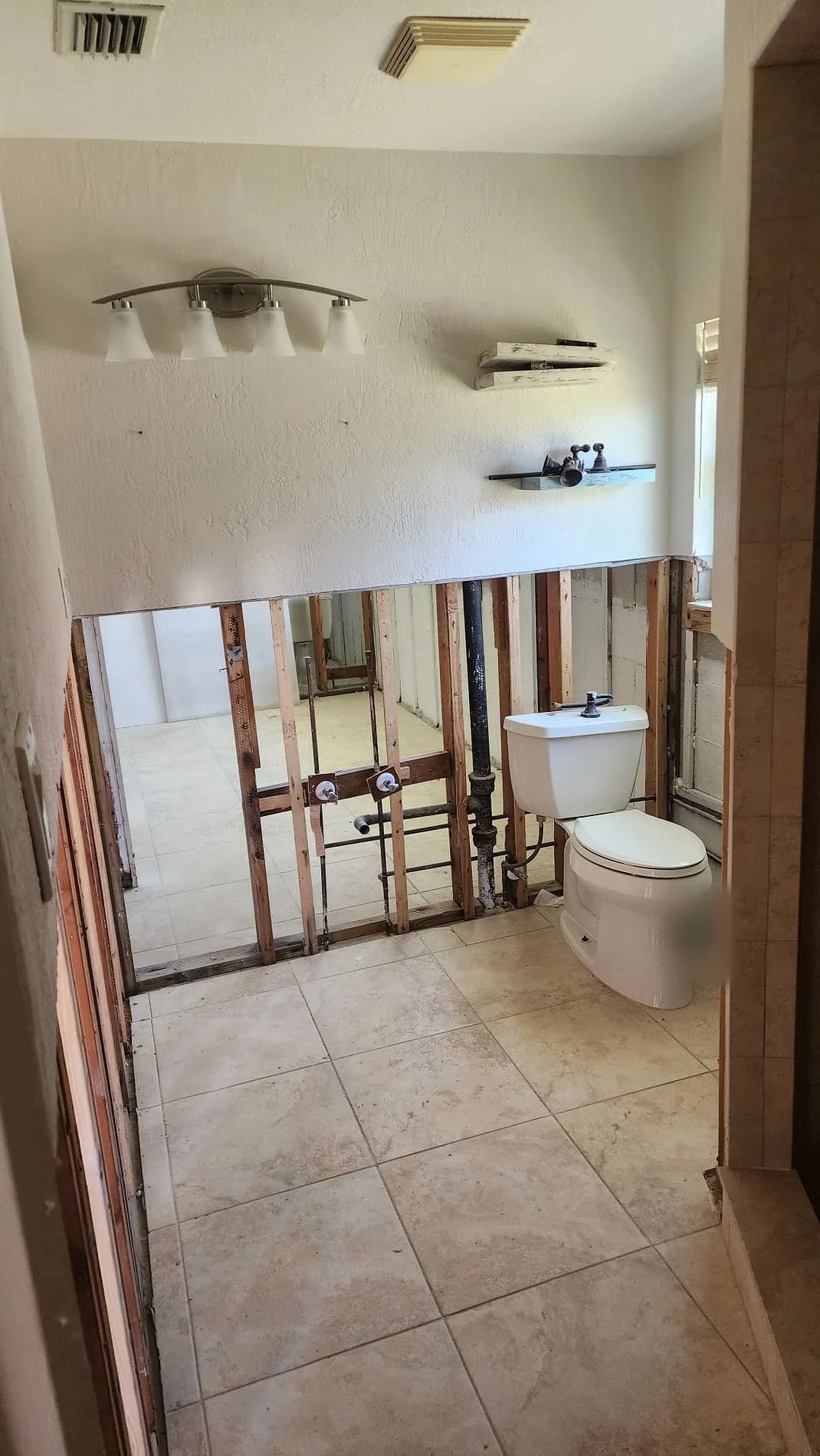
A Treasure Island home after hurricane flooding: the roof and the interior beneath it, rebuilt under one documented scope.
Shingles · Treasure Island, FL
1 / 8
Treasure Island, FL
Dry-in, documented from the air: ice and water shield across the entire deck and bundles staged before the first shingle went on.
Keep going
The playbook carries the full response sequence these answers plug into; the insurance questions page covers deductibles, the matching statute, and wind mitigation credits.
After the storm
A dated, written inspection record with photographs tied to findings is what every rule on this page runs on. K. Simon Construction verifies like the playbook says anyone should: licenses published, lookup invited.