
Tile · St. Petersburg, FL
1 / 8
St. Petersburg, FL
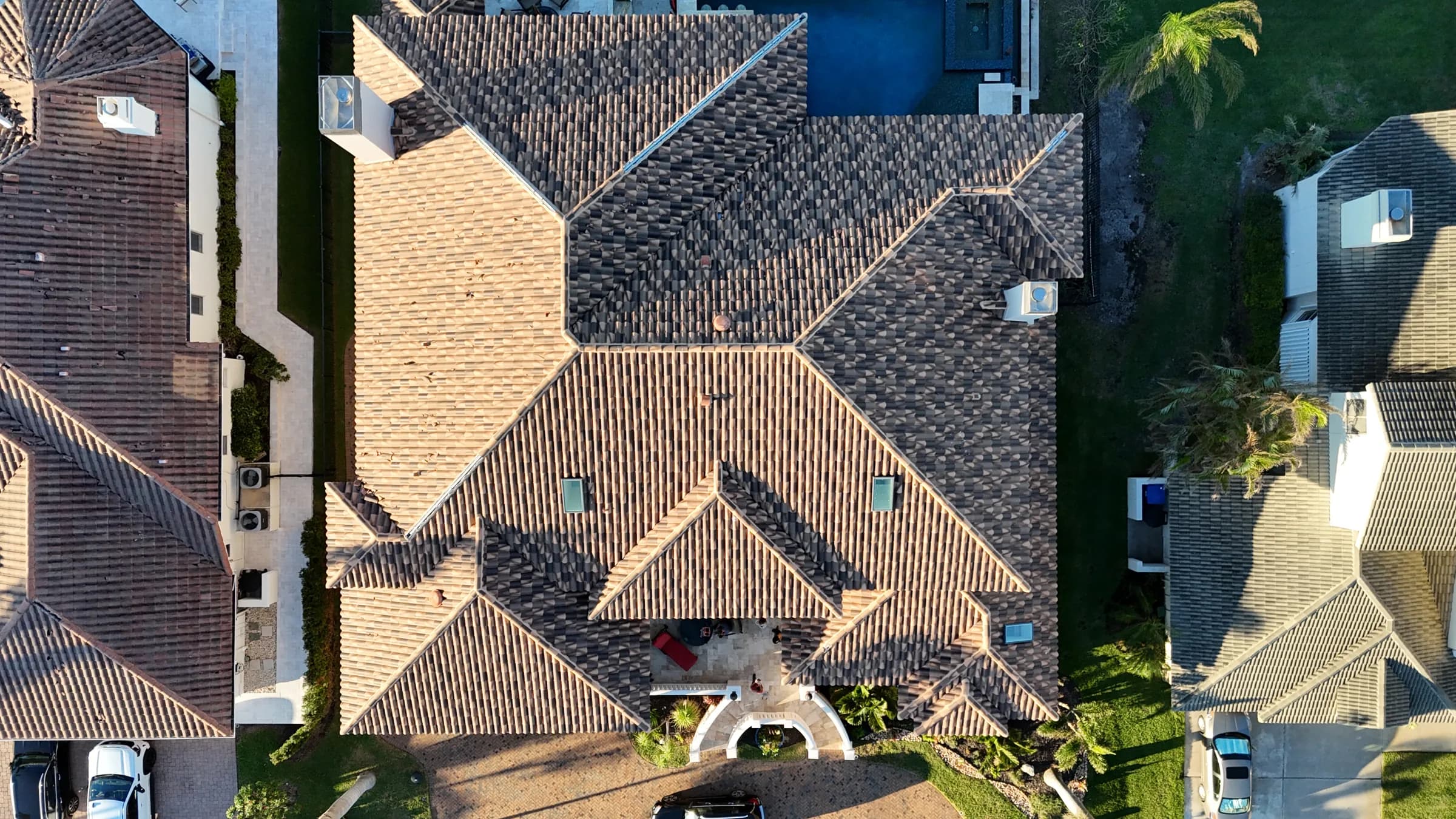
Verea clay S-barrel re-roof, St. Petersburg, FL
The existing clay tile roof, documented from above before replacement.
Deductibles, credits, and Citizens, plainly
Actual cash value versus replacement cost, roof and hurricane deductibles, the matching statute, wind mitigation inspections and credits, and Citizens' older-roof documentation rules.
Reviewed August 20, 2026. General information from a roofing contractor, not legal or insurance advice; whether any loss is covered is the insurer's decision under the policy.
Actual cash value subtracts depreciation from the cost of replacing the roof; replacement cost coverage does not. Florida insurers must offer replacement cost coverage before issuing a homeowner's policy, and Fla. Stat. 627.7011 addresses how replacement cost payments are sequenced, with an initial payment measured by actual cash value and withheld depreciation released as repair work is performed. Which coverage a policy carries is stated on its declarations page.
The statute also contains one roof-specific provision: where a policy carries a separate roof deductible, it addresses holding the roof portion of a payment at actual cash value until the insured provides reasonable proof the roof deductible was paid. How any of this applies to a specific claim is the insurer's determination under the policy; questions about a particular payment belong with the insurer, the policyholder's agent, or a licensed public adjuster or attorney if the policyholder wants representation.
Source: Fla. Stat. 627.7011 (flsenate.gov).
Florida law permits, but does not require, a separate roof deductible on homeowner policies, capped at the lesser of 2 percent of the dwelling coverage limit or 50 percent of the roof replacement cost. The statute pairs it with a required premium credit and a right to reject it on a state-approved form, and, critically, it cannot be applied to a roof loss caused by a hurricane. Whether a given policy carries one is on its declarations pages.
The hurricane carve-out is the fact most worth keeping: a hurricane roof loss runs under the hurricane deductible instead, never both, and the statute bars stacking any other deductible on the same loss. A policy that carries a roof deductible must also disclose it in bold 18-point type on the page right behind the declarations page, so the place to check is the front of your own policy. Whether accepting the deductible for the premium credit is a good trade is a conversation for your agent, not for a roofing contractor.
Under Fla. Stat. 627.4025 and 627.701, the hurricane deductible applies to losses during a defined window: it opens when the National Weather Service issues a hurricane warning for any part of Florida and closes 72 hours after the last watch or warning ends. It is a percentage of the dwelling coverage limit, not of the claim, and it applies once per calendar year across all hurricane losses that year. Which deductible applies to a given loss is the insurer's determination under the policy.
Florida insurers must offer hurricane deductible choices of $500, 2 percent, 5 percent, and 10 percent of the dwelling limit, with some tiering at higher coverage amounts, and the declarations page must state the deductible's actual dollar value so you never have to compute the percentage yourself. After the hurricane deductible is used up in a calendar year, later hurricane losses that year run under the other applicable deductible rather than free of any deductible. Outside the hurricane window, ordinary wind losses fall under the policy's all-other-perils deductible, which is typically a flat dollar amount per claim.
Sources: Fla. Stat. 627.701 (flsenate.gov) and Fla. Stat. 627.4025 (flsenate.gov).
Fla. Stat. 626.9744 provides that when a covered loss requires replacing items and the replacements do not match adjoining items in quality, color, or size, the insurer shall make reasonable repairs or replacement of items in adjoining areas. The statute never mentions roofs specifically, it is qualified by the word reasonable and by the policy's own terms, and whether it applies to any particular loss is the insurer's determination.
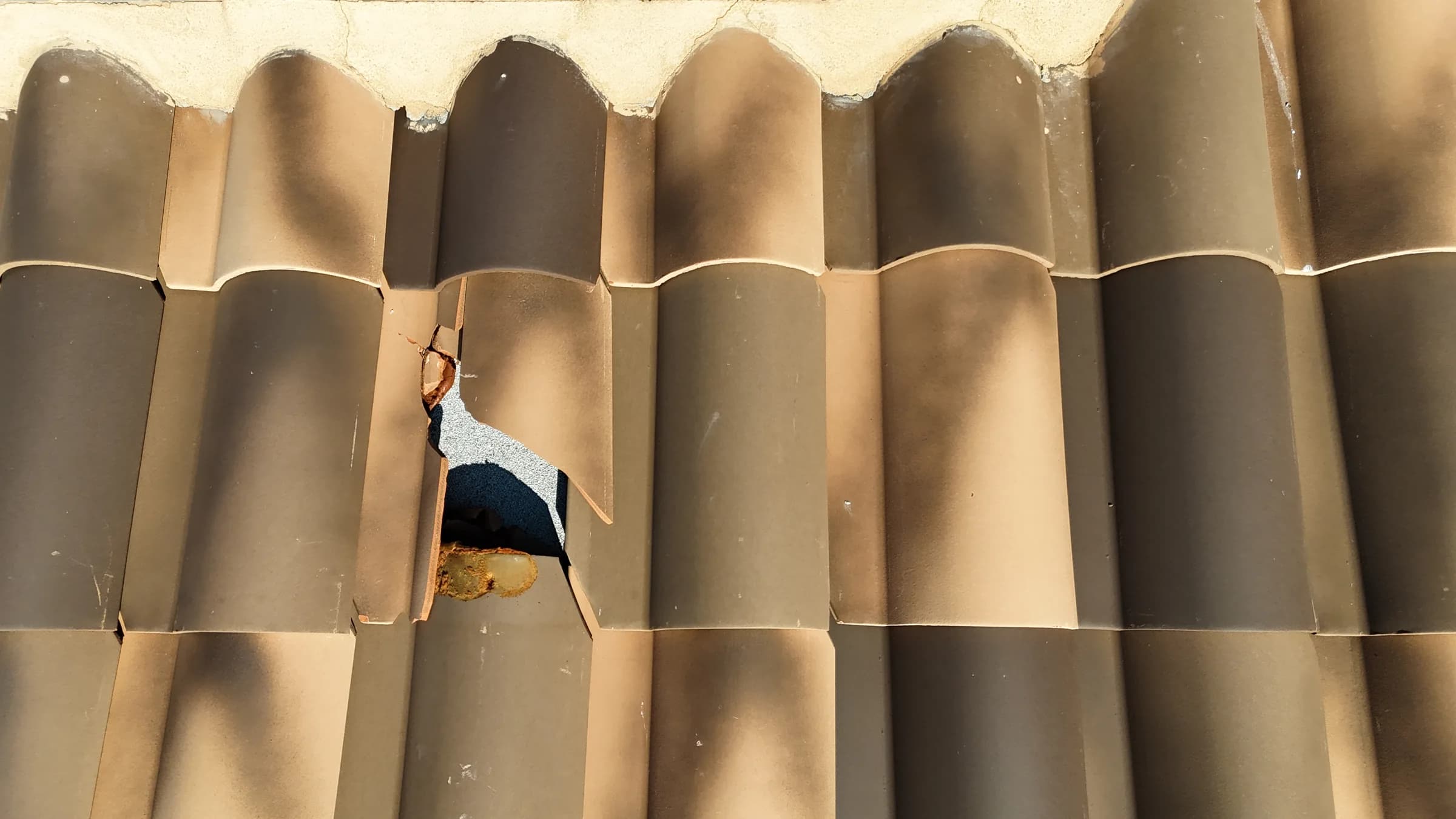
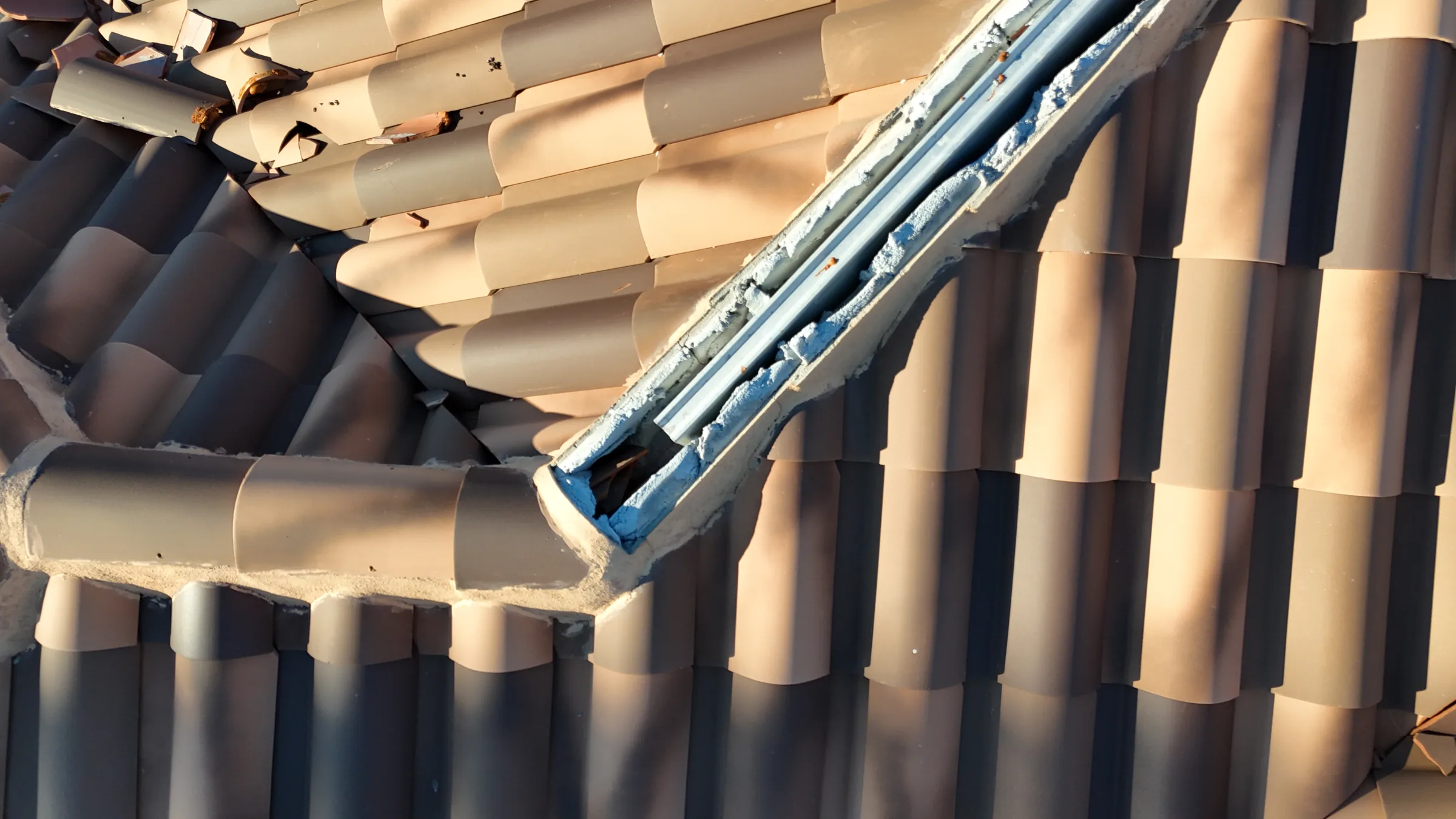
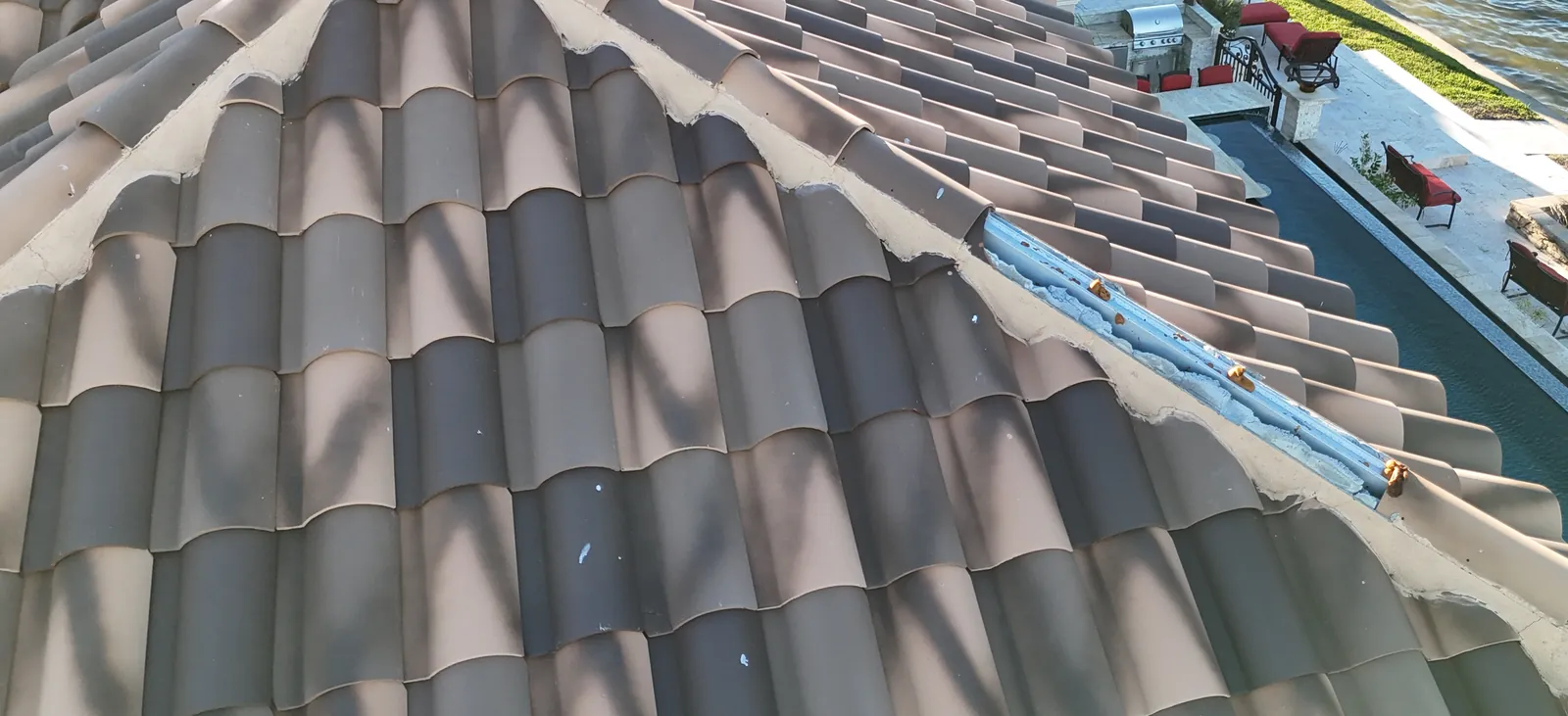
A documented inspection's contribution here is factual, not strategic: it records what covering the roof carries, what condition was found, and where, the same record a property keeps for warranty, maintenance, and sale purposes. How the matching statute bears on a specific claim is a question for the insurer under the policy, or for a licensed public adjuster or attorney if the policyholder wants representation.
Source: Fla. Stat. 626.9744 (flsenate.gov).
A wind mitigation inspection documents your home's wind-resistant features, roof covering, deck attachment, roof-to-wall connections, secondary water barrier, opening protection, on Florida's uniform OIR-B1-1802 form. Florida law requires insurers to include actuarially reasonable credits for those features in their rates, but no fixed percentage exists; the discount depends on the insurer's approved filing and your home's features.
Because the credit varies by carrier, feature, and territory, no contractor can honestly promise a specific savings number, and this page will not. Florida law requires insurers to make a mitigation discount disclosure available to policyholders, so the authoritative answer about any specific policy comes from the insurer or the policyholder's agent. A reroof frequently changes the form's answers, which is why properties commonly have the current 1802 form completed by a qualified inspector after the work. The state's My Safe Florida Home program has at times offered free mitigation inspections; its current status is on the state's own site.
Sources: Fla. Stat. 627.0629 (flsenate.gov) and the Florida OIR wind mitigation resources page (floir.gov), which hosts the current form.
According to Citizens' own published FAQ, its underwriting rules require documentation, not automatic replacement, for older roofs on personal residential policies: shingle and other soft roofs over 25 years old, and metal, tile, slate, or concrete roofs over 50, need either proof of full replacement or an inspection showing at least 5 years of remaining useful life. Citizens makes the final eligibility call either way.
The common version of this story, "Citizens drops you at 25 years," is not what the published rule says: 25 years is where Citizens' documentation requirement begins, and its FAQ describes the remaining-useful-life inspection as one way to satisfy it. When Citizens accepts that inspection, it extends eligibility for up to five years at most, however strong the report. These are underwriting rules Citizens can revise by bulletin, so treat the linked FAQ as the living source rather than any contractor's summary, including this one.
Source: Citizens Property Insurance, roof age requirements FAQ (citizensfla.com). Underwriting rules are Citizens' to apply; questions about a specific policy belong with Citizens or your agent.
From the job files
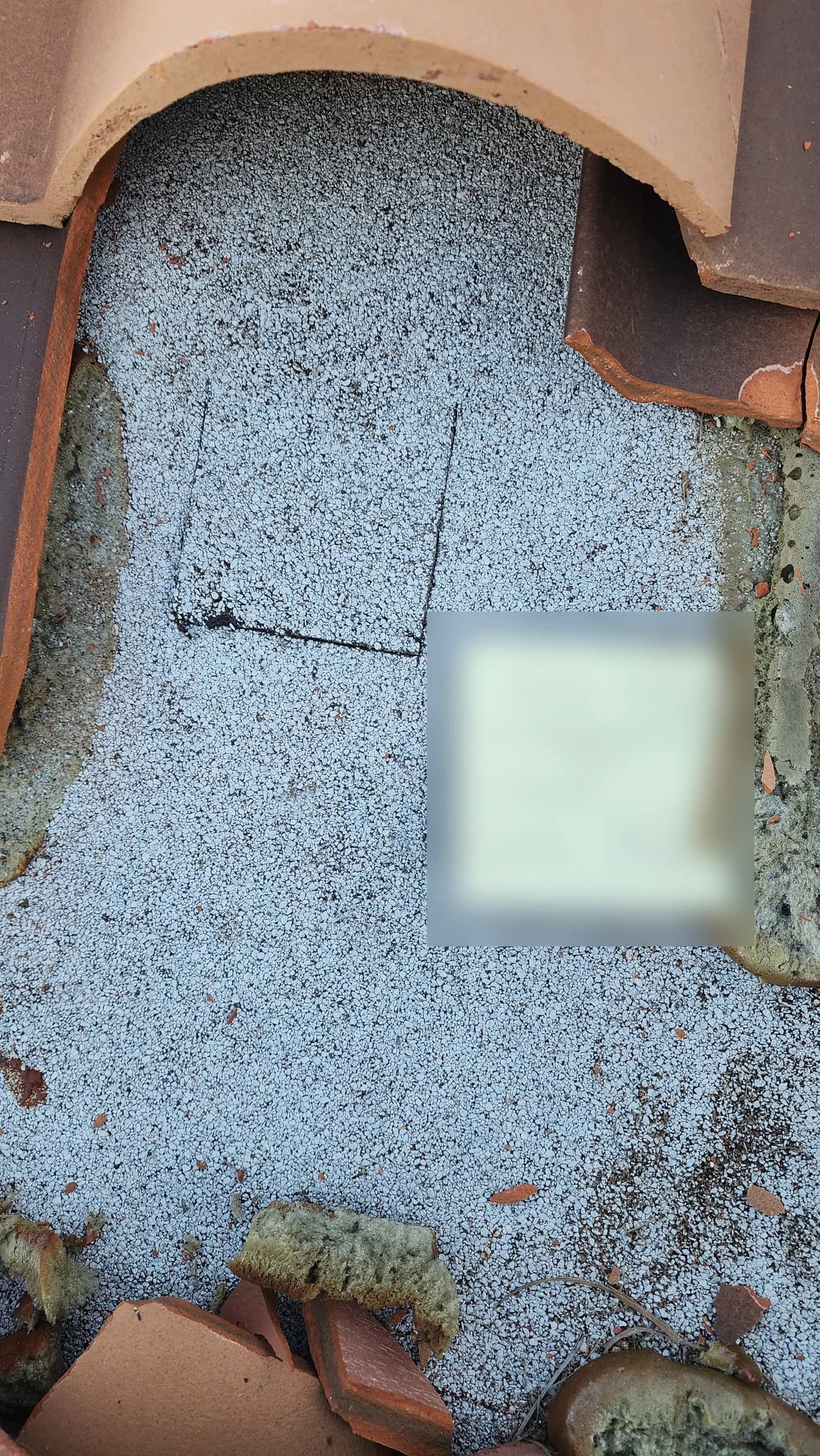
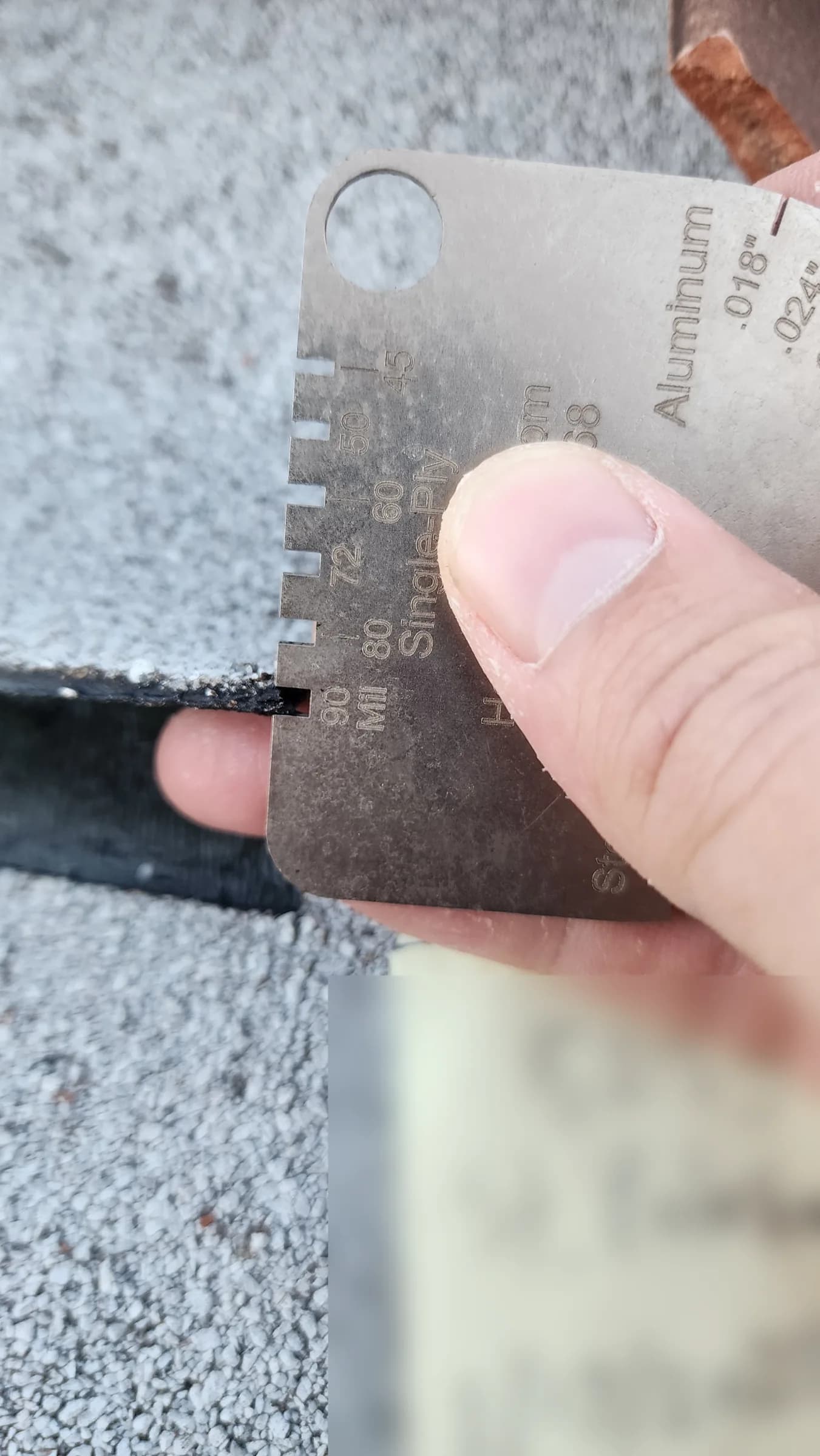
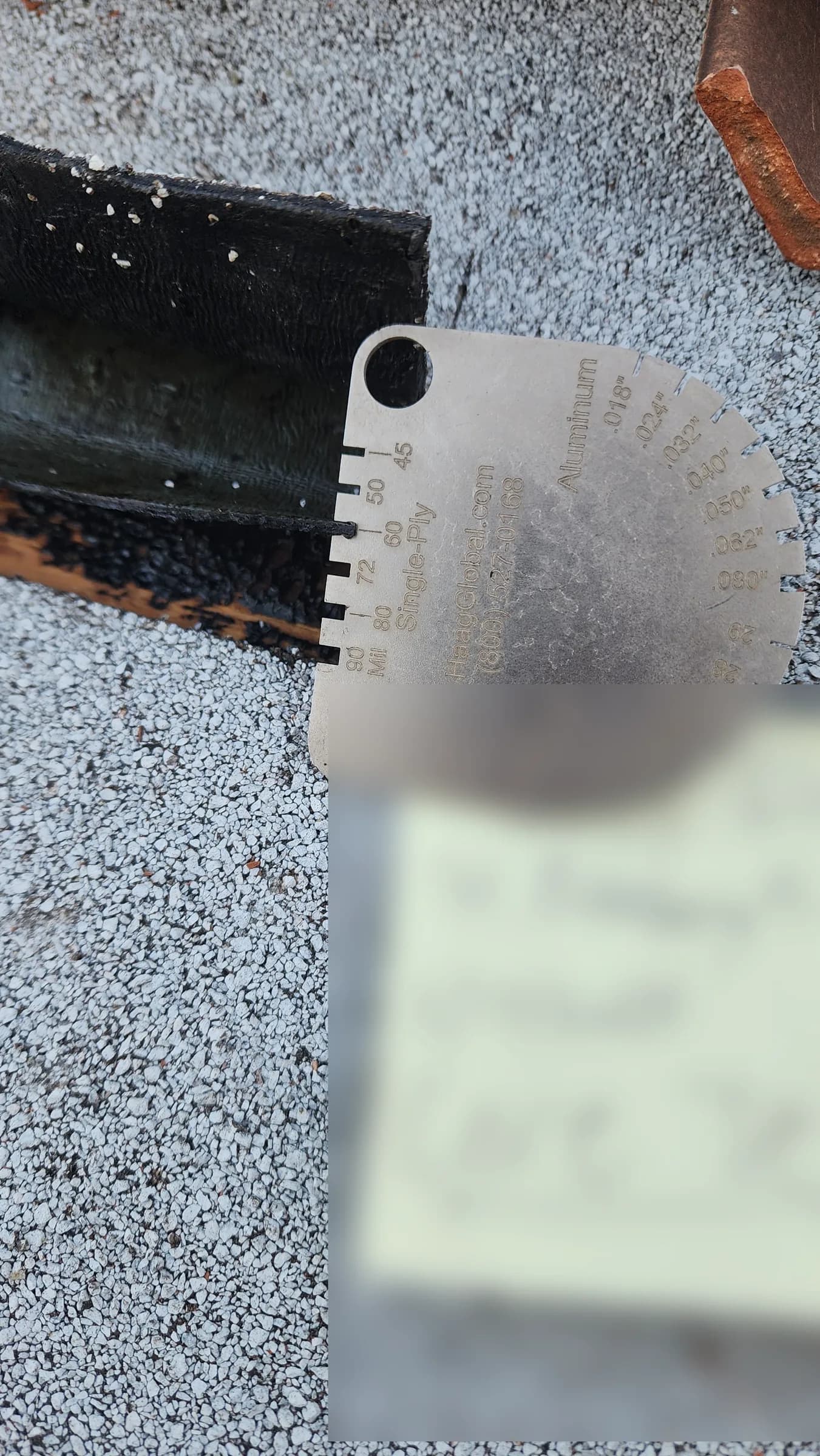
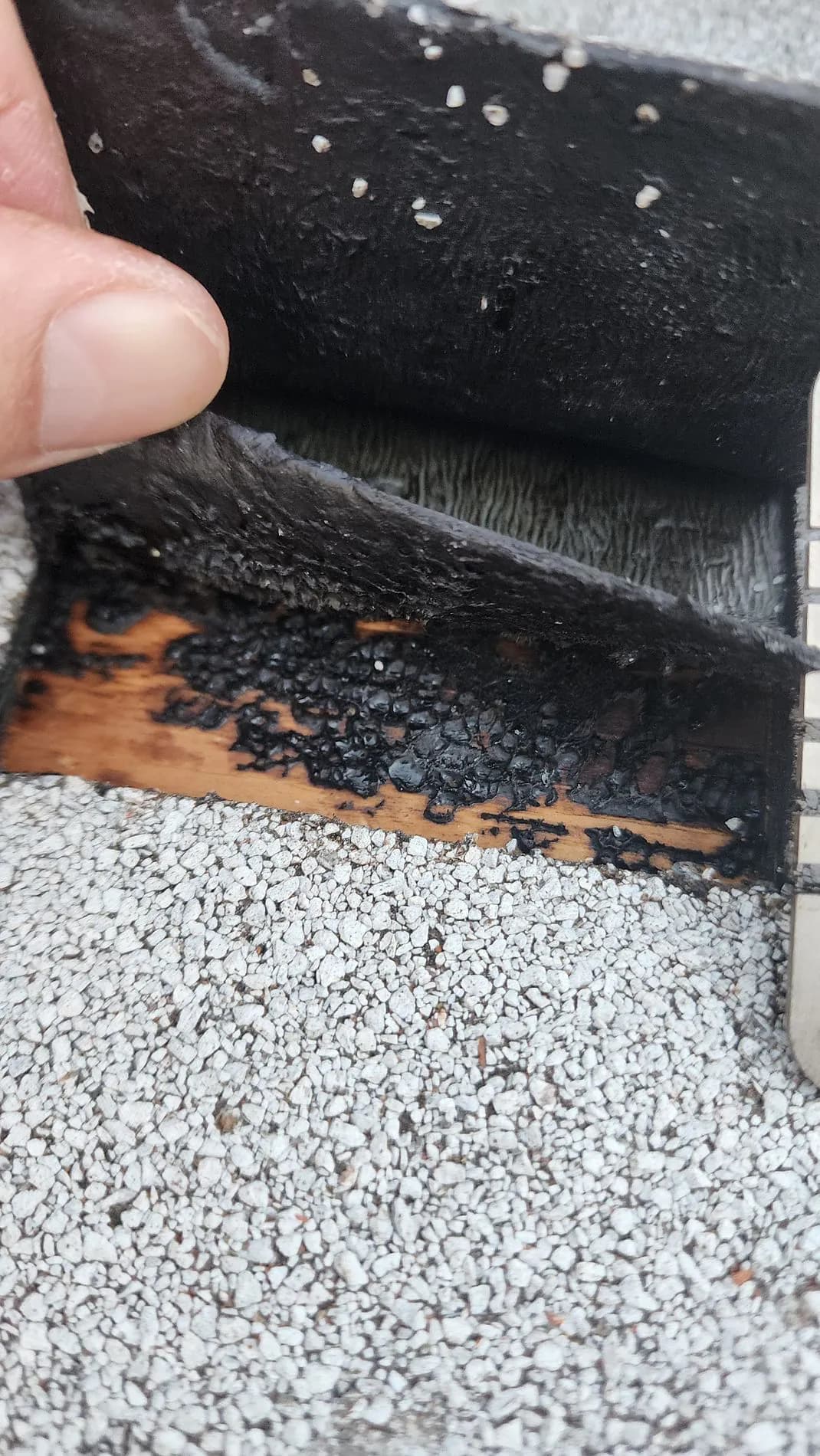
A St. Petersburg clay tile roof, photographed from first assessment through core test to finished field. Records like this are what wind mitigation inspectors and underwriters read.
Tile · St. Petersburg, FL
1 / 8
St. Petersburg, FL
The existing clay tile roof, documented from above before replacement.
Keep going
The hurricane response questions cover contracts, door-knockers, and deductible offers after a storm; the roof rules page covers permits and the 25 percent rule.
The record these rules reward
Every question on this page turns on what condition a roof is actually in. K. Simon Construction inspections produce a dated, written record of what was examined, with photographs tied to findings; coverage decisions belong to the insurer under the policy.